
Why Your Ears Struggle at Altitude
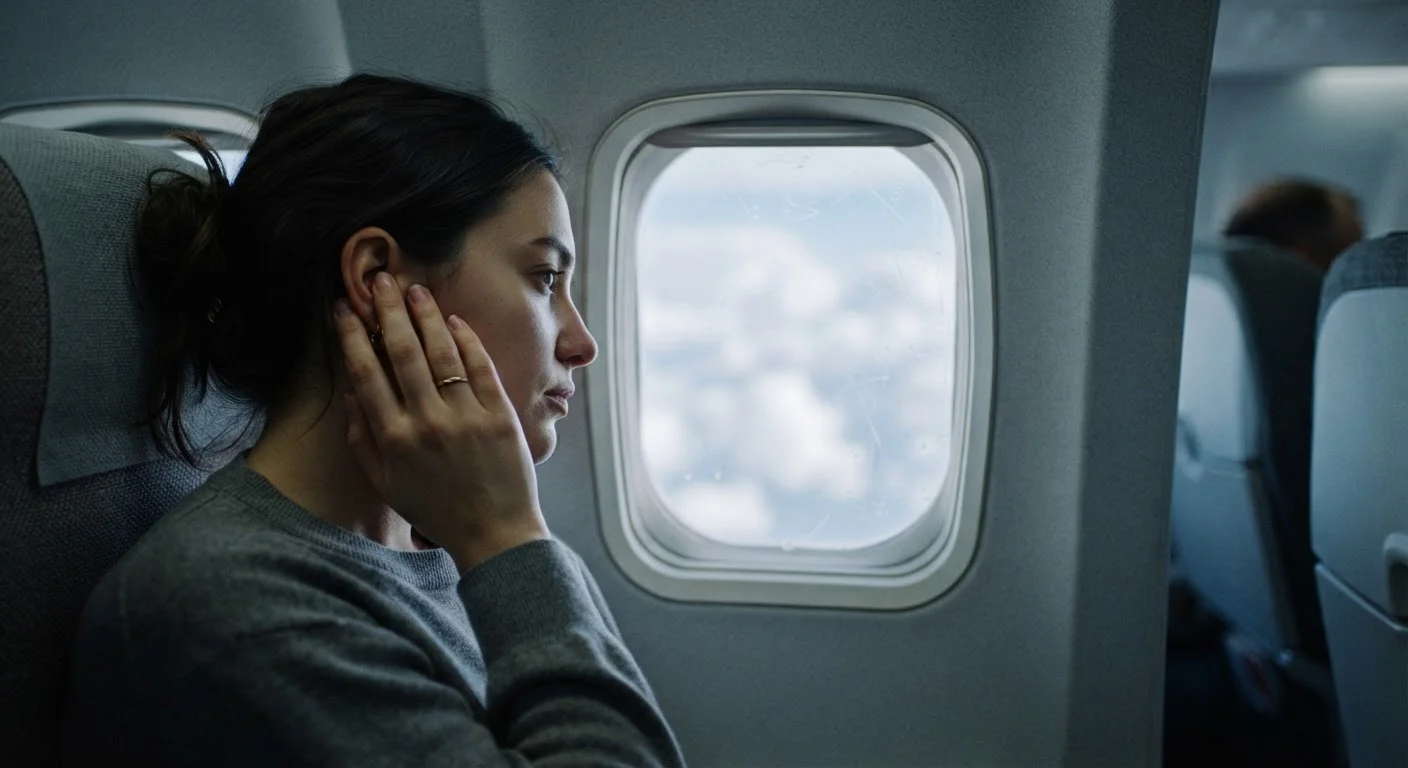
The discomfort most flyers feel during takeoff and landing has a precise cause: the middle ear - the air-filled space behind the eardrum - must constantly equalize its internal pressure with the changing cabin environment. That equalization happens through the Eustachian tube, a narrow channel connecting the middle ear to the back of the throat. When cabin pressure drops on ascent or rises on descent, the Eustachian tube must open and allow air to move in or out. If it doesn't open efficiently, pressure builds against the eardrum, producing the familiar sensation of fullness, muffled hearing, or sharp pain.
This condition - when pressure difference causes discomfort or tissue strain - is known as barotrauma (from the Greek baros, meaning weight or pressure). Mild barotrauma causes temporary ear fullness; severe cases can result in eardrum rupture, though this is relatively rare. For a broader look at what cabin pressure does to the body overall, see The Physiology of Flying: What Altitude Does to Your Body.
Key risk factors that reduce Eustachian tube efficiency include active upper respiratory infections, seasonal allergies, sinus congestion, and structural nasal issues. Descent is typically more problematic than ascent because the tube opens less readily when pressure needs to flow inward.
Descent Is the Danger Zone
Most ear barotrauma occurs during descent, not ascent. As the cabin repressurizes and altitude drops, the pressure differential across the eardrum builds more rapidly than many passengers expect. Begin active equalization strategies - swallowing, chewing, or the Valsalva maneuver - well before you feel discomfort, not after.
What You'll Need Before and During the Flight
No specialized equipment is strictly required to manage ear pressure, but a few readily available items make a meaningful difference.
Saline nasal spray
Moistens and clears nasal passages before flight to support Eustachian tube function.
Filtered flight earplugs
Slows the rate of pressure change at the eardrum, giving the ear more time to equalize naturally.
Chewing gum or hard candy
Stimulates repeated swallowing, which opens the Eustachian tube during ascent and descent.
Reusable water bottle
Supports consistent hydration throughout the flight, which helps maintain healthy mucous membrane function.
Oral or topical nasal decongestant
Reduces nasal swelling that can block Eustachian tube openings - consult a pharmacist or clinician before use.
What you will need
Step-by-Step: Preventing and Relieving Ear Pressure
Follow these steps during your next flight to minimize ear discomfort. The sequence matters - preparation before boarding is as important as technique in the air.
Manage Congestion Before You Board
If you're flying with nasal congestion due to a cold or allergies, consider using a saline nasal rinse or spray in the hours before departure to clear the nasal passages. An oral or topical nasal decongestant may also be appropriate - discuss options with a pharmacist or clinician before use, particularly if you have cardiovascular conditions or take other medications. Decongestants are most effective when taken 30-60 minutes before descent begins.
Hydrate Thoroughly Before and During the Flight
Cabin air is notably dry, often with humidity levels below 20%. Dehydration thickens mucus and can impair Eustachian tube function. Drink water consistently in the hours before departure and continue sipping throughout the flight, particularly on longer routes. Limit alcohol and caffeinated beverages, both of which contribute to dehydration. This advice aligns with broader in-flight wellness strategies covered in In-Flight Comfort From Takeoff to Landing: A Complete Reference.
Stay Awake During Ascent and Descent
Swallowing and yawning are the body's most natural mechanisms for opening the Eustachian tube. When you're asleep, you do these far less frequently, which is why passengers who nap through descent often wake to painful ear pressure. Set a light alarm or ask a travel companion to gently wake you as the aircraft begins its final approach.
Chew Gum or Swallow Frequently
Chewing gum or sucking on hard candy stimulates repeated swallowing, which activates the small muscles that pull the Eustachian tube open. Begin this practice as soon as the aircraft starts its descent - the earlier you encourage equalization, the less pressure difference accumulates. Even deliberate swallowing without food or gum provides meaningful benefit.
Use the Valsalva Maneuver
The Valsalva maneuver is a well-established equalization technique: pinch your nostrils shut, close your mouth, and gently blow air through your nose as if trying to exhale - but without releasing it. This pushes air up into the Eustachian tubes and can pop the ears open. The key word is gently: excessive force can worsen pressure injury. Repeat every few minutes during ascent and descent as needed.
An alternative is the Toynbee maneuver: pinch the nose and swallow simultaneously. Some people find this more comfortable.
Consider Filtered Earplugs for Pressure Regulation
Specialized filtered earplugs (sometimes called "flight earplugs" or "pressure-regulating earplugs") contain a ceramic filter that slows the rate of air pressure change reaching the eardrum. This gives the Eustachian tube more time to equalize naturally. They are inserted like standard foam earplugs before takeoff and removed after landing. They are not the same as standard foam or noise-cancelling headphones, which serve a different purpose.
Don't Fly with an Active Ear Infection
Flying with an acute middle ear infection (otitis media) significantly increases the risk of severe barotrauma and potential eardrum rupture. If you have ear pain, drainage, or recent diagnosis of an ear infection, consult a healthcare professional about whether flying is appropriate before your travel date. This guidance applies equally to young children who are prone to middle ear infections.
If you experience severe or unrelenting pain, blood from the ear canal, or significant hearing loss after the flight that doesn't resolve within a few hours, consult a healthcare professional promptly. For more on avoiding common in-flight health missteps, see Common Mistakes That Make Long-Haul Flights Harder Than They Need to Be.
This article is for general informational purposes only and does not constitute medical advice. Readers experiencing ear pain, hearing loss, or related symptoms should consult a qualified healthcare professional before making decisions about their care or fitness to fly.