
The Cascade Effect: How One Delay Travels With You All Day
Every commercial aircraft flies multiple legs each day. The plane departing at 6:15 a.m. from Denver is the same one scheduled to push back from Chicago at 10:45 a.m. and again from Atlanta at 3:20 p.m. When that first leg runs late - due to a gate conflict, a mechanical inspection, or weather - every subsequent rotation absorbs the delay.
This is the cascade effect, and it is the primary operational reason experienced travelers gravitate toward the first departure of the day. That flight draws on an aircraft that has been stationary overnight, fully serviced and pre-positioned. It has no delay inheritance. Book the 6 a.m. instead of the noon, and you are largely insulated from the compounding disruptions that build as a fleet works through its daily schedule.
Common flight planning myths often focus narrowly on price, but on-time performance is a measurable, trackable variable that affects the total time cost of every trip.
Check Historical On-Time Data Before Booking
The U.S. Bureau of Transportation Statistics publishes historical on-time performance data by carrier and route. Before committing to a departure time, reviewing the on-time record for that specific flight number - not just the route in general - gives you a more accurate picture of real delay risk than fare price alone.
Congestion, Security Lines, and the Hidden Cost of Peak Windows
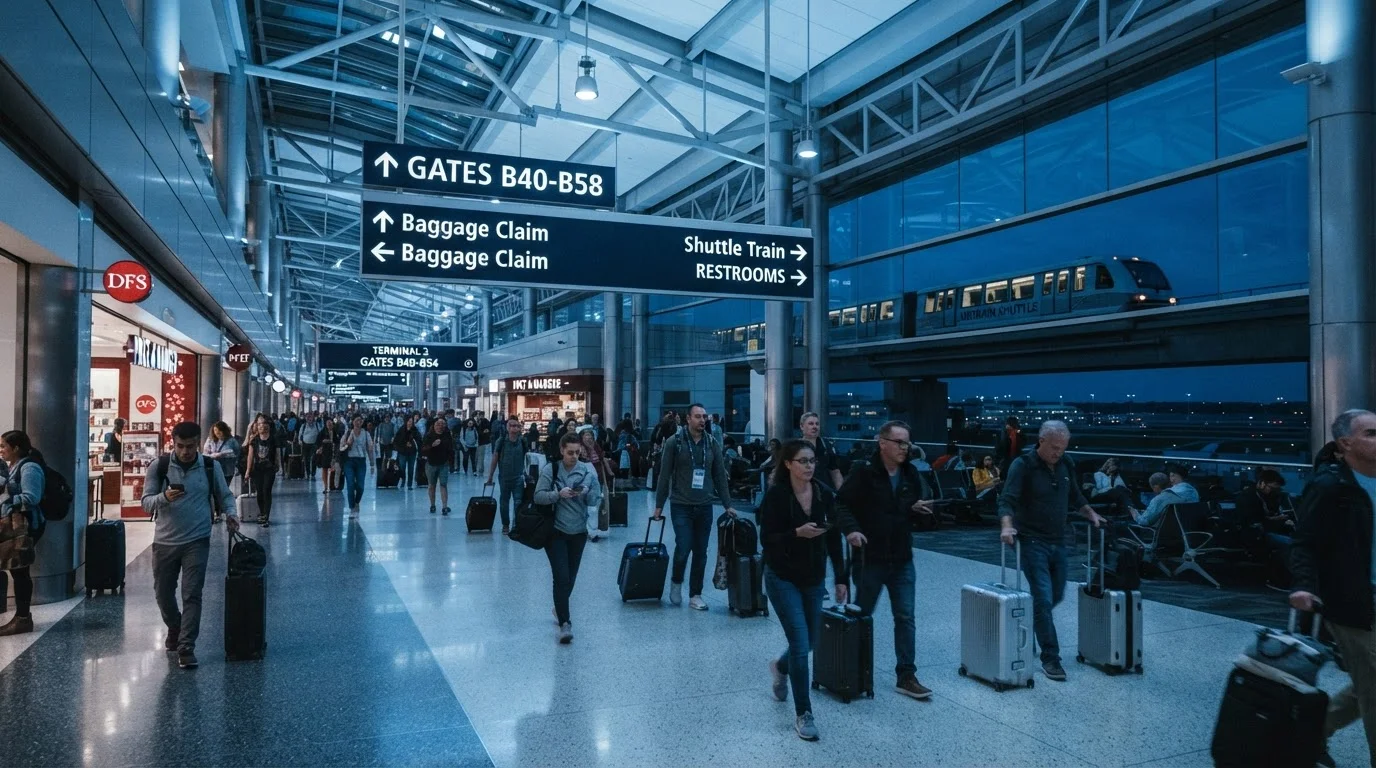
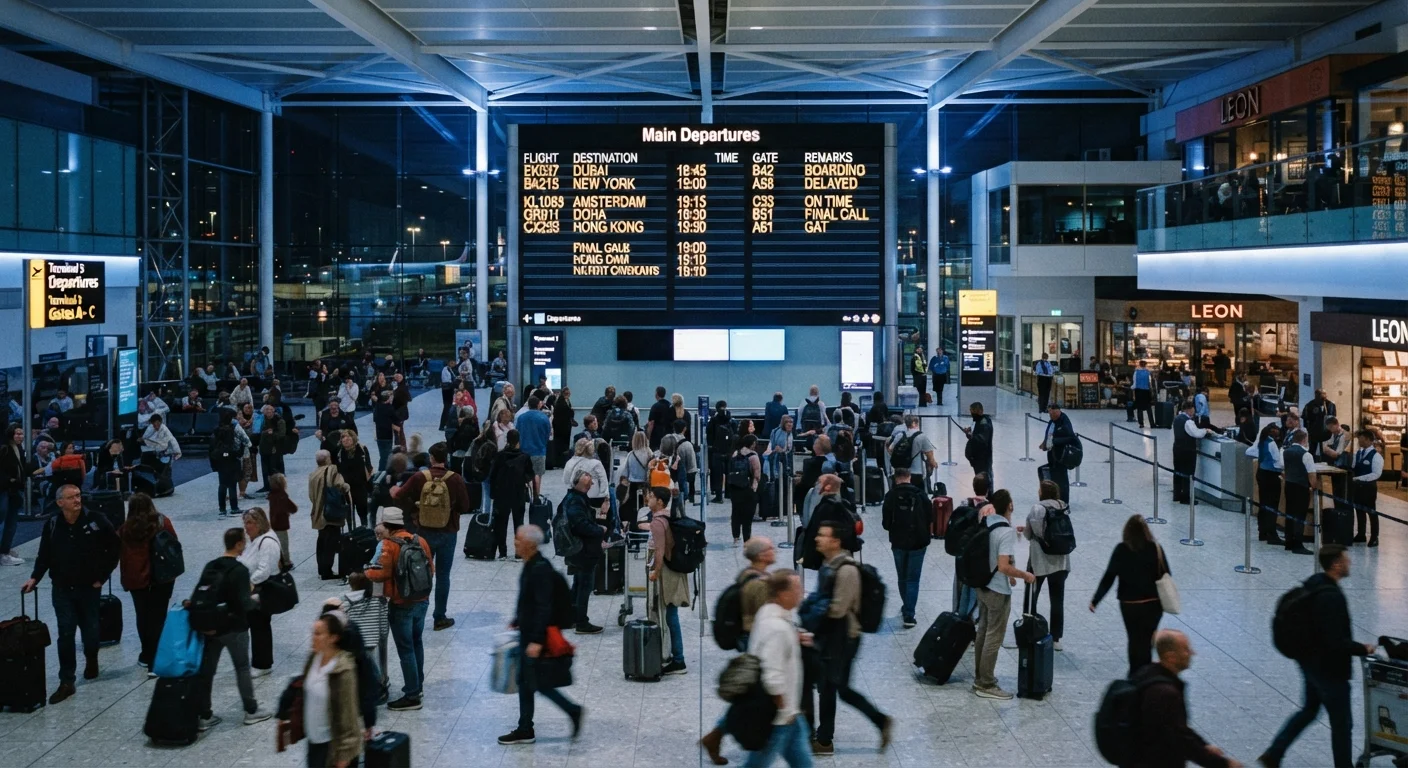
Friday afternoon departures and Sunday evening returns are among the most congested windows in U.S. commercial aviation. These peak times pack leisure travelers, business travelers returning home, and families into the same checkpoint queues, gate areas, and boarding groups simultaneously. The result is predictably slower security throughput, fuller overhead bins, and gate holds caused by passenger boarding backlogs.
Midweek departures - particularly Tuesday and Wednesday - tend to carry lighter passenger loads on routes dominated by leisure demand. Fewer travelers moving through a terminal at any given hour means faster screening, shorter queues at gate-area food vendors, and a measurably calmer boarding process. These aren't trivial conveniences; they directly affect how much energy you arrive at your destination with.
~20%
Higher on-time rate for first daily departures
U.S. Bureau of Transportation Statistics data consistently shows early-morning flights outperform afternoon and evening departures on on-time arrival metrics.
~80%
Of delays caused by aircraft arriving late
The FAA and BTS attribute the majority of non-weather domestic delays to late aircraft - the direct mechanism behind the cascade effect.
Friday-Sunday
Peak delay risk window in U.S. aviation
Weekend travel concentrations consistently produce the highest delay rates across major U.S. hubs, according to historical BTS on-time performance data.
Frequent flyers arrive earlier than most travelers expect precisely because they understand that peak-hour congestion is not just an inconvenience - it is a risk multiplier for missed connections and checked bag misrouting.
Timing's Impact on Connections and Baggage Reliability
Choosing a flight time also shapes your connection risk in ways that go beyond the published minimum connection time. A flight departing during a hub's peak bank - the window when many aircraft arrive and depart simultaneously - means your connecting plane is also likely to be running at or near schedule's edge. A 45-minute connection during off-peak hours at a less-congested terminal carries different actual risk than the same 45-minute connection during a noon bank at a major hub.
For travelers checking bags, the timing dimension matters further. Ground crews processing 30 bags for a morning departure operate differently than those simultaneously handling hundreds of bags across a dozen arriving flights at 5 p.m. on a Friday. Minimum connection times don't account for your specific airport or terminal layout, and they certainly don't account for ground crew volume stress during peak rotations.
For those weighing more complex itineraries, the trade-offs between separate bookings and single-ticket itineraries become even more consequential when timing amplifies disruption risk.
Peak Bank Timing Varies by Hub
Every major airline hub operates on a 'bank' schedule - clustered arrival and departure windows designed to maximize connecting opportunities. The peak congestion windows differ by airport and carrier. Understanding when your specific hub's busiest banks occur helps you select connections that fall outside the highest-pressure operational periods.
Physical Recovery and the Real Cost of Overnight Travel
Red-eye flights are frequently presented as efficiency tools - fly overnight, arrive in the morning, skip the hotel night. The logic is sound on paper. In practice, the recovery cost is real. Cabin pressure, low humidity, limited mobility, and the disruption to your circadian rhythm combine to create a specific type of fatigue that differs from ordinary tiredness.
Daytime flights, by contrast, allow your body to follow a closer approximation of its normal waking state. If the goal is to arrive functional - for a business meeting, a full day of touring, or a family event - the timing of your flight is as much a wellness variable as it is a scheduling one. Why overnight flights affect you differently than daytime travel is worth understanding before defaulting to the red-eye simply because it appears convenient.
Timing decisions also ripple into the broader trip budget. The logic behind how airline pricing works means that off-peak departure times sometimes carry lower fares alongside their operational advantages - though this varies by route and is never guaranteed.