

What the Distinction Actually Means
A single-ticket itinerary (sometimes called a through-ticket or interline booking) covers your entire journey under one booking reference, even if it involves multiple airlines. A separate-ticket booking means each flight segment is purchased independently - two or more distinct reservations with no contractual link between them.
That contractual link is the crux of everything that follows. When you book through a single ticket, the operating carriers share responsibility for the journey. When you book separately, each airline's obligation ends at the door of its own aircraft.
For travelers building complex itineraries, a structured approach to multi-destination planning can help clarify when splitting tickets makes practical sense versus when it introduces unnecessary exposure.
Advantages of Booking on a Single Ticket
Single-ticket travel offers protections that most travelers only appreciate when something goes wrong.
Airline owns missed connection - rebooking at no cost
If a delay on your first flight causes you to miss a connection, the ticketing carrier is obligated to rebook you on the next available service. You are not left negotiating a new fare at the gate.
Baggage checked through to final destination
On a single ticket, your bags are typically tagged through, meaning you do not need to claim and re-check between connecting flights - a significant time and stress saver at large hub airports.
Clearer recourse under DOT and airline rules
U.S. Department of Transportation rules and airline contracts of carriage apply to the full itinerary, giving travelers a defined framework for compensation and rerouting if the carrier disrupts the journey.
Simpler overall coordination and less manual oversight
One booking reference, one check-in interaction, and one point of contact for any service issue means less administrative burden - particularly valuable on complex multi-stop routes.
It is also worth noting that many travelers assume single-ticket routing is always more expensive. That is not consistently true. Airlines file multi-city fares that, when compared against the sum of separate bookings, can be competitive - particularly on established hub-to-hub routes. Running both comparisons before committing is a straightforward exercise that a well-structured flight search strategy makes easier.
Disadvantages of Booking on a Single Ticket
The single-ticket approach is not without its own constraints.
Route and carrier options are more constrained
Single-ticket itineraries are limited to routes and airline partnerships the ticketing carrier supports. Niche regional legs served only by low-cost carriers may be unavailable or priced at a premium.
Potentially higher total fare on some routes
On certain city pairs, combining two separately purchased segments can be less expensive than the through-fare filed by a network carrier, particularly when low-cost carriers serve one leg.
Less scheduling flexibility across segments
Minimum connection times set by the airline - which are conservative by design - may force longer layovers than a traveler would choose independently, adding hours to the overall journey.
Fare pricing can also be less transparent. Understanding why the same seat carries different prices across booking paths - and how airline fare classes interact - helps travelers make genuinely informed comparisons. The logic behind flight pricing explains how dynamic pricing and fare classes work in practice.
When Separate Tickets Offer a Real Advantage
Separate bookings are not inherently reckless. For certain routes and traveler profiles, they represent a deliberate and reasonable trade-off.
The clearest case is routing through a city not served by any single airline's network. Low-cost carriers often dominate specific regional legs, and combining a low-cost intra-European flight with a long-haul ticket from a network carrier can meaningfully reduce the total fare - sometimes by hundreds of dollars.
~20%
Share of U.S. flights arriving late in a typical year
U.S. Bureau of Transportation Statistics data consistently shows roughly one in five domestic flights arrives behind schedule, underscoring the connection risk in tight separate-ticket itineraries.
2-3 hrs
Recommended self-connect buffer for international legs
Travel insurance specialists and frequent flyer communities generally advise a minimum two-to-three-hour layover when self-connecting internationally, to account for customs, immigration, and terminal transit.
Separate tickets also give you the option to mix cabin classes strategically: economy on a short hop, premium economy or business on a transatlantic segment, without being constrained by the fare rules of a single ticket. This kind of flexibility is explored further in discussions of self-built itineraries vs. bundled packages.
Self-Connecting at Certain Hub Airports Carries Extra Risk
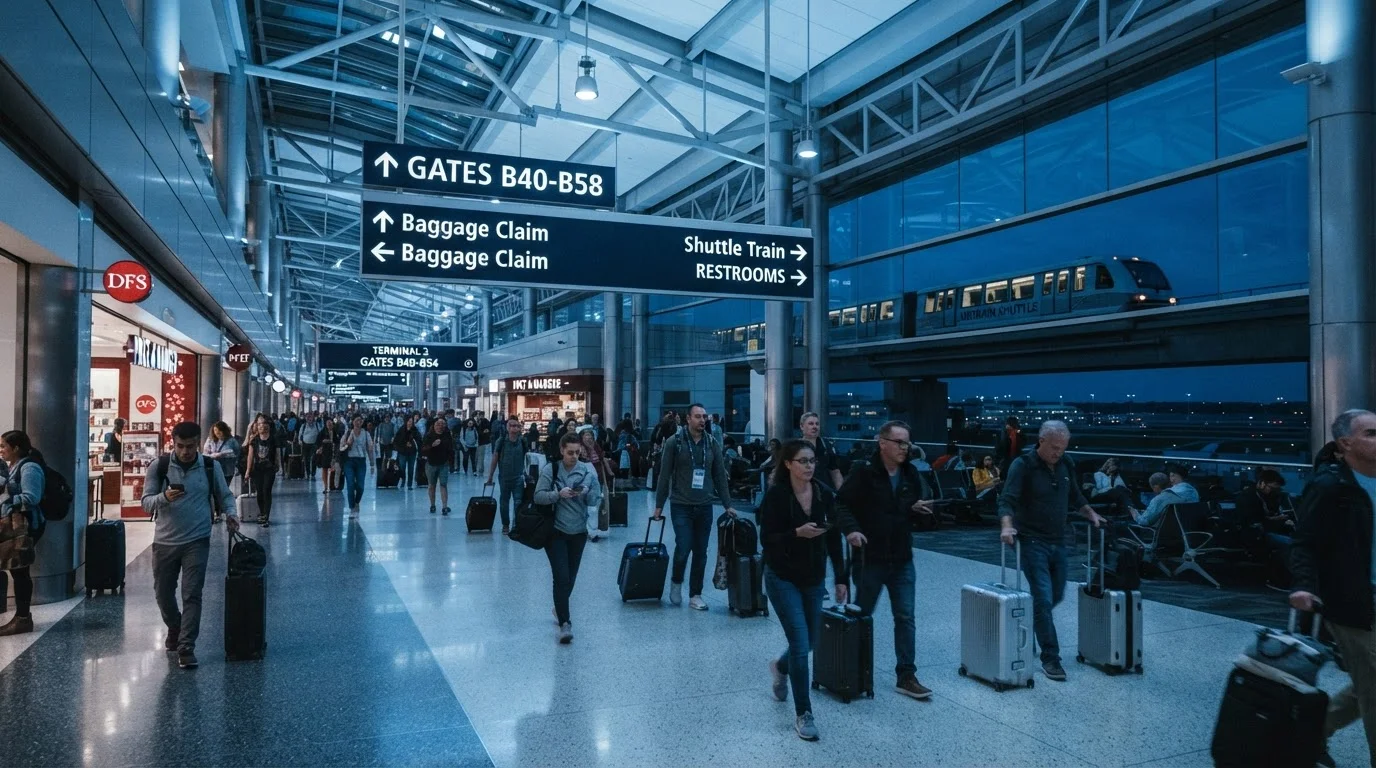
Some large hub airports - particularly those with multiple terminals not connected airside - require travelers to exit security and re-enter between separate tickets. This can add 45-90 minutes to your effective transit time and is not always obvious when booking. Before finalizing a self-connect itinerary, check the specific airport's terminal map and confirm whether airside transfers are possible between the carriers involved.
The Risk Management Checklist
If you proceed with separate tickets, the following considerations reduce but do not eliminate exposure:
- Layover buffer: Industry practice generally treats 90 minutes as a minimum domestic self-connect and 2.5-3 hours for international segments, though airport size, terminal layout, and immigration requirements all affect what is actually sufficient.
- Travel insurance: Verify that your policy explicitly covers missed connections on self-connected itineraries - many standard policies do not.
- Checked baggage: Confirm whether you will need to claim and re-check bags between flights. At most airports, this is required when tickets are not linked.
- Airport re-entry: Self-connecting internationally may require clearing customs and immigration between flights. Factor this into your layover calculation.
- Rebooking costs: Know what a last-minute replacement ticket on your second segment would cost if you missed it. If that figure is prohibitive, a single ticket is likely the more rational choice.
Travelers who tend to book every element independently should also weigh the broader implications of that approach, which a comparison of direct and third-party booking channels addresses in a related context.
This article provides general travel information and is not a substitute for advice from airlines, travel agents, or insurance providers. Entry requirements, airline policies, and airport procedures can change; always verify current conditions with official sources before travelling.