
What Each Approach Actually Covers
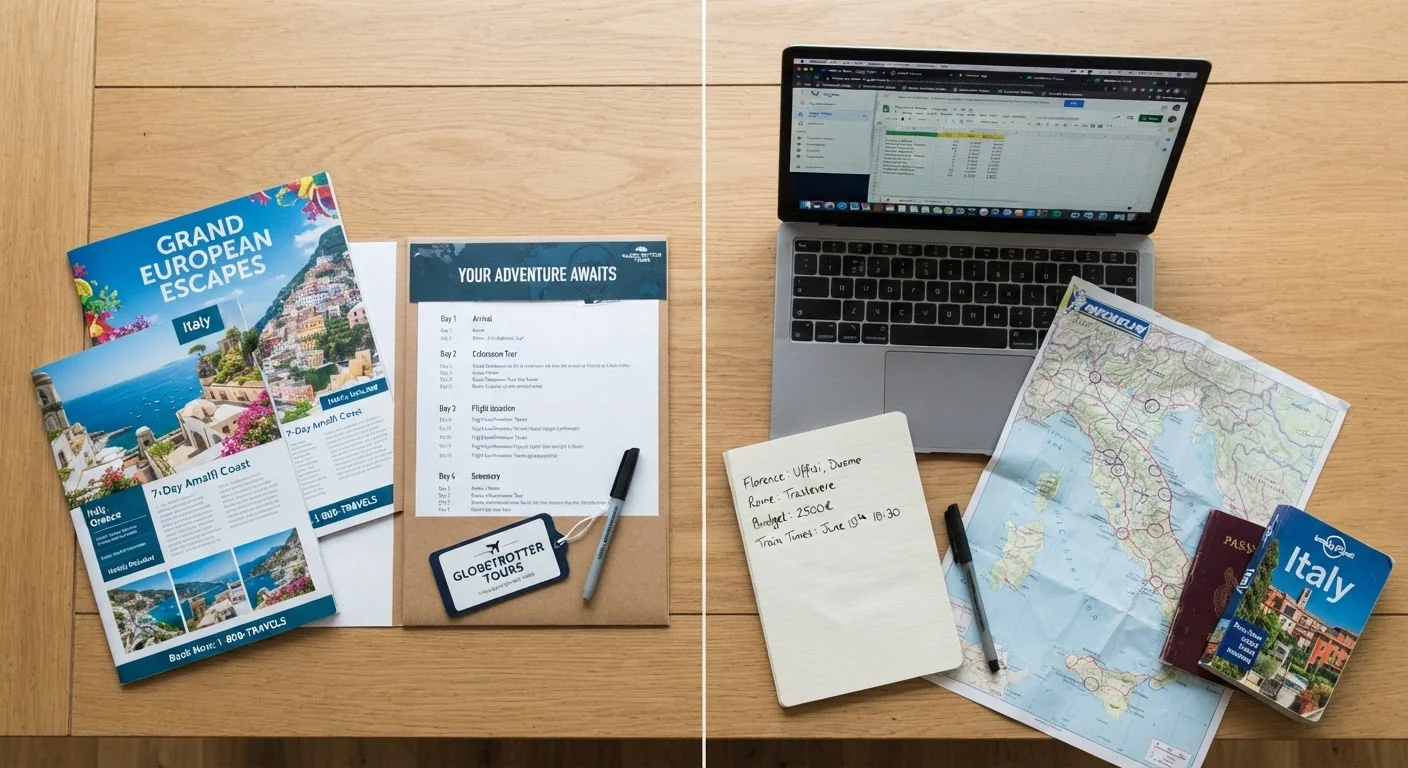
A package holiday bundles at least two travel components - typically flights and accommodation - into a single purchase, often through a tour operator or travel agency. Many packages also include transfers, tours, or meals. You pay one price; a third party coordinates the moving parts.
A self-built itinerary means booking each component separately: flights, hotels, ground transport, and activities sourced and managed independently. You retain full visibility into what you're paying for each element - and full responsibility when anything shifts.
The distinction matters for more than just convenience. In the US and in many international jurisdictions, bundled packages sold by tour operators carry specific consumer protections that standalone bookings do not. Understanding what each model actually covers is the foundation for making a sound choice. For a deeper look at how itinerary structure affects your trip experience, see The Anatomy of a Well-Built Travel Itinerary.
The Case for Package Holidays
Packages compress weeks of research and coordination into a single transaction. For travelers heading to destinations with complex logistics - multi-island trips, safari circuits, or multi-country rail routes - that compression has genuine value.
Single point of contact for disruption and rebooking
When a flight is cancelled or accommodation falls through, package operators are typically responsible for finding alternatives. This accountability is codified in consumer protection frameworks in many countries, reducing the burden on the traveler.
Reduced upfront research and coordination time
A package collapses weeks of comparison and booking into one transaction. For travelers with limited planning bandwidth, this efficiency gain can be worth a premium.
Potential for volume-based pricing advantages
Operators buying inventory in bulk sometimes access rates unavailable to individual bookers, particularly for popular routes during peak season - though this is not guaranteed.
Simplified group logistics
For families or larger groups, a single booking eliminates the coordination overhead of synchronizing multiple flight, hotel, and transfer reservations.
The cost picture is more nuanced than it appears. Operators buying hotel rooms and flights in volume sometimes access rates that individual travelers can't replicate, particularly during high season. That said, packages are not automatically cheaper; the savings depend heavily on the destination, season, and operator. See how the same trade-off plays out in accommodation choices: All-Inclusive Resorts vs. Room-Only Luxury Hotels.
The Case for Self-Built Itineraries
Building your own itinerary puts every decision in your hands - which is both the appeal and the burden. Experienced travelers who know how to anchor a plan around key experiences tend to get the most from this approach. For practical methods, How Experienced Travelers Actually Build Their Itineraries walks through the planning habits that hold up on the ground.
Limited flexibility once the trip is booked
Package itineraries are often structured around fixed departure times, pre-set hotels, and bundled tours. Changing a single element can trigger fees or require rebooking the entire package.
Higher planning and research workload upfront
Building a trip from scratch requires sourcing, comparing, and booking each component separately. On complex itineraries, this can add hours of work spread across weeks.
Disruption risk falls entirely on the traveler
When individual bookings are made independently, there is no operator responsible for rebooking across components. A delayed flight can cascade into missed hotel check-ins with no automatic remedy.
Pricing opacity can obscure true value
Packages bundle costs in ways that make direct price comparison difficult. You may not know whether you're getting a competitive rate on accommodation or flights without significant research.
One underappreciated risk: when you book flights and hotels separately, disruption in one leg doesn't automatically trigger rebooking assistance in another. Booking Flights Separately vs. on a Single Ticket breaks down where that risk sits and how to manage it.
The Variables That Should Drive Your Decision
No single approach wins across all scenarios. Several practical variables tend to determine which model fits a given trip.
Consumer Protection Varies by Booking Type
In many jurisdictions - including under EU package travel directives that apply to trips sold to US travelers departing from Europe - bundled packages carry legally mandated protections covering cancellation, significant changes, and insolvency. Standalone bookings do not trigger the same rules. Before booking either way, verify what consumer protections apply in the specific country where the contract is formed, and check whether travel insurance closes any gaps.
- Destination complexity: Trips requiring coordinated local transfers, permits, or guides - safaris, multi-island Pacific trips, polar expeditions - often work better as packages. Simpler point-to-point trips favor DIY.
- Group size: Larger groups introduce coordination overhead. Packages simplify logistics; DIY planning for groups compounds quickly. See how group dynamics shape planning: Solo vs. Group Itineraries.
- Pace preferences: Packages often lock in a set pace. If you want flexibility to linger or pivot, a self-built plan gives you that room - though it comes with cost implications. Slow Travel vs. Fast-Paced Itineraries explores how pace shapes overall spend.
- Planning bandwidth: If you have limited time to research, the coordination cost of DIY may outweigh its financial advantages. Packages transfer that labor to a third party - for a price.
For a broader framework on managing costs across either approach, the Trip Budgeting hub covers practical strategies applicable to both booking models.