

The Core Structural Difference
The fundamental gap between solo and group itineraries isn't preference - it's operational complexity. A solo traveler makes decisions in real time with zero friction. A group of four introduces four sets of preferences, energy levels, physical limits, and risk tolerances into every single choice. That compounding factor changes how you build a schedule from the ground up.
Solo itineraries can be loose frameworks. Group itineraries need to be engineered. When you're planning for others, ambiguity becomes a liability - "we'll figure out dinner" turns into 45 minutes of debate and a late reservation. Experienced itinerary builders know to lock in anchor experiences early and let flexibility exist only within defined windows, not across the whole schedule.
| Solo Itinerary | Group Itinerary | |
|---|---|---|
| Decision speed | Instant, no coordination needed | Requires consensus or designated lead |
| Pacing | Flexible, self-directed | Needs built-in buffers throughout |
| Fixed cost burden | Borne entirely by traveler | Split across group members |
| Booking lead time | Short to moderate | Longer; group minimums apply |
| Itinerary density | Can handle more stops per day | Two to three anchors per day is realistic |
| Risk of burnout | Lower; traveler sets own pace | Higher without deliberate downtime |
| Spontaneity | High - change plans mid-day easily | Low - changes require group buy-in |
Pacing: Where Group Plans Most Often Break Down
Underestimating transit time is the most common group itinerary failure. A solo traveler can move from a museum to a neighborhood restaurant in 20 minutes because they travel light and make decisions fast. Add five people, and that same transition realistically takes 40-50 minutes once everyone uses the restroom, debates the route, and accommodates the person who needed one more photo.
The fix is to build transition buffers structurally - not as padding, but as intentional downtime. A well-paced group day typically means two or three anchor activities, not five. For multi-country trips, this matters even more; see how sequencing countries sustainably differs from a single-destination plan.
Set a Daily Rhythm, Not Just a Schedule
For groups, agree on a general daily structure before departure: when you'll meet for breakfast, when free time begins, and when the group reconvenes. This framework absorbs spontaneity without sacrificing coordination. It also prevents the common pattern where late risers and early risers spend the first hour of every day in conflict over when to leave the hotel.
Budget Architecture: Different Problems, Different Solutions
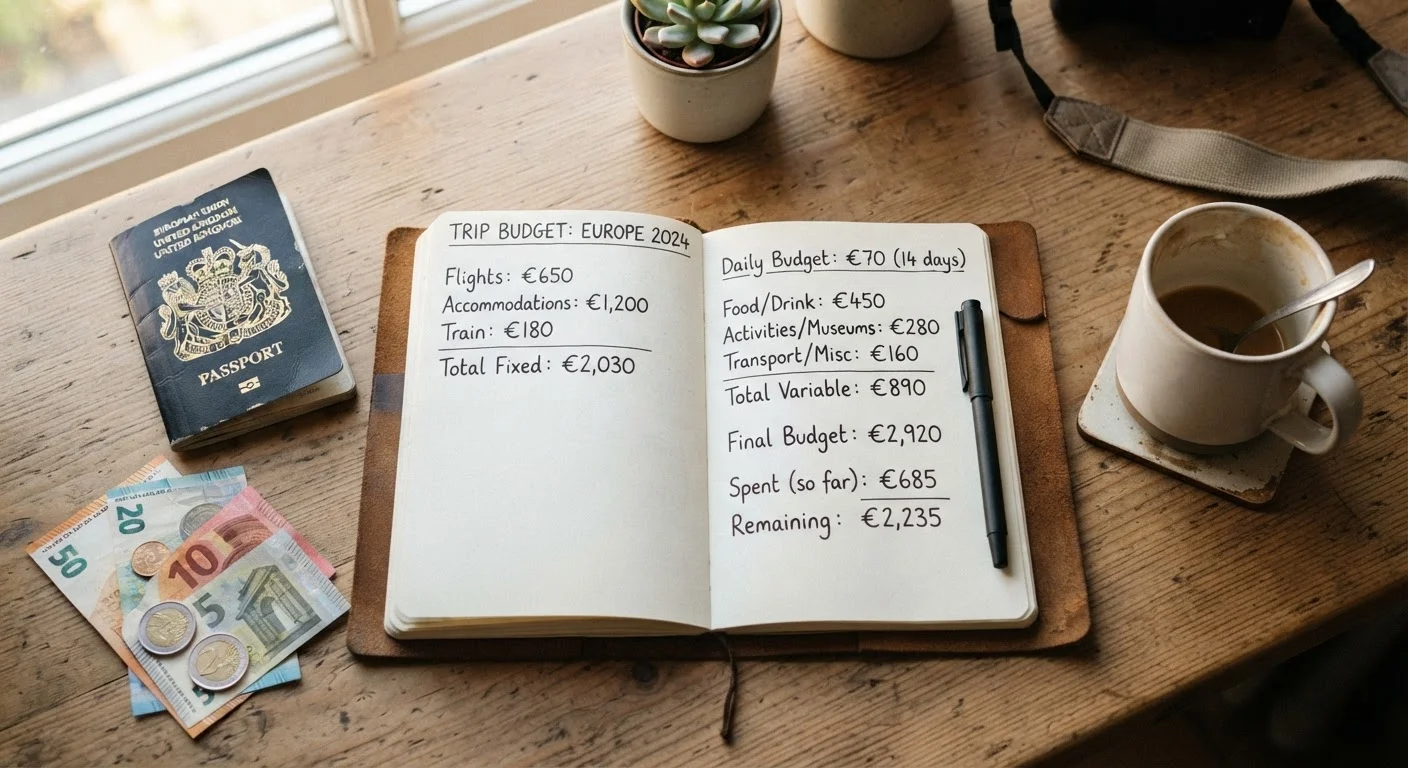
Solo travelers absorb 100% of fixed costs - a private room, a taxi, a tour. Those costs don't scale with company. Groups can split fixed costs, which can make certain experiences more accessible, but coordination overhead introduces its own costs: group discounts require advance booking minimums, shared accommodation needs more lead time, and disagreements about spending levels can fracture a group's dynamic entirely.
The practical move for groups is to establish a shared expense framework before departure - not just a rough budget, but a clear agreement on which expenses are pooled versus individual. For the booking mechanics involved, group booking logistics covers how reservations work differently at scale. Solo travelers, by contrast, should focus on minimizing fixed daily costs since there's no one to share them with.
3-5x
Longer decision time in groups vs. solo
Travel logistics research consistently shows that collective decision-making in informal groups takes significantly longer than individual choices, particularly under time pressure.
40-60%
Of group trips cite scheduling as top friction point
Survey data from group travel platforms frequently identifies schedule disagreements and pacing mismatches as the leading source of conflict on multi-person trips.
Decision-Making: Governance Matters More Than You'd Think
Solo travel is frictionless by definition - every preference is the group preference. Group travel without a designated decision-maker routinely stalls. Someone needs to hold the role of logistics lead: the person who makes the final call when consensus breaks down, confirms bookings, and keeps the group on schedule. This isn't about authority - it's about operational efficiency.
This governance question also affects activity selection. A solo traveler can build an itinerary entirely around one defining central experience without compromise. A group needs to identify that anchor experience collectively - and then assess whether every other element of the itinerary supports or competes with it. That pre-trip alignment conversation is what separates smooth group travel from exhausting group travel.
For adventure-focused trips, this distinction is even more pronounced. Guided versus independent adventure travel introduces another layer: whether a third-party guide absorbs some of the group decision-making burden, which can be worth the cost in high-stakes environments.
Flexibility Windows: How Much to Leave Open
Both formats benefit from unscheduled time - the question is how much and where to place it. Solo travelers can build very lean schedules and trust themselves to navigate gaps. For groups, unscheduled time needs to be deliberately placed mid-afternoon or as full half-days, since exhaustion and disagreement tend to peak in those windows.
A useful rule for group itineraries: schedule firmly in the mornings, loosely in the afternoons, and never over-program the last full day of any trip. That final day is where logistics crunch - packing, checkout, transfers - and trying to squeeze in one more activity reliably causes friction. For travelers considering whether to use a structured package versus a self-built plan, the trade-offs between packages and DIY planning are worth reviewing - packages impose a fixed structure that removes some flexibility decisions entirely, which some group travelers find genuinely useful.