
What You're Actually Signing Up For
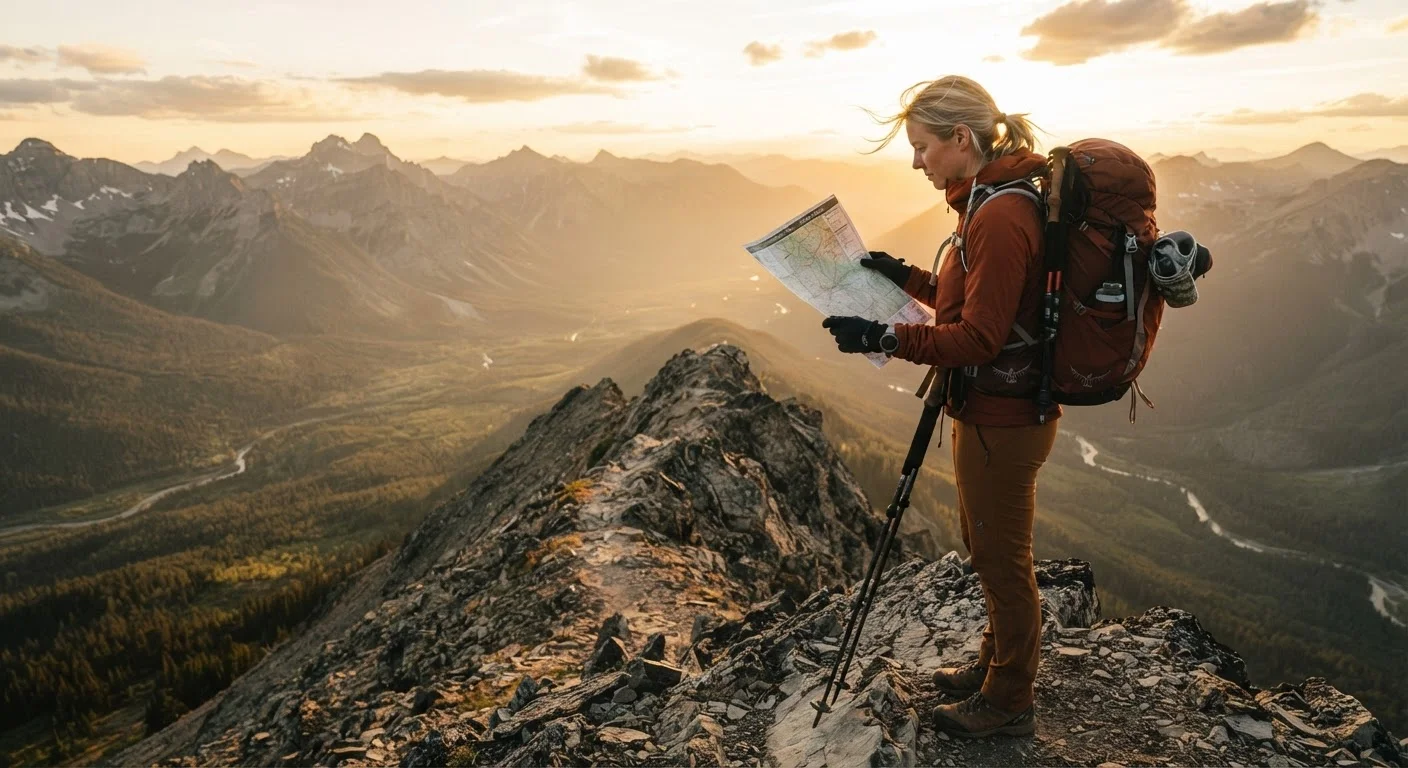
Solo adventure travel sounds like pure freedom - and in many ways, it is. But the image of a lone figure striding confidently into the backcountry glosses over the considerable mental, logistical, and physical weight that comes with removing your safety net. Before committing to this style of travel, it's worth understanding what adventure travel actually encompasses - because the spectrum from guided soft trekking to independent technical mountaineering changes everything about what preparation looks like.
The honest reality is that every decision lands on you alone: route selection, weather calls, medical emergencies, gear failures, and the judgment to turn back when conditions shift. That weight is also what makes the experience transformative.
Total autonomy over pace, route, and decisions
Without coordinating with anyone else, you can extend a rest day, abandon a planned route, or pivot entirely based on what you find on the ground. This kind of responsiveness to conditions and curiosity is genuinely hard to achieve in a group.
Deeper self-reliance and measurable personal growth
Navigating challenges alone - logistical, physical, or emotional - builds a form of confidence that transfers well beyond travel. Many experienced solo adventurers describe it as one of the most reliable methods of self-assessment they've found.
Stronger organic connections with locals and fellow travelers
Solo travelers lack the social buffer of a group, which consistently leads to more spontaneous and authentic interactions with people along the way. Shared meals, navigation help, and unexpected hospitality happen more readily when you're visibly on your own.
Unfiltered immersion in the environment
With no one else to manage, your attention is entirely on your surroundings - the terrain, the wildlife, the culture. Many solo travelers report a heightened quality of presence that feels difficult to sustain in social travel contexts.
Full ownership of every success and setback
When you summit, navigate, or solve a problem entirely on your own terms, the experience registers differently. There's no shared credit and no distributed responsibility - which sharpens both the reward and the lesson.
The Real Tradeoffs: Where Solo Adventure Travel Falls Short
No honest assessment of solo adventure travel skips the hard parts. Some of these friction points are manageable with preparation; others are structural realities of going alone.
No backup in genuine emergencies
Remote backcountry emergencies - injuries, severe weather, medical episodes - are exponentially more dangerous without a companion. A satellite communicator and rescue insurance mitigate this risk, but they don't eliminate it.
Higher per-person costs across most categories
Guide fees, gear rentals, permits, accommodation, and transport rarely discount for solo travelers, and many add explicit single supplements. The financial load of adventure travel hits harder when no one shares it.
Decision fatigue with no one to consult
Every logistical and safety judgment - route changes, weather calls, when to turn back - rests entirely with you. Over a long trip in challenging terrain, the cumulative weight of solo decision-making can be genuinely draining.
Periods of loneliness and low morale are harder to manage
Difficult days in remote environments are significantly harder without social support. Extended isolation, especially during physical hardship or adverse conditions, can affect judgment and motivation in ways that group dynamics buffer.
Permit restrictions and access limitations in some regions
Certain trekking routes, national parks, and technical terrain require minimum group sizes or have restrictions that effectively preclude solo travel without engaging a guide. This narrows independent options in ways that require advance research.
Costs are a particularly underappreciated barrier. Without a partner to split guide fees, permit costs, or gear rentals, solo travelers absorb the full financial load. The hidden costs of adventure travel - from rescue insurance to altitude medications - are real expenses that don't scale down when you travel alone.
Safety is the other non-negotiable. In remote environments, an injury that would be manageable with a companion - a twisted ankle on a trail two days from a trailhead - becomes a genuine emergency. Filing a detailed trip plan with a reliable contact, carrying a satellite communicator, and purchasing comprehensive rescue insurance aren't optional flourishes; they're table stakes for responsible solo travel in backcountry terrain.
~70%
Solo travelers who report underestimating trip logistics
Adventure travel operators consistently note that solo travelers, regardless of experience level, frequently underestimate the planning complexity of remote independent travel.
2-3x
Typical cost multiplier versus group travel
Industry estimates suggest solo adventure travelers commonly pay two to three times the per-person cost of equivalent group itineraries once single supplements, solo guide rates, and undivided gear costs are factored in.
Guided vs. Independent: A Decision That Shapes Everything
One of the most consequential choices a solo adventure traveler makes is whether to travel independently or join a guided framework. This isn't purely a budget decision. Guided and independent adventure travel differ in fundamental ways - safety backup, cultural access, flexibility, and the texture of the experience itself all shift depending on your approach.
For solo travelers specifically, a guided expedition can solve the safety-in-numbers problem without requiring you to travel with a fixed companion. It also opens access to destinations and technical terrain where solo permits may be restricted or where local knowledge is effectively mandatory - remote regions of off-grid Asia, for example, where route conditions, permits, and local protocols change frequently.
A Note on Safety Infrastructure
Solo adventure travel in remote terrain requires safety systems that go beyond what most travelers use domestically. A satellite two-way communicator (such as a personal locator beacon or messenger device), a detailed trip plan filed with a trusted contact, and comprehensive rescue and medical evacuation insurance are considered standard preparation by experienced backcountry travelers. Verify current permit requirements, entry rules, and any local safety regulations with official government sources before departure, as these change and vary significantly by destination.
Why Experienced Travelers Keep Coming Back to It
Despite the demands, solo adventure travel has a loyal following for good reason. The autonomy is real: you eat when you want, pivot when conditions or curiosity call for it, and never negotiate an itinerary with anyone. Every success - summit reached, river crossed, navigation problem solved - belongs entirely to you, and the confidence that accumulates over repeated solo trips is difficult to replicate through any other kind of travel.
There's also a social paradox at work. Solo travelers are far more likely to connect genuinely with locals and fellow travelers than those moving through destinations in insular groups. Without a built-in social buffer, you're pushed into conversations, shared meals, and encounters that simply don't happen the same way when you're already part of a unit.
For a different take on what solo travel looks like without the wilderness component, solo road trips carry their own version of this dynamic - freedom and friction in equal measure. And if structured solo travel appeals to you more than raw independence, it's worth exploring how solo cruising compares as an alternative framework.