

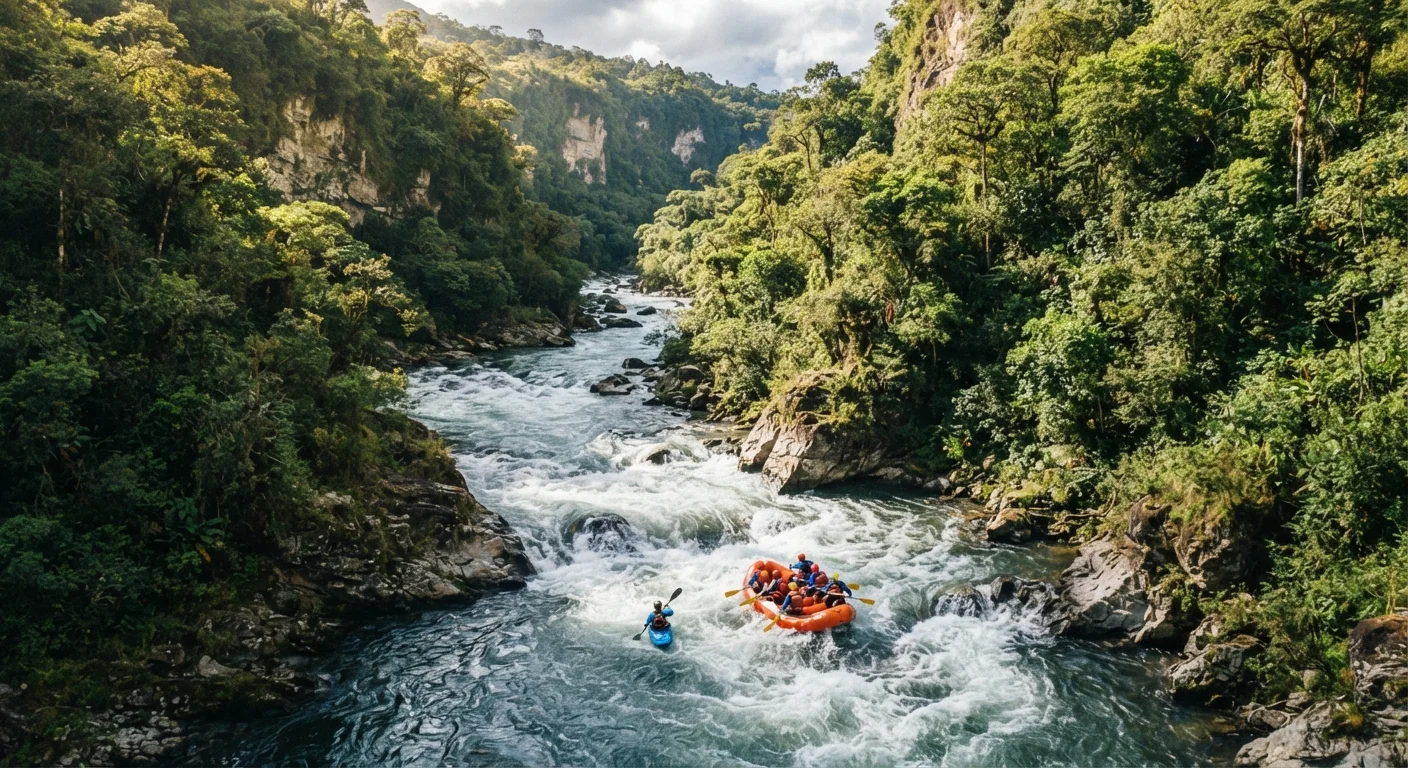
What Actually Separates These Two River Disciplines
At first glance, both activities share the same raw ingredient: fast-moving water. But the experience inside that water diverges sharply. In white-water rafting, a group of four to eight people sits in a large inflatable raft, following paddle commands from a professional guide positioned at the stern. The collective power of the crew - combined with the guide's river-reading expertise - propels and steers the craft. Responsibility is distributed; the guide carries the technical burden.
Kayaking places that entire responsibility on a single paddler in a purpose-built boat shaped to respond to body weight, blade angle, and nuanced water reading. There is no guide to call out strokes. A kayaker must independently identify the safest line through a rapid, execute precise bracing and rolling techniques, and self-rescue if capsized. That demand is exactly what makes it compelling to skill-focused adventurers.
| Criterion | White-Water Rafting | Kayaking |
|---|---|---|
| Crew size | 4-8 people per raft | Solo paddler |
| Skill barrier to entry | Low - guide leads | Moderate to high - self-directed |
| Technical learning curve | Minimal for passengers | Significant; ongoing progression |
| Self-rescue requirement | Not required from participants | Essential; roll technique critical |
| River access range | Commercial routes; wide rapids | Narrow creeks to open rivers |
| Gear management | Provided by outfitter | Personal investment required |
| Suitable rapids class | Class II-V with guide | Class I-VI by skill level |
For travelers already comfortable with guided river experiences - perhaps through European river journeys - white-water rafting is a natural escalation of intensity on moving water.
Risk, Safety, and the Rapids Rating System
Both disciplines use the International Scale of River Difficulty, which grades rapids from Class I (gentle riffles) to Class VI (widely considered un-runnable without extreme risk). Knowing this scale is essential before committing to any trip.
Class I-VI
International rapid difficulty scale
The International Scale of River Difficulty, recognized across most paddling nations, provides a standardized framework for communicating hazard level.
4-8°C
Cold-shock risk water temperature threshold
Water at or below this range significantly increases cold-water shock risk; thermal protection becomes critical regardless of air temperature or swimmer fitness.
Class III
Typical entry point for commercial rafting
Most commercial guided rafting operations on popular adventure rivers run Class III-IV rapids, balancing accessible excitement with manageable risk for guided groups.
Rafting guides are trained specifically for their river and typically hold swift-water rescue certifications. This institutional safety net dramatically reduces individual exposure on Class III-IV rapids. That said, no raft is risk-free: foot entrapment, hydraulic recirculation, and collisions with rocks remain real hazards. Always verify that any commercial outfitter operates under recognized certification standards - requirements vary by country and jurisdiction, so research local regulatory bodies before booking.
Kayakers bear greater personal responsibility. A reliable roll - the technique that rights a capsized kayak without exiting the boat - is considered non-negotiable before paddling anything beyond Class II. Most whitewater kayaking instructors recommend formal pool sessions and flatwater progression before approaching moving water. Helmets and personal flotation devices are mandatory in both activities; dry suits or wetsuits are essential depending on water temperature, which can cause cold-water shock regardless of air conditions.
Safety considerations are general in nature. Always consult certified instructors, verify outfitter credentials, and check current river conditions and official advisories before participating in any whitewater activity.
Choosing Your River Experience: Practical Factors
Several practical dimensions shape which discipline fits a given trip.
- Trip duration and commitment: A single-day rafting excursion requires no prior preparation beyond a safety briefing. Learning to kayak confidently typically involves multiple sessions spread over weeks or months.
- Gear and cost structure: Commercial rafting includes all equipment in the trip fee. Kayaking, once pursued independently, requires a meaningful investment in boat, paddle, helmet, PFD, and safety gear - though rental options exist at many paddling centers for initial exploration.
- Social dynamic: Rafting is inherently communal; the shared effort and collective reaction to a big rapid creates powerful group memories. Kayaking is largely solitary, even when paddled with companions who run the same line separately.
- River access: Large rafts require put-in and take-out logistics, usually managed by outfitters. Kayaks can be portaged by one person, opening access to remote creek runs and wilderness sections that commercial trips never touch.
The spirit of choosing between these two experiences mirrors broader adventure travel decisions - much as expedition voyagers weigh independent exploration against structured itineraries. See our look at expedition cruising versus classic cruising for a parallel framework applied to sea-based adventure travel.
A Note on River Conditions and Seasonality
River grade is not static. Snowmelt in spring can push a Class III river to Class V conditions within hours, while late-summer low water can expose hazardous rocks on normally forgiving runs. Always check current gauge readings, recent trip reports, and any regional flood or drought advisories before your launch date. Outfitters operating on a specific river will typically have real-time insight into conditions - consult them directly.