
Scale, Solitude, and the Atlantic in Between
The Faroe Islands and Iceland share a biography written in Norse settlement, sea wind, and geological drama - yet standing in Tórshavn's colored harbor rows feels nothing like standing on Reykjavík's Laugavegur street, even in October. One is an archipelago of 18 islands where roughly 55,000 people live; the other a country of around 380,000 that now hosts more than two million visitors a year.
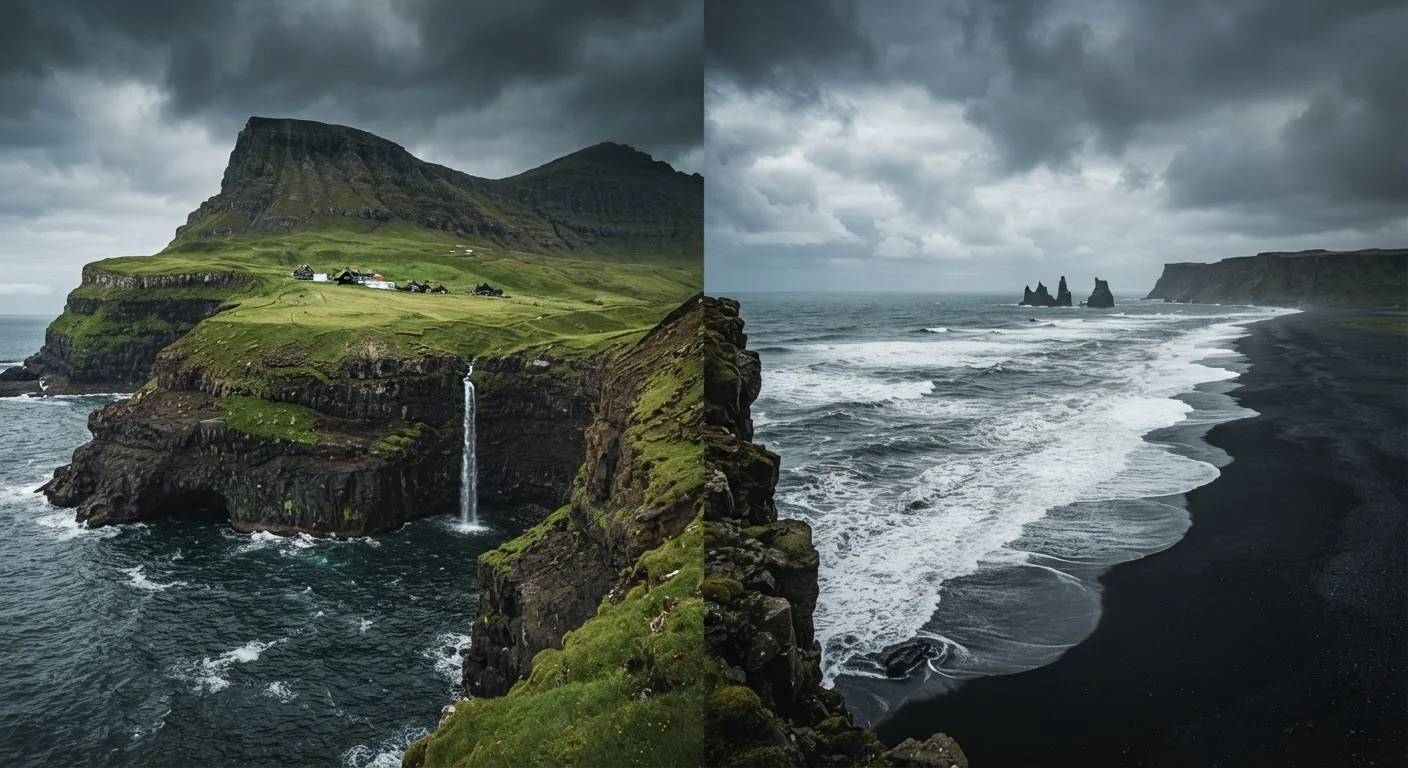
That gap in tourist volume is not a minor footnote. In practice, it means that hiking to the cliffs above Gásadalur on Vágar Island will feel like a private encounter with the Atlantic, while the trail to Iceland's Skógafoss waterfall in summer can feel closer to a pilgrimage queue. Neither experience is wrong - they simply answer very different questions about what travel is for.
| Criterion | Faroe Islands | Iceland |
|---|---|---|
| Annual visitors | Under 150,000 | Over 2 million |
| Flight access | Limited European routes | Direct flights from North America & Europe |
| Self-drive ease | Moderate (some tunnels, ferries needed) | High (Ring Road well maintained) |
| Landscape type | Sea cliffs, fjords, green highlands | Volcanoes, glaciers, geothermal plains |
| Crowd levels on trails | Very low | Moderate to high in summer |
| Accommodation range | Limited; book early | Extensive, from guesthouses to hotels |
| Best season to visit | May-September | Year-round (aurora season: Oct-Mar) |
Getting There: The Logistics Gap Is Real
Iceland wins on access without contest. Keflavík International Airport sits roughly 50 kilometers from Reykjavík and serves direct routes from across North America and Europe. Once there, the country's Route 1 - the Ring Road - circles the island's perimeter in roughly 1,332 kilometers, making independent self-drive travel straightforward for most visitors.
The Faroe Islands demand more planning. Vágar Airport receives a growing number of direct European connections, but options from North America typically require a routing through Copenhagen, London, or Reykjavík. Alternatively, the Smyril Line ferry from Hirtshals, Denmark, takes roughly 36-40 hours - a slow crossing that many travelers find becomes part of the experience itself. For those who want to combine both destinations in a single journey without the layover juggling, expedition-style cruising is increasingly popular, with small-ship operators routing through both archipelagos on the same North Atlantic voyage.
450 mi
Distance between the two archipelagos
The Faroe Islands and Iceland sit roughly 450 miles apart in the North Atlantic, making combined itineraries logistically feasible.
36-40 hrs
Smyril Line ferry crossing to the Faroes
The Smyril Line ferry route from Hirtshals, Denmark to Tórshavn is the primary sea connection to the Faroe Islands.
882 m
Height of Enniberg cliff, Faroe Islands
Enniberg, on the island of Viðoy, is among the tallest sea cliffs in the world at approximately 882 meters.
Landscape Character: Green Cliffs vs. Volcanic Plains
Iceland's geological resume is dense: active volcanoes, the Mýrdalsjökull and Vatnajökull ice caps, the Mid-Atlantic Ridge visible at Þingvellir, geothermal hot springs tucked into river valleys. For travelers motivated by landscape diversity, Iceland is genuinely hard to rival - it's one reason it appears in comparisons like Patagonia, Iceland, and Kyrgyzstan as premier wilderness trekking destinations.
The Faroes deal in a different kind of beauty - dense, vertical, and oceanic. The islands are defined by sea cliffs that drop hundreds of meters to churning Atlantic swell, narrow fjords that amplify the sound of wind, and turf-roofed farmhouses that appear to grow out of the hillsides. Mykines island, accessible by a short ferry or helicopter, hosts one of Europe's great seabird colonies. The optical illusion of Sørvágsvatn - a lake that appears to hover above the sea - has become one of the North Atlantic's most photographed natural features, though it still draws far smaller crowds than Iceland's comparable landmarks.
Cultural Texture and Practical Considerations
Both destinations carry layers of Norse heritage, but they have evolved differently. Iceland has a deeply literary culture - the Eddic sagas were composed here, and Reykjavík holds UNESCO Creative City of Literature status. The Faroese maintain their own distinct language, a living descendant of Old Norse, alongside a tradition of village-level community that makes even brief encounters with locals feel genuinely unhurried.
Practical considerations differ, too. Iceland is more expensive than most European destinations; the Faroes similarly so. Weather in both can shift from clear skies to horizontal rain within an hour - layered, waterproof gear is non-negotiable in either place. Travelers considering broader North Atlantic routing should also explore how Norwegian fjord cruise routes and seasonal daylight patterns interact with a Faroe or Iceland add-on.
Responsible Travel in Fragile Ecosystems
Both the Faroe Islands and Iceland have introduced visitor management measures to protect sensitive landscapes. The Faroes operate a 'Closed for Maintenance, Open for Voluntourism' program on certain trails during spring. In Iceland, fines apply for driving off designated roads, particularly on fragile highland terrain. Checking current rules with official tourism authorities before visiting is strongly recommended.
For those focused specifically on trekking, Iceland's trail infrastructure is better marked and more frequently maintained, while Faroese trails sometimes require a local guide or detailed offline mapping. Always verify trail conditions, entry requirements, and travel advisories with official government sources before departure, as conditions vary significantly by season.