
Why Season Defines the Fjord Experience
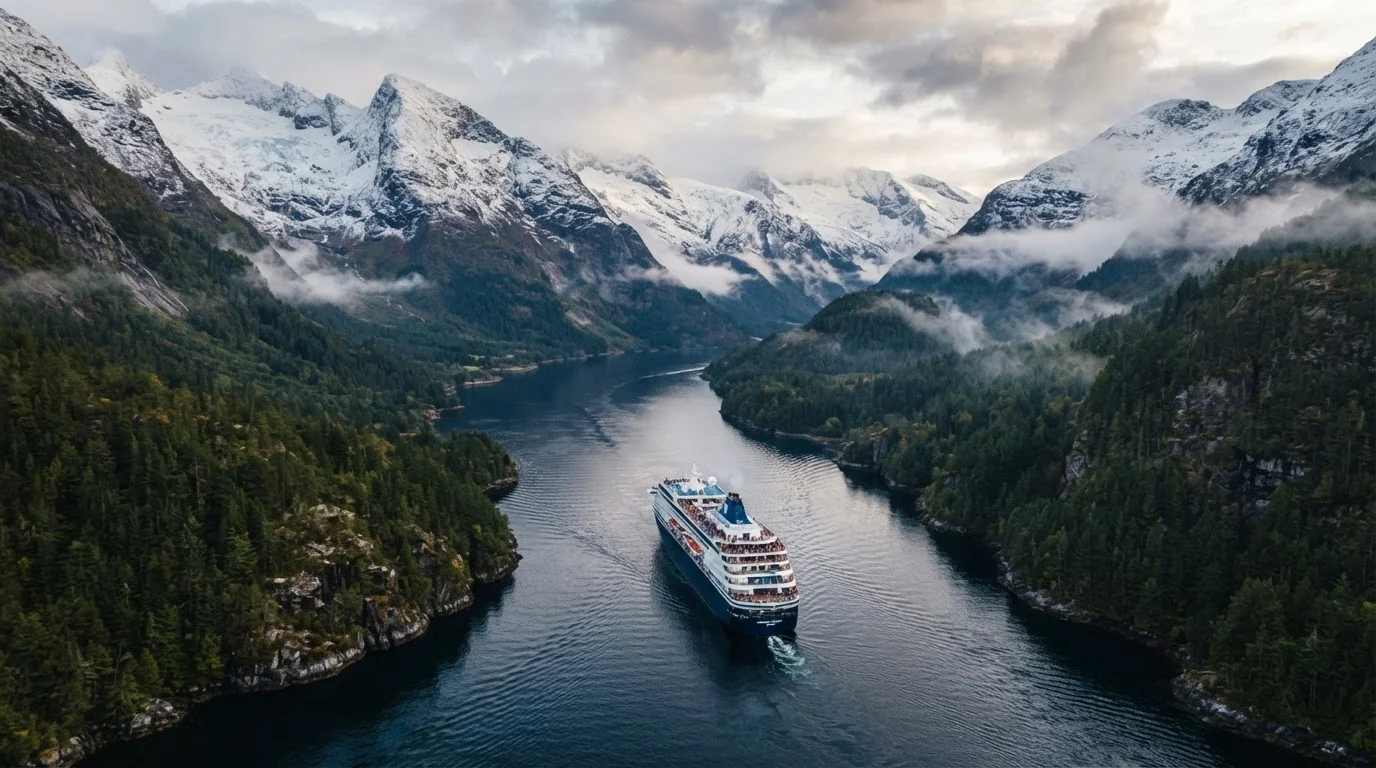
Norwegian fjord cruises are not a single, consistent product. The same Sognefjord passage looks profoundly different in early May-when snowmelt swells waterfalls to their most dramatic-versus late July, when the hillsides are lush and ferry traffic is at its height. Season isn't just a scheduling detail; it shapes the visual character of the landscape, the behavior of wildlife, the crowd levels at every tender port, and even which anchorages ships can access.
The core season runs from late April through September, though the shoulders of that window behave very differently from the peak weeks of June, July, and early August. Winter sailings exist-typically marketed around the northern lights-but they operate on fundamentally different itineraries with limited daylight and selectively open port infrastructure. Understanding that distinction upfront prevents the most common planning mistake: booking a standard western fjord itinerary and expecting aurora activity that only materializes well above the Arctic Circle.
Check Scenic Transit Times Before Booking
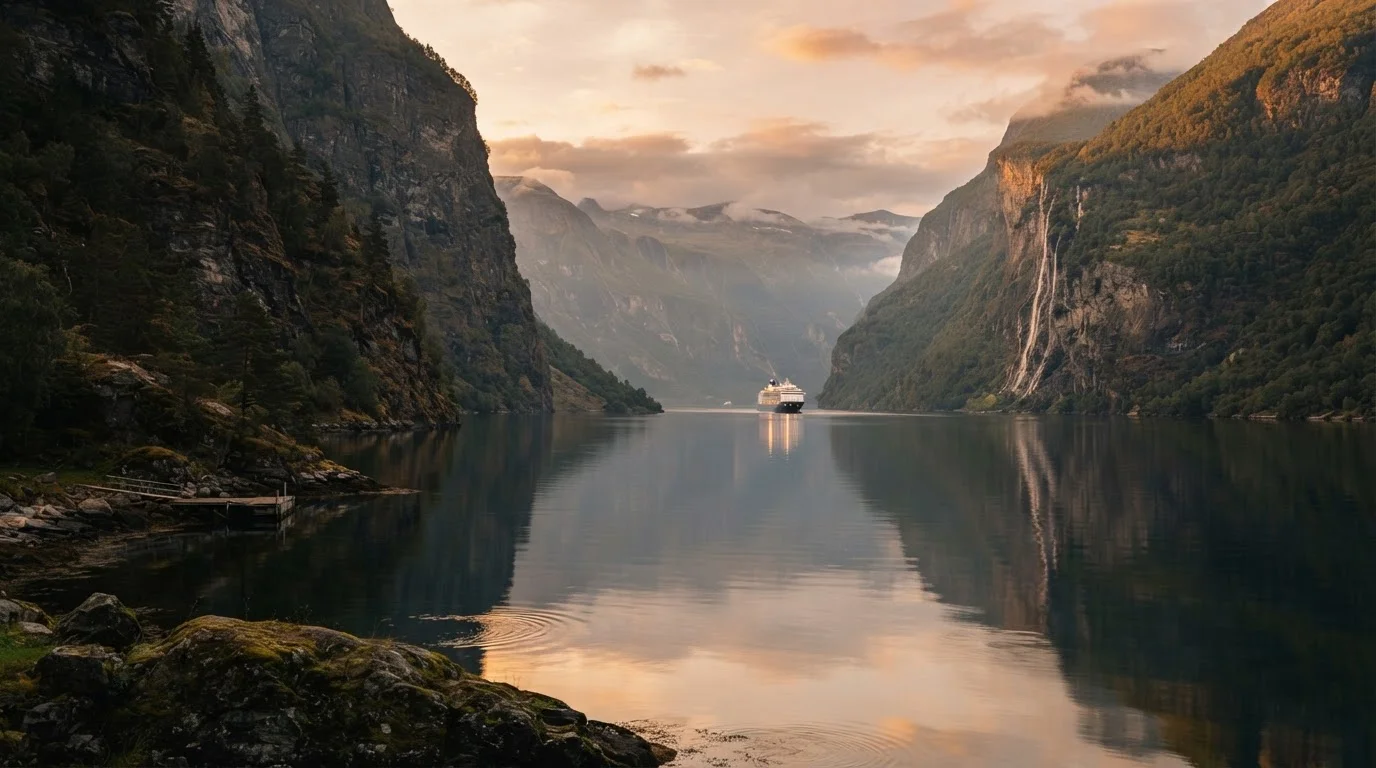
Request or look up the ship's sample daily schedule for the specific itinerary before committing. Fjord transit through Geirangerfjord, Nærøyfjord, or the Lysefjord is often the visual highlight of the sailing-but if it occurs at 5 a.m., most passengers miss it entirely. Some itineraries schedule these passages for early morning precisely to manage port logistics, not passenger experience.
For travelers focused on seasonal climate strategy beyond fjords, this seasonal planning guide provides a useful framework for thinking across regions.
Daylight Hours: The Variable Most Travelers Underestimate
Daylight is arguably the single most consequential variable in fjord cruising, and it operates on a spectrum that many travelers don't fully map before departure.
~20 hrs
Usable daylight in Bergen at midsummer
At roughly 60°N latitude, Bergen experiences near-continuous light around the June solstice, with civil twilight extending past midnight.
204 km
Length of the Sognefjord
The Sognefjord is the longest fjord in Norway and the second longest in the world, making it the centerpiece of many extended western fjord itineraries.
Nov-Feb
Optimal northern lights window
Aurora activity requires dark skies and clear conditions; high-latitude sailings specifically targeting the northern lights typically depart between November and February.
In Bergen and the western fjords (roughly 60°N latitude), midsummer days run well past 11 p.m. in terms of usable light-enough to photograph waterfalls at 9 p.m. from a ship deck. By mid-September, sunset arrives before 8 p.m. and atmospheric haze can reduce visibility in the deeper, narrower passages. By contrast, itineraries routed to Tromsø, Svalbard, or the North Cape-typically above 70°N-experience the midnight sun phenomenon in full from late May through late July. This is a categorically different experience: continuous daylight that disorients sleep schedules, eliminates the concept of a scenic "golden hour," and makes the landscape feel almost surreal.
Winter sailings chasing the northern lights require clear, dark skies-meaning departures between November and February and destinations at high northern latitudes. These itineraries are explicitly structured around aurora viewing; they are not fjord scenic cruises in the conventional sense. Travelers who conflate the two itinerary types consistently report disappointment in one direction or the other.
Pull the ship's published daily schedule before finalizing a booking-not just the port list. The transit times through Geirangerfjord or Nærøyfjord matter as much as the port calls themselves.
Many travelers discover after boarding that the most scenic fjord passages happen before dawn or after dinner. Reviewing the daily schedule in advance allows you to choose sailings where key transits occur during daylight hours.
If seeing waterfalls at full volume is a priority, target departure dates in the first three weeks of May rather than peak July-snowmelt drives the most dramatic flows.
Waterfall intensity in Norwegian fjords is directly tied to snowmelt from the surrounding mountains. By mid-summer, many of the smaller cascades visible in May have reduced significantly.
Route Structures: What's Actually Different Between Itineraries
Norwegian fjord itineraries divide broadly into three structural categories, and recognizing the differences prevents significant misalignment between expectation and experience.
Classic Western Fjord Loops
Most 7-night itineraries departing from Copenhagen, Amsterdam, or Hamburg include Bergen as a primary port, then navigate into the Hardangerfjord or Sognefjord (the world's longest fjord) before returning. These round-trips are designed around port calls rather than scenic transit-the ship often navigates the most dramatic passages overnight, meaning guests who want to see specific fjords from the deck need to check the sailing schedule carefully before booking.
One-Way Norway Coastal Itineraries
Longer itineraries-typically 10 to 14 nights-often sail one-way from a northern German or Danish port to a UK turnaround, or vice versa. These routes allow more time in Norwegian waters and may include less-visited fjords such as the Lysefjord (above which the famous Preikestolen cliff sits) or the Nordfjord. Because they don't double back, they cover more geographic ground and typically include a wider mix of port sizes, from Ålesund's Art Nouveau architecture to smaller tender-only stops. It's worth noting that ship class and size matter enormously here-smaller expedition-style vessels can access fjord anchorages that large ocean ships physically cannot.
High-North Arctic Itineraries
These sailings target Tromsø, Svalbard, and the North Cape as destination highlights rather than fjords per se. The fjord scenery exists, but the draw is wildlife-polar bears, walruses, seabirds-and extreme latitude. Expedition ships dominate this segment. The experience has more in common with a structured exploration itinerary than with a classic scenic cruise.
Shoulder Season Fjord Cruising: Honest Trade-offs
May and September both offer genuine advantages for experienced travelers willing to accept some variability. May delivers the most dramatic waterfall displays-snowmelt from the mountains creates cascades that simply don't exist in August-and morning light on still water produces some of the most photographically striking fjord conditions of the year. Crowds at tender ports are noticeably lighter, and the hillsides retain a vivid spring green before summer haze settles in.
September Access Is Not Guaranteed
Some of the most popular viewpoint hiking routes in Norway-including paths above certain fjords-close seasonally or have weather-dependent access in September. Tender port operations may also be reduced. Don't assume that a port appearing on the itinerary translates to full shore access in shoulder season; verify with the cruise line which excursions are available during your specific sailing dates.
September brings its own appeal: early autumn colors begin appearing on the mountainsides from mid-month, and sailing conditions are often calmer than in the wind-prone early spring. However, some smaller ports reduce their tender schedules, certain hiking routes (including access paths to popular viewpoints) may still be closed after summer, and weather windows are less predictable.
For a more structured approach to shoulder-season decision-making, this guide on shoulder-season cruise planning addresses how to evaluate specific routes against seasonal trade-offs. The core discipline is the same: identify which experiences are non-negotiable, then map those against what each month reliably delivers-and what it doesn't.
Travelers drawn to the Atlantic edges of Scandinavia should also note that the Faroe Islands and Iceland represent markedly different journeys from the Norwegian fjord circuit, with their own seasonal logic.
Practical Considerations Before You Book
A few factors consistently catch first-time fjord cruisers off guard, regardless of season.
Tender Ports vs. Dockside Ports
Many of the most scenic fjord stops-Flåm, Geiranger, Eidfjord-require tender boats to reach shore. Tender operations depend on weather and sea conditions. On rough days, ships may bypass tender ports entirely. This is standard practice, not a booking error, but it changes the itinerary meaningfully.
Shore Excursion Timing
The Flåm Railway, the Nærøyfjord boat tour, and Preikestolen hike access are among Norway's most in-demand experiences. Availability on the day depends on how many ships are in port simultaneously-a factor not disclosed in most itinerary descriptions. Peak weeks in July can see multiple large ships in Flåm simultaneously.
What the Ship Actually Navigates
Scenic fjord transit is not guaranteed to coincide with waking hours. Check the ship's daily schedule before sailing to identify when the vessel transits the passages you most want to see-and plan accordingly.
Verify Entry and Port Conditions Independently
Port schedules, entry requirements, and local access conditions in Norway can change due to weather, infrastructure, or policy. Always check current travel advisories through official government sources (such as the U.S. State Department) and confirm current access with your cruise provider well in advance of departure. This article provides general planning information only.
Entry requirements, port access conditions, and local regulations can change. Always verify current visa, health, and travel advisory information with official government sources and your cruise provider before travel.