
Two States, One Overlooked Interior
Most travelers who venture beyond Yangon and Mandalay head for Inle Lake or Bagan. Fewer still push into the highlands that press against Myanmar's western and eastern borders - the deeply folded hill country where the country's ethnic diversity is most concentrated and most intact. Kayah State and Chin State represent two distinct chapters of that interior story, separated by geography, cultural lineage, and the practicalities of getting in.
Both states sit well outside the standard tourist circuit. Both require special travel permits - a system that has historically been administered through Myanmar's immigration authorities, though conditions change and travelers should verify current requirements with their embassy and local operators before making any plans. What separates them is the texture of the experience and the scale of commitment each demands.
For context on how similar dynamics play out across other restricted highland regions of Asia, see our piece on India's northeastern states, where permit systems and ethnic diversity create comparably layered travel decisions.
Kayah State: Loikaw as a Gateway to Kayan Culture
Kayah State's capital, Loikaw, is reachable by domestic flight - a short hop from Yangon - which immediately distinguishes it from the deep overland odysseys required elsewhere in Myanmar's interior. The city itself is modest, set on a landscape of gentle ridges and reservoirs, but it serves as a functional base for exploring the surrounding villages.
The state is home primarily to the Kayan and Kayah peoples, and it is the Kayan sub-group - sometimes called Padaung - whose women's practice of wearing brass neck rings has drawn outside attention. That attention carries an ethical weight: visitors should engage through community-led experiences that respect the agency of the women involved, rather than approaching the tradition as spectacle.
| Criterion | Kayah State | Chin State |
|---|---|---|
| Main access point | Loikaw (domestic flight available) | Mindat / Kanpetlet (overland only) |
| Permit complexity | Required; relatively streamlined | Required; village-specific, more involved |
| Journey difficulty | Moderate | High - rough roads, multi-day travel |
| Primary ethnic groups | Kayan, Kayah, Kayaw | Dozens of Chin sub-tribes |
| Trekking opportunities | Light to moderate village routes | Serious multi-day hill treks |
| Accommodation | Basic guesthouses and homestays | Homestays; very limited guesthouses |
| Visitor numbers | Very low | Exceptionally low |
| Cultural signature | Kayan brass neck rings, New Year festivals | Chin facial tattoos, village textile traditions |
Beyond the Kayan communities, Kayah State offers boat trips on Mobye Reservoir, cycling routes between hill villages, and the striking Kayan New Year festivals, typically held in early spring, where traditional dress and dance remain vivid and actively practiced. The permit process, while still required, has historically been handled with relative efficiency through licensed local guides.
Chin State: The Chin Hills and a Fading Tradition
Reaching Chin State demands considerably more from a traveler. The main approach is via Bagan or Mandalay to Kalay, then overland south toward Mindat - a journey measured in hours of rough road rather than flight minutes. The town of Mindat, perched at around 1,400 meters, is one of the more accessible entry points into the Chin Hills proper, and even it feels genuinely remote.
The Chin people are not a single group but a constellation of dozens of sub-tribes, each with distinct languages, textile traditions, and social customs. The practice of facial tattooing - once widespread among Chin women, believed by some accounts to have served protective or identity functions - now exists almost exclusively among elderly women in certain villages around Mindat and Kanpetlet. It is a tradition that will not outlast this generation, and the responsibility of encountering it thoughtfully cannot be overstated.
Engaging Sensitively with the Chin Tattoo Tradition
The facial tattooing practiced by older Chin women is a deeply personal cultural expression, not a tourist attraction. Photographing individuals without explicit, unhurried consent is inappropriate, and framing the tradition as a curiosity diminishes its meaning. Traveling with a guide who has genuine community relationships - rather than one who simply knows the route - makes a meaningful difference to both the experience and its impact on the communities visited.
Trekking between villages in the Chin Hills is physically demanding and requires a registered guide. Trails connect communities at varying elevations through forest and open ridge, offering a walking experience with almost no infrastructure - which is precisely its appeal for travelers who have already explored more organized highland routes elsewhere in Asia. Those drawn to similarly restricted highland trekking may find resonance in Upper Mustang's walled canyon landscapes or the quieter districts covered in our guide to Bhutan's eastern dzongkhags.
Practical Realities: Access, Permits, and Safety
Any honest account of travel to either state must begin with a candid note on the political situation in Myanmar. Since the military coup in February 2021, conditions across the country have been volatile and uneven, with conflict affecting multiple states including, at various points, both Kayah and Chin. Travelers must consult their government's official travel advisory - and re-consult it close to departure - before making any plans. This article is general background, not a real-time safety assessment.
135+
Officially recognized ethnic groups in Myanmar
Myanmar's government recognizes over 135 distinct ethnic nationalities, with Chin and Kayah states among the most ethnically diverse regions in the country.
~1,400m
Elevation of Mindat town, Chin State
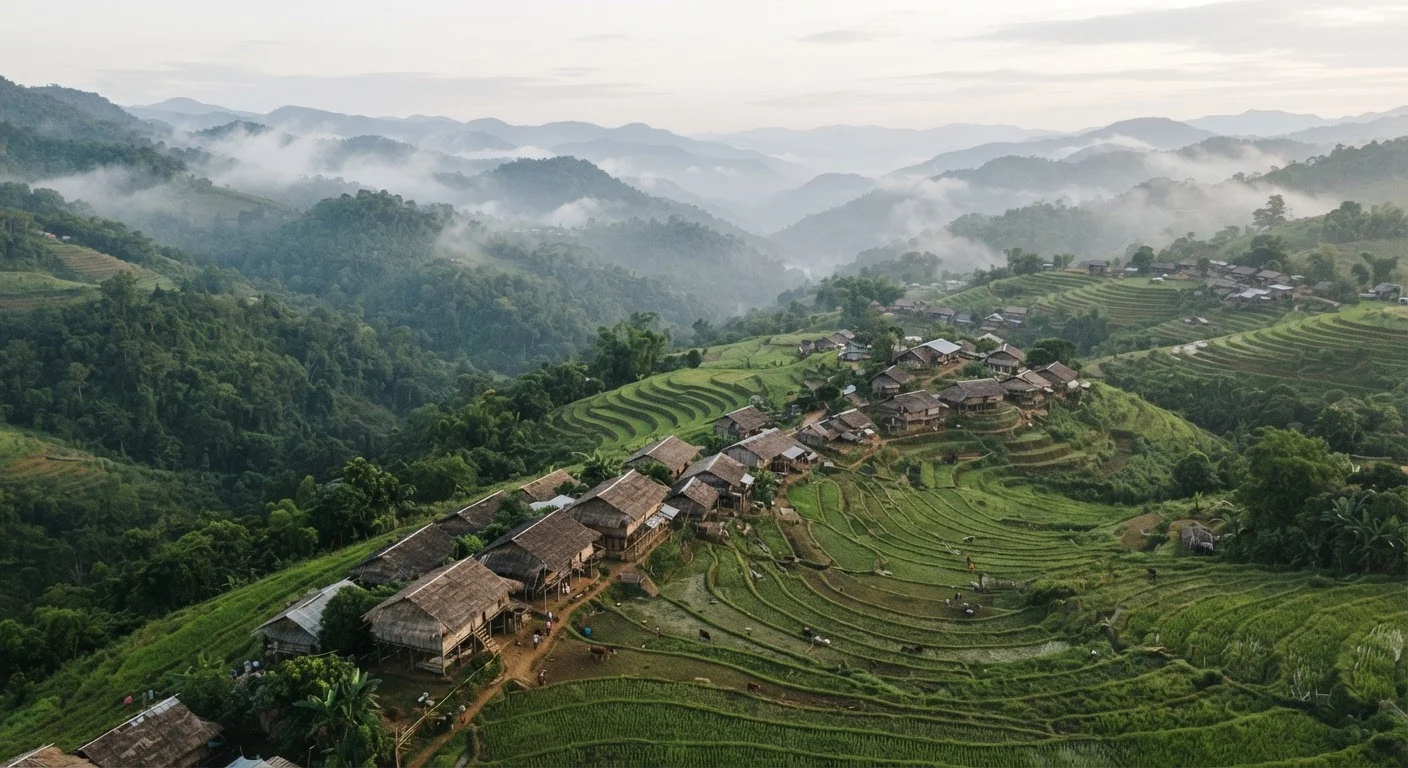
Mindat sits at roughly 1,400 meters above sea level, contributing to cooler temperatures and the misty highland atmosphere characteristic of the Chin Hills.
Assuming conditions permit travel, both states require special permits obtained in advance, typically through registered tour operators who know the current administrative requirements. Independent travel without a guide is generally not permitted and practically inadvisable given road conditions, language barriers, and the absence of tourist infrastructure. Medical facilities are extremely limited in both states; travelers should carry comprehensive first-aid supplies and ensure their travel health insurance covers remote-area evacuation.
Accommodation ranges from basic guesthouses in Loikaw and Mindat to homestays arranged through guides in smaller villages. Neither state offers anything approaching resort-level lodging, and that is precisely the point: the experience is defined by proximity to daily life, not distance from it.