

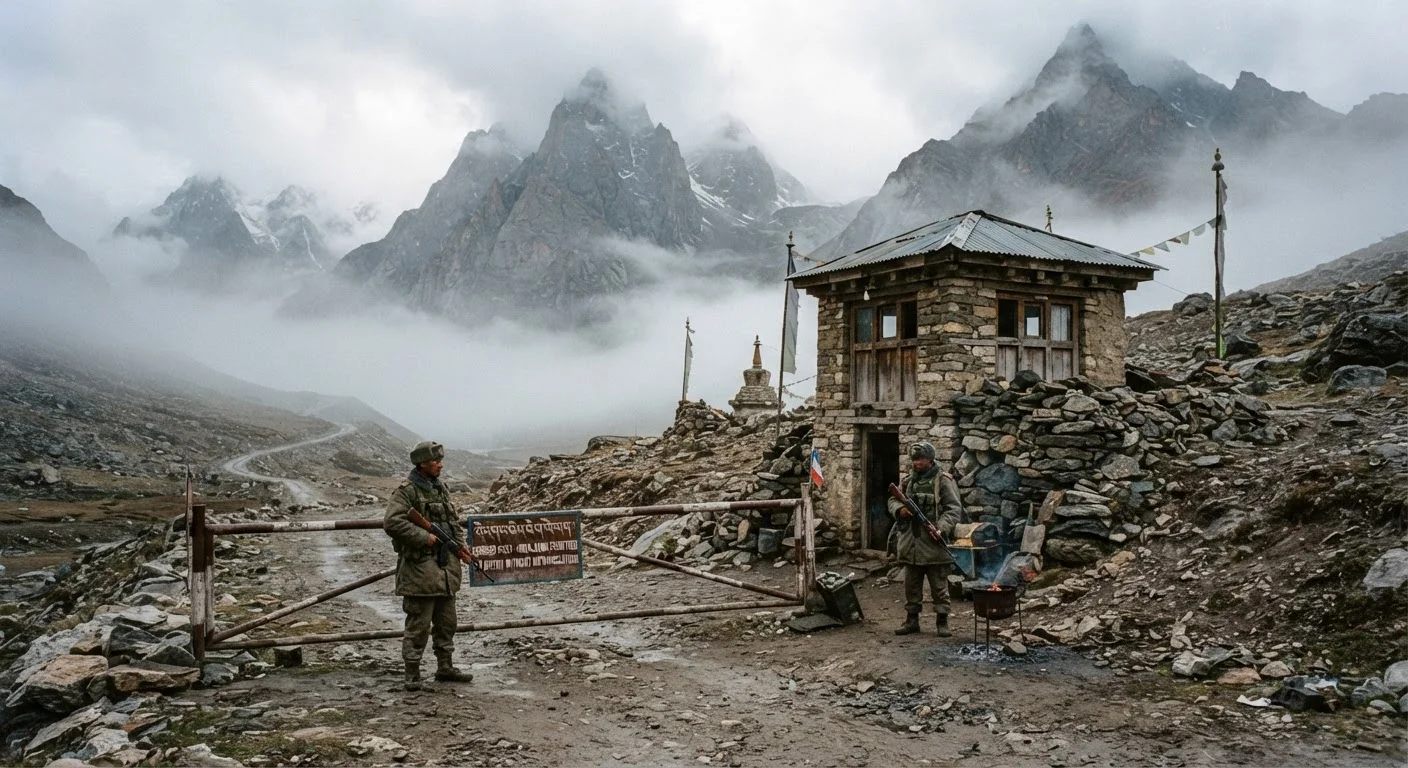
Why Restricted Zones Exist - and What That Means for Travelers
Across South, Southeast, and Central Asia, governments designate certain territories as restricted for a range of reasons: proximity to international borders, ecological sensitivity, military or strategic significance, or the cultural protection of indigenous communities. These designations are not arbitrary bureaucratic inconveniences - they reflect genuine governance priorities, and travelers who approach them as such tend to navigate the process far more successfully than those who treat permits as obstacles.
For the frequent traveler already familiar with popular circuits, restricted zones represent some of the most compelling destinations on the continent: Arunachal Pradesh in northeastern India, Bhutan's interior highlands, the Wakhan Corridor in Tajikistan, Myanmar's remote Chin State, Tibet Autonomous Region, and the upper Mustang district in Nepal, to name just a few. The permit layer is the price of admission to landscapes and cultures that remain largely unchanged precisely because access is controlled.
What follows is a reference organized by region and permit type - covering issuing authorities, general lead times, and the categories of documentation typically required. Always verify current requirements directly with the relevant government authority or embassy before traveling, as rules change and this guide cannot be treated as a substitute for official guidance.
Inner Line Permit (ILP)
A travel document required for Indian nationals entering certain northeastern Indian states, rooted in a colonial-era system maintained to protect indigenous communities and border regions.
Protected Area Permit (PAP)
A permit required by foreign nationals to enter specific sensitive regions of India, typically issued by the Foreigners Regional Registration Office (FRRO) or through a registered travel agent.
Restricted Area Permit (RAP)
A Nepal-specific permit granting access to designated restricted trekking districts such as Upper Mustang and Upper Dolpo. It must be obtained through a licensed Nepali trekking agency.
GBAO Permit
A permit required for entry into the Gorno-Badakhshan Autonomous Oblast in Tajikistan, which includes the Pamir plateau and the Wakhan Corridor. It can be added to a Tajik e-visa application.
Tibet Travel Permit
A mandatory document issued by the Tibet Tourism Bureau allowing foreign nationals to enter the Tibet Autonomous Region. It must be arranged through a registered Chinese travel agency.
Border Zone Permit (Propusk)
An authorization issued by Kyrgyzstan's State Border Service allowing travelers to enter designated zones near international frontiers. Typically arranged several weeks in advance through a local agency.
South Asia: India, Nepal, and Bhutan
India maintains several overlapping permit frameworks. The Inner Line Permit (ILP) governs travel by Indian nationals into Arunachal Pradesh, Nagaland, Mizoram, and Manipur; foreign nationals require a Protected Area Permit (PAP) for most of the same territories, typically applied for through a registered travel agent or directly at a Foreigners Regional Registration Office (FRRO). The PAP for Arunachal Pradesh is generally issued within a few days when applied for in Delhi or major state capitals, but expedition-scale visits can require additional clearances. Groups of at least two foreign nationals are usually required.
In Nepal, the Restricted Area Permit (RAP) covers Upper Mustang, Upper Dolpo, Humla, and several other districts. These are issued by the Department of Immigration in Kathmandu and require travelers to also hold a standard trekking permit (TIMS) and, for many zones, the relevant National Park entry fee. Upper Mustang RAPs carry a specific daily tariff and must be issued in conjunction with a licensed Nepali trekking agency - independent trekking is not permitted in restricted districts.
Bhutan operates under a fundamentally different model. All foreign visitors (except nationals of India, Bangladesh, and the Maldives) must travel through a licensed Bhutanese tour operator. A government-regulated daily package rate - covering accommodation, meals, guide, and a sustainable development fee - is mandatory. There is no independent tourist visa pathway for foreign nationals under this framework.
| Nepal RAP lead time | Issued in Kathmandu; allow 1-3 business days minimum (Department of Immigration, Nepal) |
| Bhutan daily package requirement | Mandatory for most foreign nationals; includes guide, accommodation, meals, and sustainable development fee (Tourism Council of Bhutan) |
| GBAO permit (Tajikistan) | Can be added to e-visa application; in-country fallback via OVIR in Dushanbe (Tajikistan e-visa portal) |
| Tibet permit group requirement | Individual applications not accepted; must be arranged through a registered Chinese agency (Tibet Tourism Bureau) |
| India PAP group minimum | Generally two or more foreign nationals traveling together required (Ministry of Home Affairs, India) |
| Kyrgyzstan border zone permit | Recommended to arrange 3-4 weeks in advance through State Border Service (State Border Service of Kyrgyzstan) |
Central Asia: Tajikistan, Kyrgyzstan, and the GBAO
The Gorno-Badakhshan Autonomous Oblast (GBAO) in eastern Tajikistan - encompassing the Wakhan Corridor, the Pamirs, and areas bordering Afghanistan and China - requires a GBAO permit in addition to a standard Tajik visa. This permit can be requested when applying for a Tajik visa (most efficiently via e-visa) or obtained at Tajikistan's border posts and the OVIR office in Dushanbe. Lead time when included in the e-visa application is typically a few business days; obtaining it upon arrival at certain crossings is possible but less reliable and not recommended for travelers heading directly to remote areas.
Kyrgyzstan does not currently operate a broad permit system for most of its territory, though border zones - particularly along the Chinese and Tajik frontiers - require a Border Zone Permit (propusk) issued through the State Border Service. These are typically arranged 3-4 weeks in advance and are best coordinated through a local agency or fixer familiar with the current process. Read about the real tradeoffs of going independent in Central Asia before deciding whether to self-arrange these permits.
Permit Suspensions Can Happen Without Warning
Tibet Travel Permits and certain Indian PAPs have been suspended periodically - sometimes for weeks or months - around politically sensitive events or during administrative reviews. Travelers should treat permit availability as a planning variable rather than a given. Build buffer time into any itinerary that depends on a restricted-zone permit, and check with your travel agency or relevant embassy within 30 days of departure to confirm current status.
Tibet, Myanmar, and Southeast Asian Restricted Areas
Travel to the Tibet Autonomous Region requires a Tibet Travel Permit in addition to a standard Chinese visa. The permit is issued by the Tibet Tourism Bureau and must be arranged through a registered Chinese travel agency - individual applications are not accepted. Additional permits are required for Everest Base Camp (the Alien's Travel Permit, issued by Public Security Bureau), Ngari Prefecture, and areas near Nepal's border. Tibet permits are subject to periodic suspension, particularly around politically sensitive dates; travelers should build significant flexibility into planning timelines and verify current availability well in advance.
In Myanmar, several ethnic states and border regions - including parts of Chin State, Kayah State, and areas near Rakhine - have historically required Special Permits or travel authorization from the Myanmar Tourism Board. The situation in Myanmar has undergone significant change and instability; travelers are strongly advised to consult their government's current travel advisory and the Myanmar Embassy in their home country before planning any visit.
Across Southeast Asia, national parks and marine reserves in Indonesia, the Philippines, and Vietnam may require entry registration or paid conservation permits, though these are generally less bureaucratically complex than the restricted-zone permits described above. The planning demands, however, compound quickly when combined with logistics in remote areas - a point examined in detail in our guide to where off-grid Asia travel plans go wrong.
Before any departure into a restricted zone, compile every permit in physical and digital form, confirm guide licensing where required, and cross-check requirements with the pre-departure checklist for remote Asia travel. Official government sources and your home country's foreign affairs ministry remain the definitive authorities on current entry conditions.
This article provides general reference information only. Entry requirements, permit rules, and political conditions change. Always verify with official government sources and your home country's travel advisory service before making any travel decisions.