
A Country That Fell Through the Cracks
Pull up a map of South America and trace the countries most travelers tick off: Argentina, Brazil, Peru, Chile, Colombia. Paraguay sits squarely in the middle of the continent - landlocked between Argentina and Brazil - and is routinely skipped over. It receives fewer than a million international tourist arrivals annually, a fraction of what any of its neighbors absorbs. That obscurity is not accidental. Paraguay has long sat outside the mainstream circuits, and its political and economic history through much of the twentieth century didn't make it a natural draw for leisure travelers.
What's left is a country that has developed on its own terms. Guaraní, an indigenous language, co-exists with Spanish as an official tongue, and it is spoken daily by the majority of the population - not as a heritage artifact but as a living, first language. That bilingualism runs through everything: street signs, markets, radio stations, family conversations. For a traveler arriving from elsewhere in South America, it immediately signals that Paraguay operates by its own cultural logic.
Those who have discovered it often find themselves defending it to skeptical friends, which says something. It also contrasts interestingly with other overlooked corners of the continent - see how Suriname and Guyana differ in access and experience for a sense of how differently neglect can shape a place.
What Paraguay Gets Right
Genuinely crowd-free cultural and natural sites
From the Jesuit Mission ruins to Asunción's colonial center, major attractions here receive a fraction of the visitor numbers their Argentine or Brazilian equivalents draw, making for unrushed, immersive experiences.
Living Guaraní language and culture
Guaraní is co-official and widely spoken in daily life, giving Paraguay a cultural identity that is meaningfully distinct from the rest of South America - a rarity in a continent where indigenous languages have often receded.
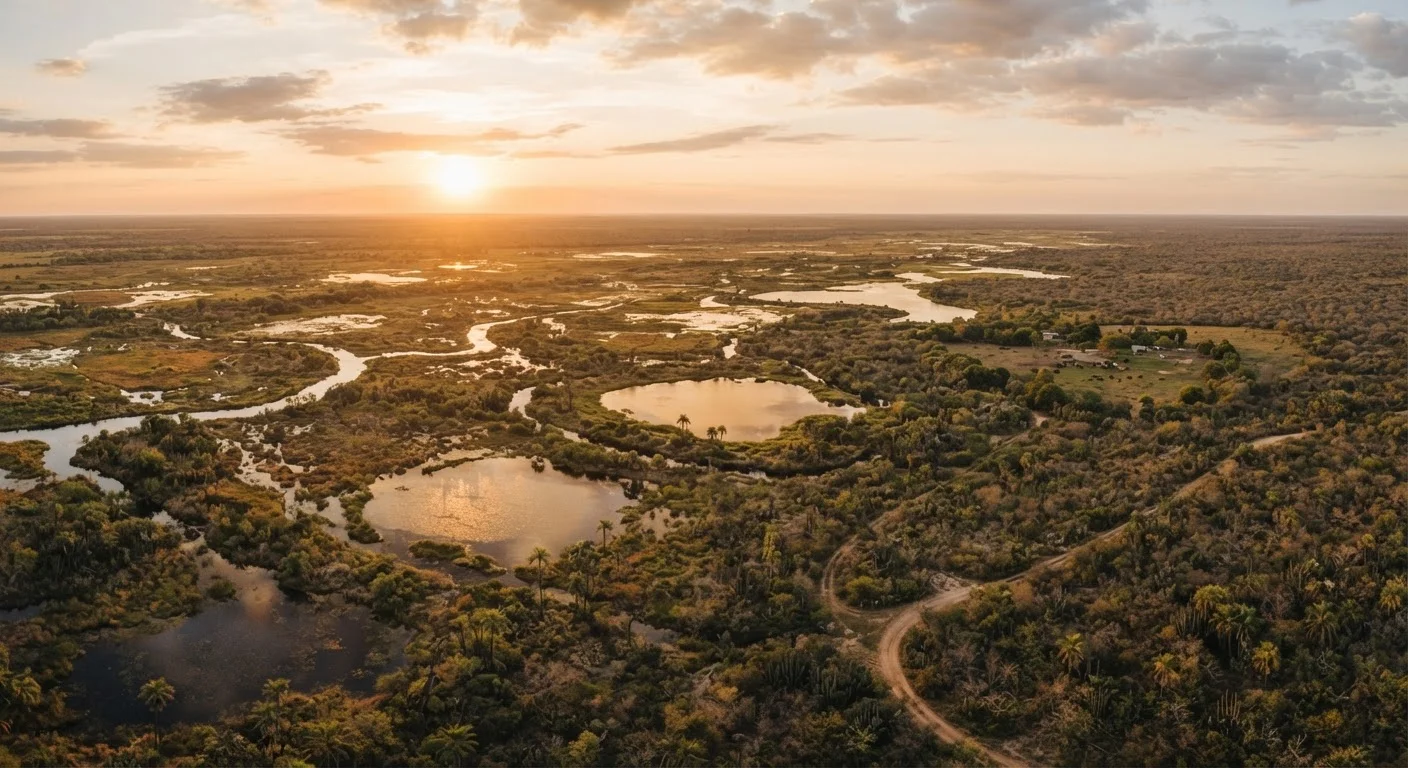
Gran Chaco wilderness is vast and wild
One of South America's largest remaining wilderness zones, the Chaco offers wildlife encounters - jaguars, giant anteaters, tapirs - in a setting that has not been shaped around tourist expectations.
Affordable travel costs relative to regional neighbors
Accommodation, food, and ground transport in Paraguay tend to cost less than equivalent options in Argentina or Brazil, stretching travel budgets meaningfully for those willing to do the logistical groundwork.
Asunción's underrated arts and architecture
The capital holds a walkable historic core and a contemporary gallery scene that punches above its international profile, with several institutions recognized within broader Latin American art circles.
Asunción deserves particular attention. The capital is frequently dismissed as a transit point, but its historic center - centered on the Palacio de los López and the Manzana de la Rivera - rewards slow walking. The city's contemporary art galleries, particularly those clustered around Villa Morra, have quietly built reputations that extend well beyond Paraguay's borders. And because Asunción draws only a trickle of international visitors, interactions here feel unmediated in a way that capitals like Buenos Aires or Lima, saturated with tourist infrastructure, no longer can.
Beyond the capital, the Jesuit Missions of La Santísima Trinidad de Paraná and Jesús de Tavarangue form a UNESCO World Heritage circuit that rivals the more-publicized Argentine missions in scale and atmospheric power - and sees a fraction of the foot traffic. The Gran Chaco, occupying roughly 60 percent of Paraguay's territory, is one of the largest wilderness areas remaining in South America: a seasonally flooded, biologically dense frontier where wildlife encounters are genuine rather than staged.
The Honest Challenges
Limited English-language tourist infrastructure
Outside upmarket Asunción hotels and a handful of specialist tour operators, English signage and English-speaking staff are rare. Travelers without working Spanish will find independent navigation genuinely difficult.
Seasonal road access issues in the Chaco
The rainy season - roughly November through March - can render key Chaco routes impassable for standard vehicles, limiting access to the interior during a significant portion of the year.
Thin international flight connections
Silvio Pettirossi International Airport in Asunción connects to regional hubs but lacks the direct long-haul routes found in Lima, Bogotá, or São Paulo, requiring most international travelers to make at least one connection.
Sparse organized tourism options for independent travelers
The network of guesthouses, guided tours, and visitor centers that makes self-guided travel easier elsewhere in South America is patchier here, particularly outside Asunción and the Missions circuit.
Heat and humidity can be extreme
Eastern Paraguay and Asunción experience intense heat and humidity between December and February, which can make outdoor sightseeing uncomfortable and affects planning for activities across the region.
Infrastructure is the defining limitation. Buses between major destinations are serviceable, but rural roads - particularly into the Chaco - can become impassable during the rainy season, typically November through March. Travelers accustomed to the well-worn backpacker circuits of Peru or Bolivia will find that Paraguay requires more planning and more tolerance for ambiguity. English is spoken in upmarket Asunción hotels and some tour operations, but outside the capital, Spanish - and ideally some Guaraní courtesy phrases - is essential.
Entry Requirements and Health Precautions
Entry requirements, visa policies, and health recommendations for Paraguay change periodically and vary by nationality. Before traveling, verify current entry rules with your country's official foreign affairs or state department website. Consult a qualified travel health professional well in advance of departure for guidance on vaccinations and health precautions appropriate to your itinerary.
Entry requirements, visa policies, and health recommendations for Paraguay change periodically. Before traveling, verify current entry rules and any required vaccinations with your country's official foreign affairs or state department website and consult a travel health professional for personalized guidance.
Where Paraguay Fits in a Broader South American Journey
Paraguay integrates naturally into several regional itinerary frameworks. Travelers moving overland between Argentina and Brazil can route through Asunción without backtracking, adding three to five days to experience the capital and the Missions circuit. Those with a longer South American journey might pair Paraguay with Bolivia's Chaco - the two wilderness zones connect across a border that is passable but rarely used by tourists.
For travelers focused on river and waterway travel, Paraguay's position along the Paraguay River connects, in theory, to broader South American water routes, though organized cruise infrastructure here is minimal compared to the Amazon or Patagonian corridors covered in South American cruise itineraries.
What Paraguay is not is a plug-and-play destination. It rewards travelers who arrive curious and prepared rather than those looking for a pre-packaged experience. The country's arid northeastern edges also hint at the continent's wider range of dry landscapes - a theme explored further in overlooked South American deserts beyond the Atacama. The travelers who leave Paraguay most impressed are almost always the ones who gave it more time than they originally planned.
~90%
Paraguayans who speak Guaraní
Guaraní is spoken by an estimated 90 percent of Paraguay's population, making it one of the few countries where an indigenous language is genuinely dominant in daily life alongside a European one.
60%
Share of Paraguay covered by the Gran Chaco
The Gran Chaco biome accounts for roughly 60 percent of Paraguay's national territory, representing one of South America's largest intact wilderness zones outside the Amazon basin.