
Two Countries That Have Quietly Avoided the Spotlight
Wedged along South America's northeast Atlantic coast, Suriname and Guyana sit in a corner of the continent that most itineraries simply skip. They share the ancient Guiana Shield - one of Earth's oldest geological formations - a vast interior of highland rainforest, and the distinction of being among the least-visited countries on the continent. Beyond those broad similarities, however, the two nations diverge in ways that matter enormously to travelers.
Just as Paraguay challenges expectations about South America, Suriname and Guyana confound the assumption that the continent is well-mapped tourist territory. Both reward travelers willing to do a little extra planning - but they reward them differently.
| Criterion | Suriname | Guyana |
|---|---|---|
| Official language | Dutch (Sranan Tongo widely spoken) | English |
| Capital city highlights | UNESCO colonial riverfront, multicultural food scene | Georgetown wooden architecture, local markets |
| Signature natural landmark | Central Suriname Nature Reserve | Kaieteur Falls, Iwokrama Rainforest |
| Interior access method | Charter flights + river canoe travel | Charter flights + 4WD overland (Rupununi) |
| Cultural distinctiveness | Javanese, Hindustani, Creole, Dutch blend | Afro-Guyanese, Indo-Guyanese, Amerindian |
| Tourism infrastructure | Limited; advance planning essential | Limited; growing eco-lodge sector |
| Ease for English-speaking travelers | Moderate (Dutch official; English understood in cities) | High (English throughout) |
Suriname: A Colonial Port City Unlike Any Other
Paramaribo, Suriname's capital, is the most quietly astonishing city in South America. Its historic inner city carries UNESCO World Heritage status for its Dutch colonial wooden architecture - broad-verandahed townhouses painted in ochre and white that line the Suriname River waterfront. Walk ten minutes inland and you'll find a working Hindu temple beside a nineteenth-century synagogue, a Chinese grocery, and a street vendor selling bara - fried split-pea dough with a Hindustani lineage - from a cart.
That pluralism has roots in Suriname's colonial labor history: waves of indentured workers arrived from India, Java, and China after the abolition of slavery in 1863, and their descendants now form the fabric of everyday Surinamese life. This means the food alone constitutes a minor revelation: Javanese saoto soup, Hindustani roti wraps, Creole pom - a cassava and chicken bake - and Dutch kroket all appear on the same neighborhood menu.
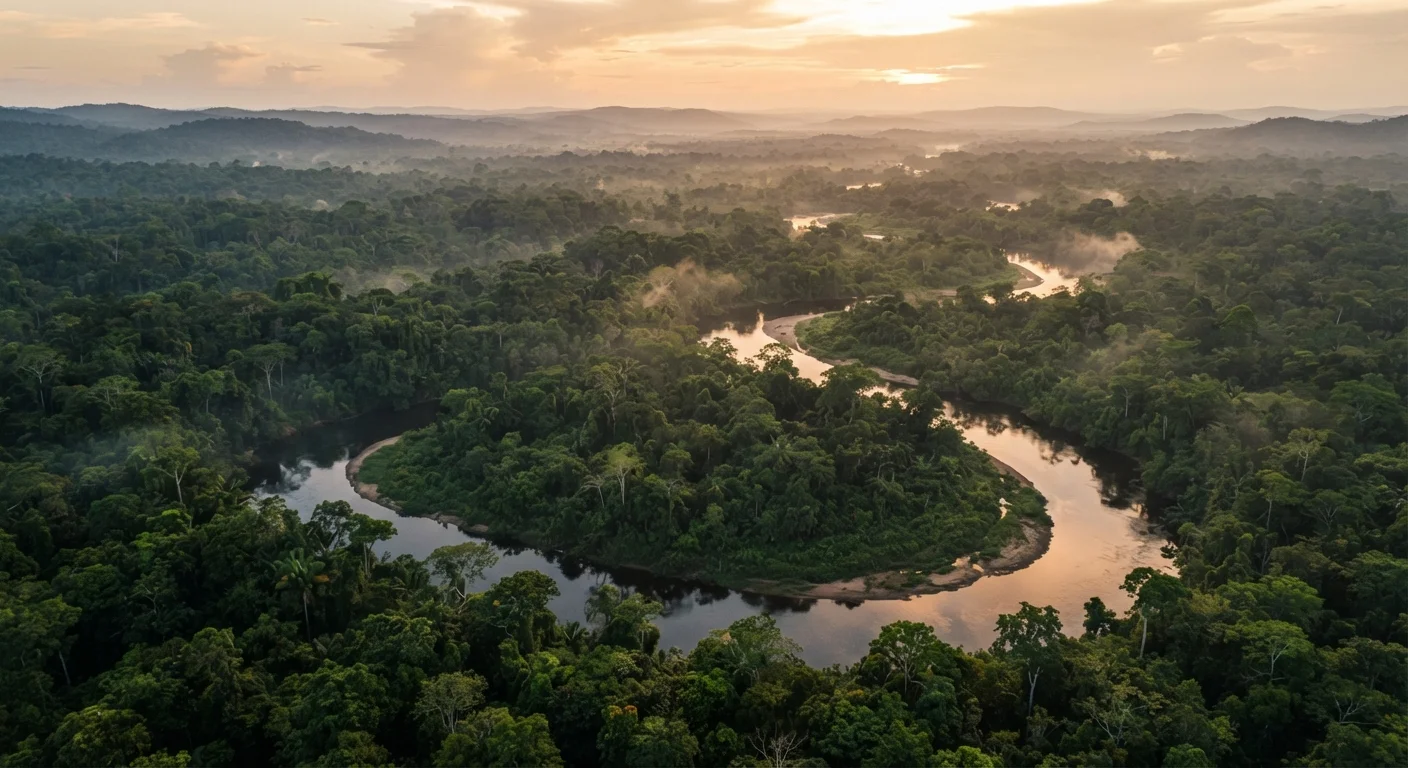
For the interior, small aircraft departing Johan Adolf Pengel International Airport serve camps and lodges near the Central Suriname Nature Reserve, a 1.6-million-hectare protected area of pristine highland jungle. River travel by dugout canoe into Maroon villages - descendants of escaped enslaved people who built autonomous communities in the interior centuries ago - offers one of the hemisphere's most culturally textured wilderness experiences.
1.6M ha
Central Suriname Nature Reserve protected area
Designated a UNESCO World Natural Heritage Site in 2000, the reserve protects one of the most intact tropical rainforest ecosystems in the Americas.
226 m
Single-drop height of Kaieteur Falls, Guyana
Kaieteur Falls is generally cited among the world's most powerful waterfalls by combined height and volume, according to geographic references including the Smithsonian.
~93%
Forest cover remaining in Guyana
Guyana consistently ranks among the world's most forested nations by percentage of national territory, according to Global Forest Watch data.
Guyana: English-Speaking, Wildlife-Rich, and Genuinely Wild
Guyana's defining logistical advantage is language. As the continent's only English-speaking country, it removes the translation barrier that can complicate travel in neighboring Suriname (where Dutch is official, and Sranan Tongo - an English-based creole - serves as the everyday lingua franca). For North American or British travelers stepping into South America for the first time, Guyana is a significantly more navigable entry point.
Georgetown, the capital, is scruffier and less architecturally intact than Paramaribo - years of political turbulence and economic strain left the colonial wooden city worn at the edges - but it has a raw energy of its own, and the St. George's Anglican Cathedral, one of the tallest wooden buildings in the world, is worth the walk.
The real reason most travelers come, though, is what lies beyond the coast. The Iwokrama Rainforest, managed collaboratively with the indigenous Makushi and Wapishana peoples, offers guided wildlife encounters of unusual density: giant river otters, tapirs, black caiman, and the harpy eagle - South America's apex aerial predator - are all sighted with reasonable regularity. The Rupununi savanna in the south, bordering Brazil, adds a visual counterpoint: a vast, seasonally flooded grassland that makes Guyana feel like two countries in one.
And then there is Kaieteur Falls. Located in Kaieteur National Park, the falls drop 226 meters in a single plunge - making them among the world's most powerful waterfall systems by volume and height combined. Day trips by small charter aircraft from Georgetown are the standard access route; on most days, visitor numbers are measured in dozens rather than thousands. For travelers accustomed to sharing natural landmarks with crowds, the solitude is disorienting in the best possible way. Those interested in how South American river and coastal ecosystems connect across the broader region may also find context in South American cruise itineraries spanning the continent's major waterways.
On Tourism Growth and Guyana's Oil Economy
Since significant offshore oil discoveries began producing revenues in the early 2020s, Guyana has experienced rapid economic change. Infrastructure investment is accelerating, and the tourism sector is evolving alongside it. Conditions - from hotel availability to interior road access - may shift considerably in coming years. What exists today as genuinely frontier travel may look different within a decade, which is itself a reason many travelers are choosing to visit sooner rather than later.
Practical Considerations Before You Go
Neither country has a mature tourism infrastructure in the way that, say, Peru or Colombia does. That is largely the point - but it carries real implications. Interior access in both Suriname and Guyana depends on small charter aircraft and river transport, which means weather delays, limited departure frequency, and the need to book guides and camps well in advance. Last-minute logistics are rarely possible outside the capital cities.
Health precautions for both destinations typically include malaria prophylaxis for travelers venturing into interior zones and yellow fever vaccination - but requirements and recommended protocols vary by itinerary and individual health history. Consult a travel medicine specialist and your country's official health authority before departure; do not rely on general guidance for personal medical decisions.
Visa requirements differ by nationality for both Suriname and Guyana and can change. Always verify current entry requirements through the official embassy or consulate of each country before making travel arrangements. Border conditions, road accessibility, and regional safety advisories should be confirmed through your national government's travel advisory service close to your departure date.
Seasonality matters considerably. Both countries have two wet and two dry seasons influenced by the Intertropical Convergence Zone. Generally, the longer dry season (roughly August through November) offers better interior access, clearer rivers, and more reliable small aircraft operations - but even then, tropical downpours are possible at any time. Travel with that flexibility baked into your plans.