
How South American Cruise Corridors Are Structured
South America's cruise geography divides naturally into three distinct corridors: the Southern Cone and Patagonian fjords, the Atlantic and Pacific coastal arcs connecting major port cities, and the inland river systems of the Amazon and its tributaries. Each corridor serves a different traveler priority - wilderness immersion, cultural depth, or ecological exploration - and very few itineraries combine all three. Understanding which corridor anchors a given route is the single most useful filter when comparing sailings.
The continent's scale matters here. Buenos Aires to Ushuaia is roughly 1,800 nautical miles. Adding the Amazon delta region of Belém to that arc extends the journey by another 2,400 nautical miles. Most itineraries focus tightly on one corridor and dip into an adjacent one - not all three. For travelers drawn to the ecological extremes, expedition-style cruising often gives the most honest access to Patagonia's remote channels and Antarctic approaches.
The Patagonian Fjords and Southern Cone
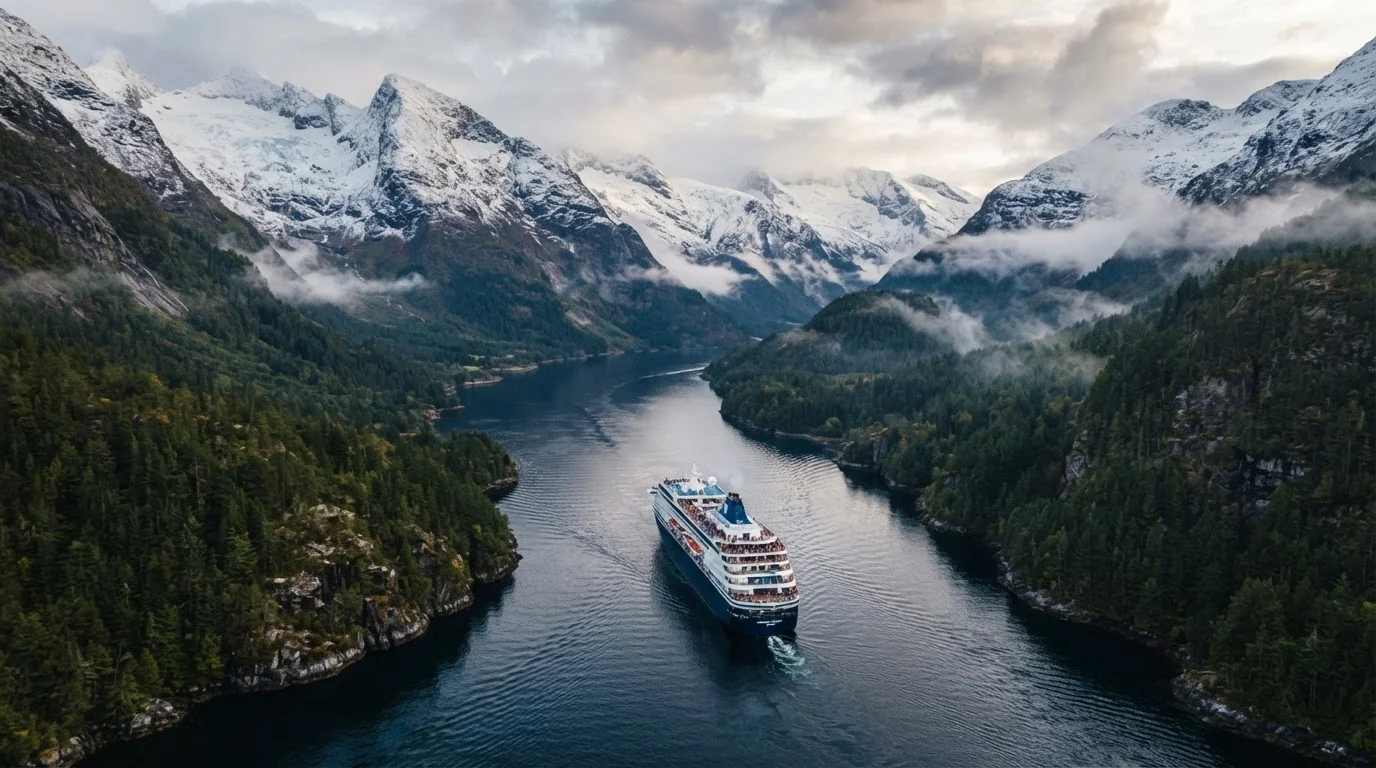
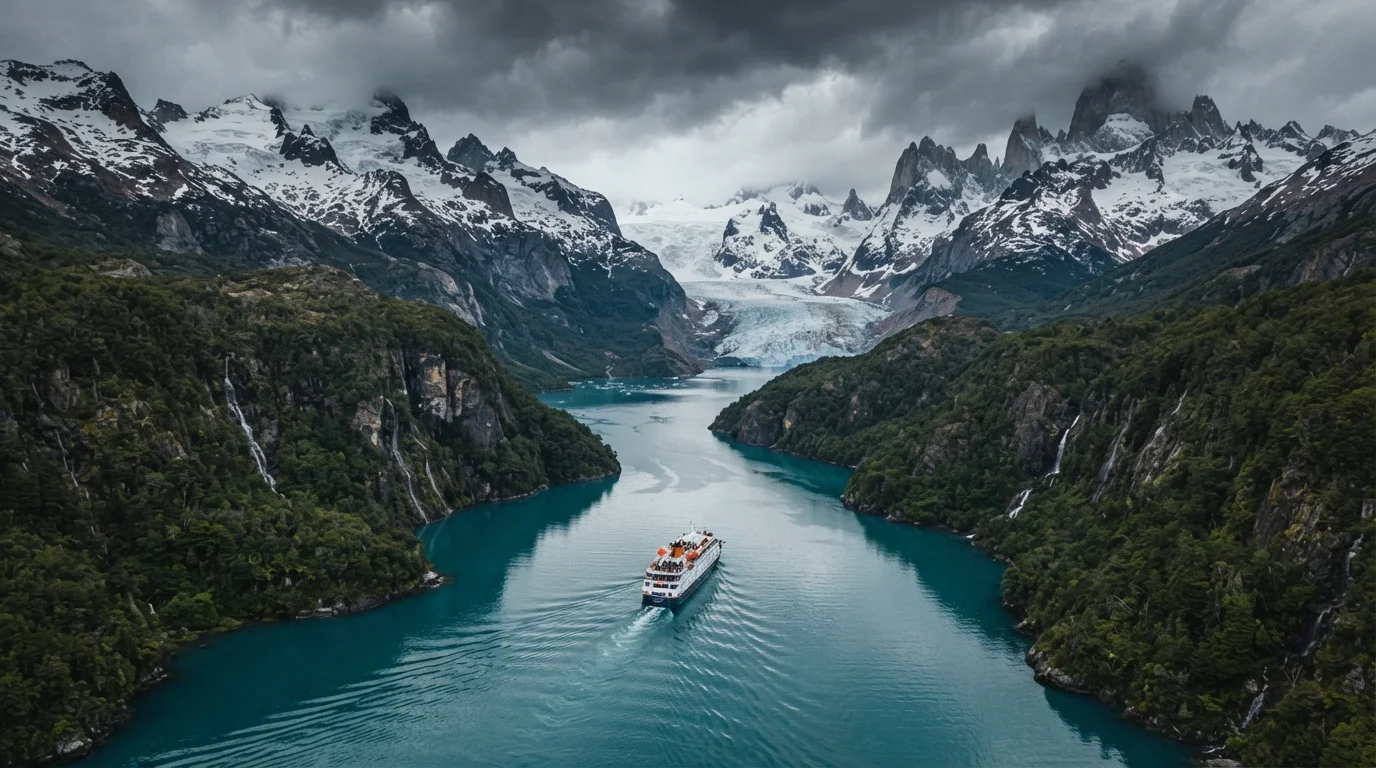
This is the continent's flagship wilderness corridor. Itineraries running between Ushuaia, Argentina and Puerto Montt or Valparaíso, Chile transit a 1,400-mile chain of channels, glaciers, and archipelagos that has no road equivalent. Key waypoints include the Strait of Magellan, the Beagle Channel, Glaciar Perito Moreno (via Puerto Natales overland), and the Chilean fjords around Puerto Natales and the Amalia Glacier. Cape Horn transits - rounding the continent's southernmost point - are available on select sailings and are weather-dependent.
Ship size is decisive in this corridor. Larger ocean liners typically stop only at Punta Arenas and Ushuaia, bypassing narrower fjord passages. Smaller expedition vessels and boutique ships can navigate channels like the Canal Cockburn and anchor near tidewater glaciers inaccessible to mainstream fleets. Travelers who want the full fjord experience - Zodiacs, hikes, and ice - should specifically verify whether the itinerary enters the inner channels or simply transits the Strait. Matching your travel style to the right cruise line is a useful starting point before committing to a ship class.
Seasonality is narrow. The Patagonian fjord season runs roughly November through March (Southern Hemisphere summer). Outside those months, daylight shortens sharply, weather intensifies, and many operators suspend service.
Fjord corridor
A coastal route that navigates long, narrow inlets carved by glacial activity, typically requiring smaller vessels to access the innermost channels. In South America, this refers primarily to the Chilean and Argentine lake and channel systems south of Puerto Montt.
Expedition vessel
A purpose-built small ship (typically under 200 passengers) designed for remote itineraries, equipped with Zodiacs, naturalist staff, and reinforced hulls. These ships can access anchorages and channels closed to mainstream cruise fleets.
Tender port
A port where the ship anchors offshore and passengers travel to land by small boat (tender) rather than docking at a pier. Many Patagonian and Amazon stops are tender-only due to shallow or narrow waterways.
Grand voyage
An extended itinerary - typically 20 or more nights - that strings together multiple ports across a large geographic arc, often combining two or more South American coastal corridors in a single sailing.
Atlantic and Pacific Coastal Arc Routes
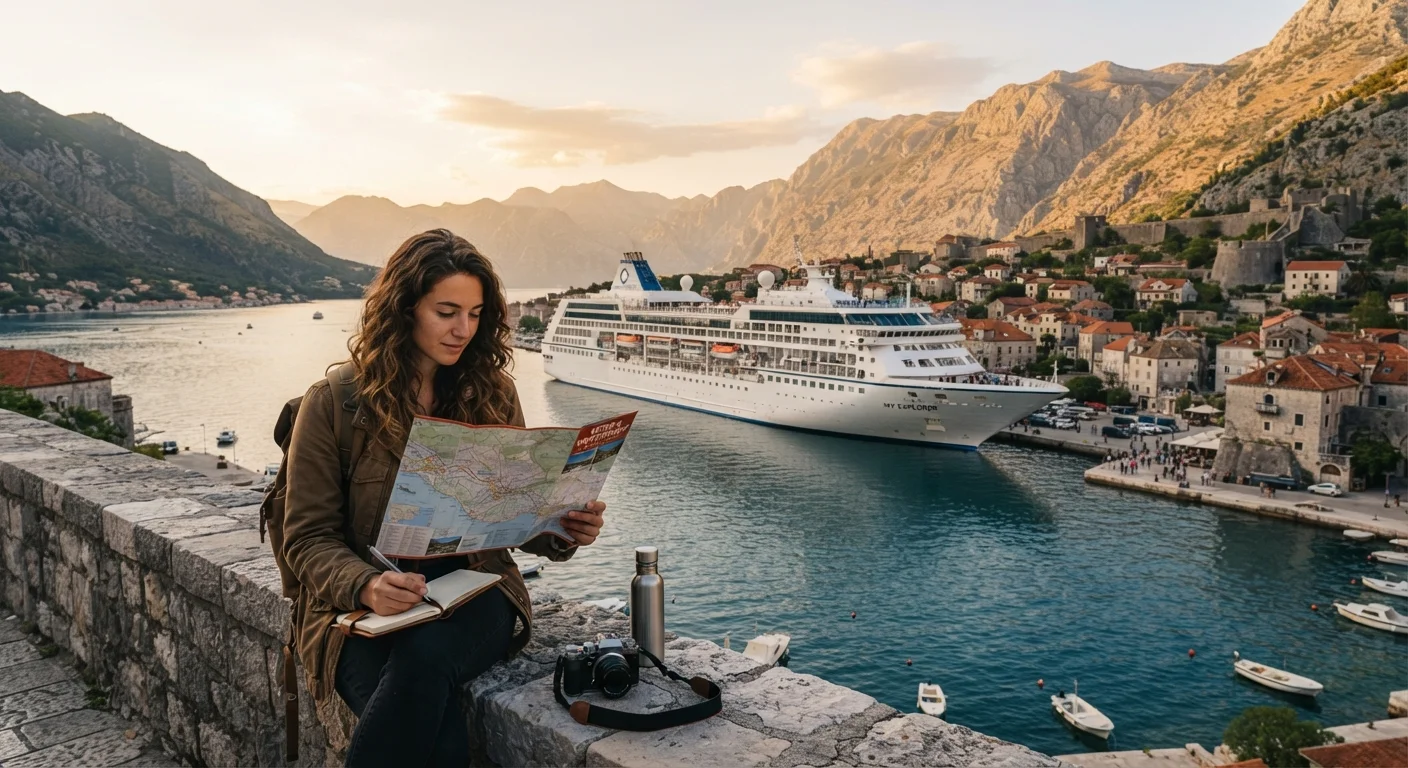
The coastal arc itineraries - sometimes marketed as South America grand voyages - string together the continent's major port cities on either the Atlantic or Pacific side, with some full circumnavigation sailings covering both. Atlantic-side routes typically call at Montevideo (Uruguay), Buenos Aires (Argentina), Rio de Janeiro, Santos (São Paulo's gateway), and Salvador da Bahia, occasionally extending north to Fortaleza or Manaus. Pacific-side routes link Callao (Lima, Peru), Manta (Ecuador), Cartagena (Colombia), and sometimes the Galápagos or San Juan del Sur (Nicaragua).
These routes prioritize cultural and urban access over wilderness. Port time in Buenos Aires, Rio, and Lima is generous on most sailings - enough for substantive city exploration. Lesser-visited inclusions like Ilhéus (Bahia state), Puerto Madryn (gateway to Patagonian wildlife reserves), or Pisco (Peru) reward travelers who research port days carefully. The Americas Unknown hub offers useful context on overlooked destinations along these corridors, including neighbors like Suriname and Guyana, which appear on some extended northeastern Brazil itineraries.
~1,800
Nautical miles, Buenos Aires to Ushuaia
This stretch anchors the Southern Cone coastal arc and represents the approximate sailing distance between South America's largest Atlantic gateway and its southernmost cruise port.
~4,000 mi
Length of the Amazon River
The Amazon is among the world's longest rivers; cruise itineraries typically cover a fraction of that distance, concentrating on accessible sections near Manaus or Iquitos.
Nov-Mar
Patagonian fjord cruise window
The Southern Hemisphere summer provides the only reliable weather window for full fjord-channel itineraries; most operators suspend Patagonia fjord service outside this period.
Amazon River Cruising: A Different Category Entirely
Amazon itineraries operate on a fundamentally different logic from ocean sailings. Purpose-built river vessels - typically carrying 20 to 150 passengers - navigate the main stem of the Amazon and its tributaries out of Manaus (Brazil) or Iquitos (Peru), neither of which is accessible by road. Sailings range from four-night introductory expeditions to three-week deep jungle immersions reaching the Peruvian Amazon via Leticia (Colombia).
The practical distinctions from ocean cruising are significant: no stabilizers, no ocean-grade medical facilities, limited connectivity, and a strong dependence on naturalist guides for the experience to deliver. Health preparation is not optional - travelers should review what Amazon travel requires in terms of health, logistics, and environmental responsibilities well in advance. Entry requirements, vaccination recommendations, and permit conditions vary by country and tributary region; always verify with official sources and your operator before departure.
The Galápagos Islands, though technically part of Ecuador's Pacific territory, function as a standalone cruise sub-category. Permitted vessel numbers are tightly regulated by the Galápagos National Park Directorate, itineraries follow fixed routes, and the experience is built around naturalist-led landings rather than port calls. Travelers comparing Galápagos sailings to Amazon river cruises will find the two share an expedition philosophy but differ almost entirely in ecosystem, pace, and logistics.
Choosing the Right Corridor for Your Priorities
The table below summarizes the primary differentiators across South America's three cruise corridors. Note that hybrid itineraries exist - a Buenos Aires to Manaus sailing might touch both the Atlantic arc and the Amazon - but the balance of days typically favors one corridor heavily.
| Corridor | Best For | Typical Duration | Ship Type |
|---|---|---|---|
| Patagonian Fjords | Wilderness, glaciers, hiking | 10-21 nights | Small expedition or boutique |
| Atlantic / Pacific Arc | Culture, cities, history | 14-30 nights | Mid to large ocean ship |
| Amazon River | Ecology, wildlife, immersion | 4-21 nights | Small river vessel |
If wilderness scenery is the draw but you're not ready to commit to a full expedition format, consider that Alaska's fjord systems offer a structural comparison - the Alaska Inside Passage vs. open ocean routes article explores how ship size and route type shape the experience in a similar protected-waterway environment.
Verifying Entry and Health Requirements
Visa requirements, vaccination recommendations, and regional permit conditions across South America's cruise corridors vary by nationality, itinerary country, and season. Requirements can change with little notice. Always verify current entry requirements with the relevant consulates and official government travel advisory sources, and consult a travel medicine specialist well ahead of departure - particularly for Amazon itineraries.