
What Makes a Repositioning Cruise Different
Twice a year, cruise lines face a logistical reality: the ships positioned in the Caribbean for winter need to reach the Mediterranean for summer - and vice versa. Rather than sailing empty, lines open these transits to passengers, creating what the industry calls repositioning cruises.
The resulting itineraries look nothing like a standard seven-night loop. A typical transatlantic reposition might depart from Fort Lauderdale or New York, call at Bermuda or the Azores, and arrive in Barcelona or Southampton roughly two weeks later. A transpacific variant might move from Los Angeles or Seattle to Sydney or Tokyo via Hawaii and the South Pacific.
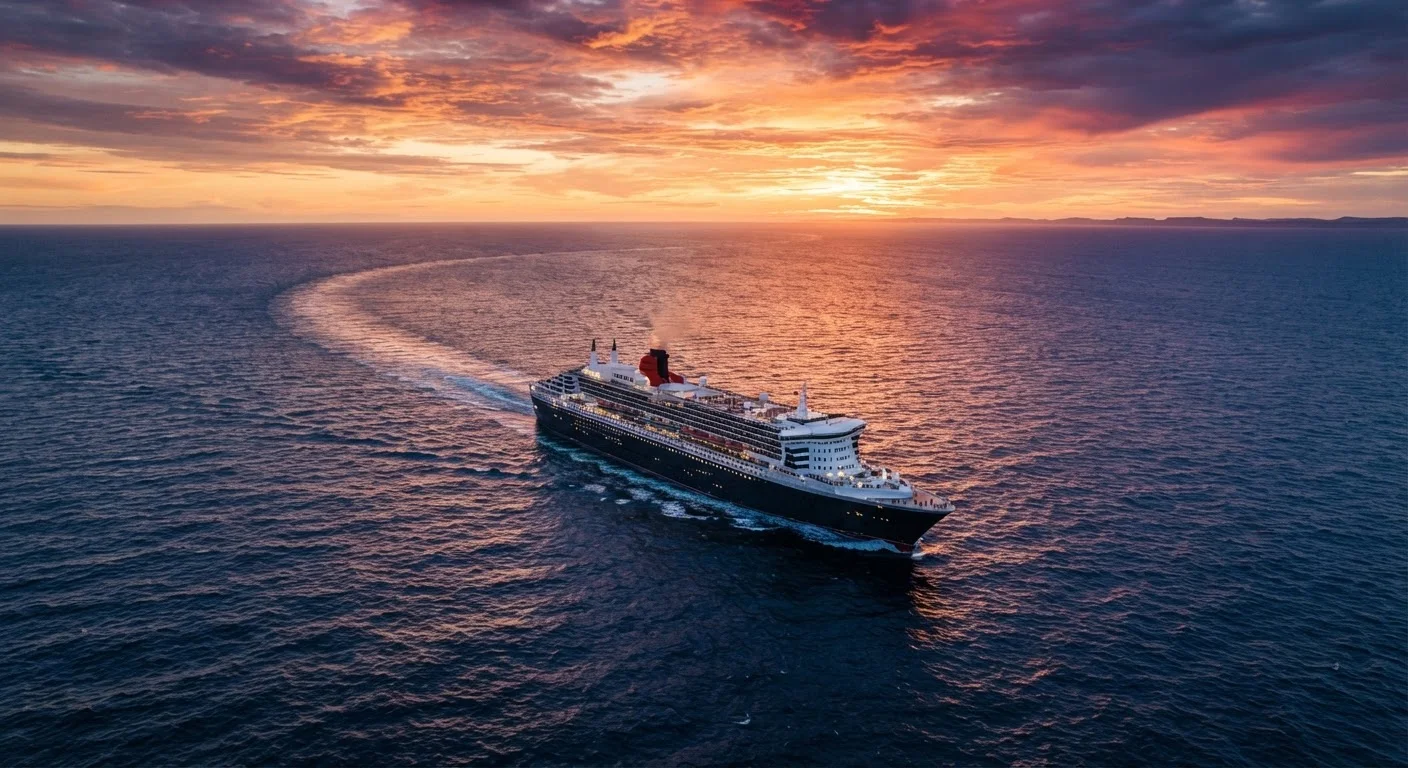
What sets these sailings apart isn't just geography - it's the experience onboard. With five to eight consecutive sea days common on an Atlantic crossing, the ship itself becomes the destination. That dynamic separates repositioning passengers from the average port-focused cruiser, and it's exactly why experienced travelers seek them out. For a deeper look at how onboard life shapes the overall experience, the Cruise Life Hacks hub covers practical strategies worth reviewing before you sail.
10-14 days
Typical duration of a transatlantic reposition
Most spring and fall Atlantic crossings run between 10 and 14 nights, with transpacific routes stretching to 20-25 days.
2x/year
Frequency of major fleet repositions
Most cruise lines reposition large portions of their fleets twice annually - spring to summer regions and fall back to winter regions.
5-8
Consecutive sea days on an Atlantic crossing
Open-ocean passages between the Americas and Europe regularly produce week-long stretches without a port call, depending on the specific itinerary.
Who Thrives on Long Sea Days - and Who Doesn't
Repositioning cruises reward a specific kind of traveler: someone who finds genuine pleasure in shipboard rhythm - morning lectures, afternoon reading on deck, unhurried dinners, and evenings with live entertainment. If your usual cruise style involves sprinting off the ship at every port, a crossing with eight sea days will feel frustrating rather than freeing.
That said, most contemporary ships sailing repositioning routes are large enough to keep a curious passenger occupied. Cooking demonstrations, enrichment programming, fitness classes, and specialty dining options fill the calendar. Understanding how dining venues work across different parts of the ship becomes especially relevant on longer crossings - the guide to dining across the ship walks through the tradeoffs between specialty restaurants, the main dining room, and the buffet in a way that's useful on any extended sailing.
Solo travelers and retirees with schedule flexibility make up a disproportionate share of repositioning passengers, largely because the one-way nature of these sailings suits those unburdened by rigid return dates. Couples and small groups also find them appealing when the goal is genuine decompression rather than destination-hopping.
Book Early for the Best Cabin Selection
Repositioning sailings often offer lower fares than standard itineraries, but the cabin inventory that works best for long crossings - mid-ship balconies on lower decks for stability - goes quickly. Booking several months in advance gives you access to the widest range of cabin categories, not just the lowest price.
Notable Routes Worth Knowing
The transatlantic corridor between the eastern seaboard and northern Europe remains the most established repositioning lane. Ships departing from ports such as Fort Lauderdale, New York, or Baltimore typically call at Bermuda, the Azores, or the Canary Islands before reaching Lisbon, Southampton, Copenhagen, or Barcelona.
Transpacific routes are less common but more dramatic in scale. Sailings from Los Angeles or San Francisco to Sydney or Auckland may take 20 to 25 days and call at Hawaii, Tahiti, or Fiji en route - ports rarely seen on standard itineraries. These are among the more unusual long-haul routes in commercial cruising.
A third category worth tracking: Europe-to-Caribbean repositions in fall, which reverse the spring route. These sailings often depart from Mediterranean ports and arrive in San Juan, Barbados, or Bridgetown. For travelers who prefer to fly into Europe rather than out of it, this direction can simplify logistics considerably.
Repositioning sailings contrast sharply with the immersive, remote-access model of expedition cruising. If the appeal of a reposition lies in the open-ocean passage itself rather than rare wildlife or polar landscapes, it's a fundamentally different product - the Expedition Cruising 101 explainer draws that distinction clearly.
Planning a Repositioning Cruise: Key Logistics
The one-way structure is the defining logistical challenge. You'll fly into one city and disembark in another - often on a different continent. Building a full day's buffer before embarkation is standard advice; last-minute flight disruptions that cause a passenger to miss a transatlantic departure are not recoverable mid-voyage.
Travel insurance that covers trip interruption and missed departure is particularly relevant for repositioning sailings given the longer duration and international disembarkation. Always verify current entry requirements, visa rules, and any health documentation with official government sources before booking - these details change and no third-party article should be treated as definitive.
Packing for a repositioning cruise differs from a Caribbean week. North Atlantic crossings in April or October can produce genuinely cold, windy deck conditions. Layering is practical advice. At the same time, the extended duration means formal or semi-formal evenings are often more numerous than on a short loop cruise.
Savvy repositioning passengers also take time to map out the quieter parts of the ship in advance. On a 14-day crossing, knowing where the less-trafficked reading lounges or uncrowded breakfast spots are can meaningfully change the experience - the guide to underused corners of the ship covers exactly this. And before committing to any itinerary, it's worth reviewing common itinerary decisions that disappoint to ensure a long sailing matches your actual expectations rather than an idealized version of them.
“The passengers who love repositioning voyages most are the ones who've realized the ship itself is the itinerary. The ports are a bonus, not the point.”
— Cruise industry commentator, Contributing editor, cruise travel media