

Define the Trip Before You Book Anything
Every well-executed trip starts with a brief but honest scoping exercise — before any tabs are opened on flight search engines. Ask four questions upfront: How many days do I actually have (including travel days)? What's the non-negotiable experience I want? Who am I traveling with, and do our priorities align? What's my realistic spending ceiling?
Answering these filters your destination shortlist before you've wasted hours researching a place that doesn't fit. A 10-day trip with two travel days and a companion who dislikes long drives calls for a very different itinerary than the same duration solo.
For trips covering multiple stops, this scoping step is even more critical. See our guide to planning multi-destination trips for how to sequence cities and transit before committing to any booking.
Write your trip's single must-have moment at the top of your planning document and work everything else around it. Every trade-off decision becomes easier when you know what the trip is actually for.
Experienced planners know that itinerary conflicts — where to stay, how long to linger — resolve quickly when there's a clear hierarchy of priorities established before booking begins.
Don't schedule anything in the first three hours after an international arrival. Account for customs, baggage, transit to your accommodation, and basic orientation before expecting yourself to engage meaningfully with a destination.
Arrival fatigue consistently derails the first day of trips that overestimate how quickly travelers can shift from transit mode to exploration mode.
Build a Realistic Day-by-Day Structure
The most common itinerary mistake is front-loading every day with three major sites, two neighborhoods, and a dinner reservation across town. The schedule looks impressive on paper and collapses by day three.
A more durable approach: categorize each day as either high-intensity (museums, long hikes, multi-hour tours) or low-intensity (neighborhoods, markets, slow meals). Then alternate them deliberately. A high day followed by a low day keeps energy consistent across a week-long trip.
Apply a rough rule of two to three meaningful activities per day, with buffer time between them. Factor in the hidden time costs: transit between sites, queues, meal breaks, and the unexpected detour that turns into a highlight. For road-based trips, road trip planning from start to finish covers how to pace driving days so you're not arriving at every stop exhausted.
Don't Confuse a Full Schedule With a Good Trip
Packing every hour with activities is one of the most reliable ways to return from a trip more tired than when you left. Itinerary density is not the same as travel quality. Deliberate downtime — a slow lunch, an unplanned walk — often produces the experiences travelers remember longest.
Sequence Your Bookings Strategically
Not everything needs to be booked at once, and booking everything simultaneously is often inefficient. Work in layers: flights first (hardest to change, most price-sensitive), then accommodation for the first and last nights, then remaining accommodation, and finally activities and dining reservations.
This sequence matters because your accommodation decisions should follow your confirmed flight times, not the other way around. Booking a hotel across a city before you know which airport you're arriving at creates unnecessary complexity.
Time-sensitive bookings — heavily visited sites with timed-entry tickets, popular restaurants, or guided tours with limited capacity — should move up in priority once your dates are locked. Everything else can wait until the trip is closer, giving you flexibility if plans shift.
Visa and Entry Requirements Need Separate Verification
Booking sequencing doesn't include visa applications — those run on their own timeline and should be researched before flights are purchased. Always verify current entry requirements, including passport validity rules and any health-related documentation, directly with the official government sources for both your destination and any transit countries. Conditions change and this article cannot reflect real-time requirements.
Budget Across the Full Trip Arc
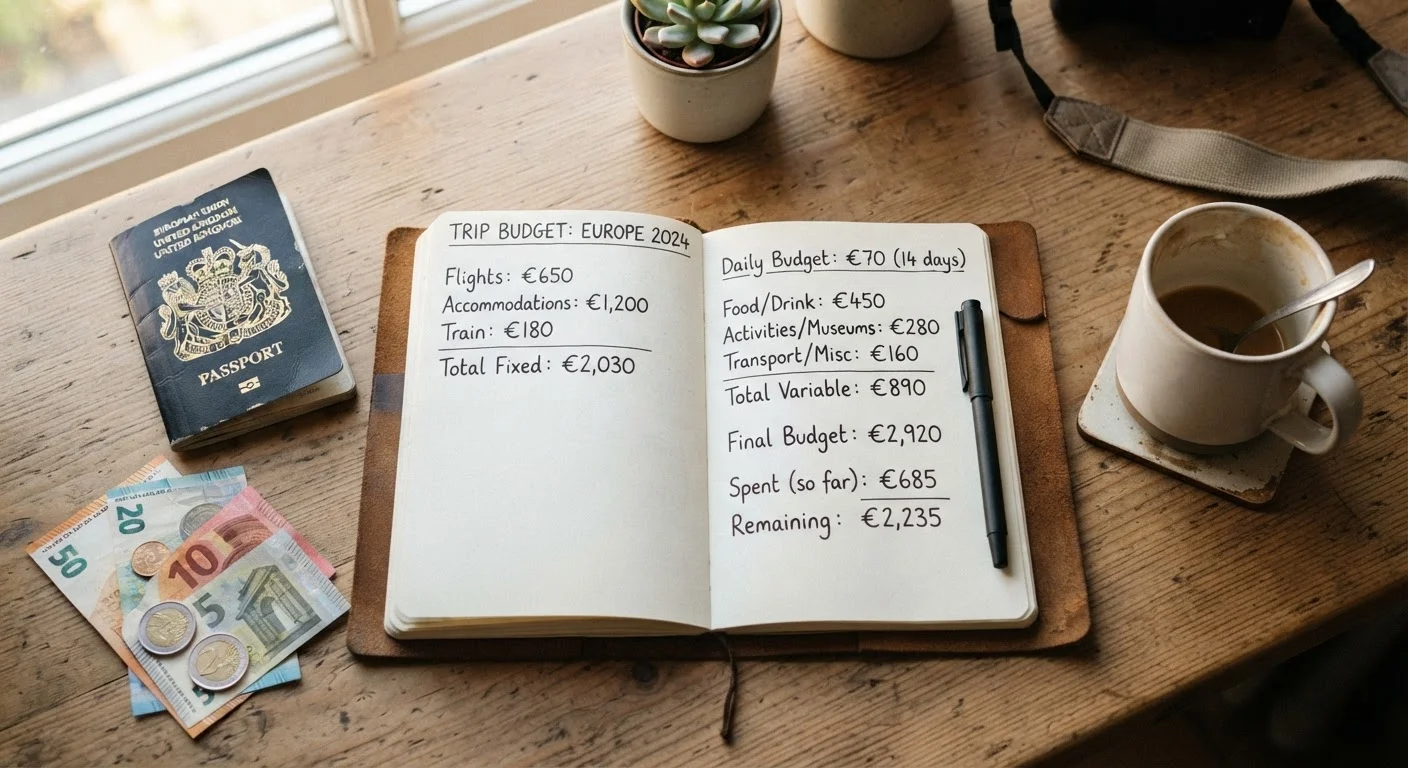
Most trip budgets undercount by focusing only on flights and hotels. A complete budget works across five categories: transportation (flights, trains, local transit, car rental), accommodation, food and drink, activities and entry fees, and a contingency buffer of roughly 10–15% of the total.
The contingency isn't pessimism — it's planning. Missed connections, unexpected entry fees, a bag that needs replacing, a weather day that reshuffles paid reservations: these happen on real trips. Building the buffer in means you handle them without financial stress.
For a structured approach to tracking travel costs before and during a trip, the trip budgeting hub covers how to build and manage a travel budget from first estimates through final reconciliation.
42%
Travelers who exceed their trip budget
Surveys from multiple travel finance sources consistently find that over 40% of travelers spend more than planned, most often due to underestimating food and ground transport costs.
2–3
Meaningful activities per day recommended
Travel researchers and itinerary planners broadly agree that more than three major activities per day leads to diminishing enjoyment and increased fatigue on multi-day trips.
Build In Flexibility Without Losing Structure
A trip itinerary is a framework, not a contract. The travelers who consistently report the most satisfying trips are those who plan enough to avoid logistical chaos but hold their daily schedules loosely enough to follow something genuinely interesting when it appears.
Practically, this means keeping at least one half-day per three days fully unscheduled. Mark it on your itinerary as intentional white space. This is where you extend a morning that's working, revisit a neighborhood, or simply rest without guilt.
For trips with a strong cultural dimension — where immersion matters as much as sightseeing — culturally immersive travel planning covers how to structure encounters and pacing when depth of experience is the goal. The same principle applies to adventure-heavy itineraries: the overland Africa planning guide shows how contingency thinking plays out in logistically demanding environments. And for those structuring a trip around driving, road trip planning resources apply these same flexibility principles to route-based travel.
Bring your itinerary. Use it as a starting point every morning. Then give yourself permission to deviate from it when the day calls for it.