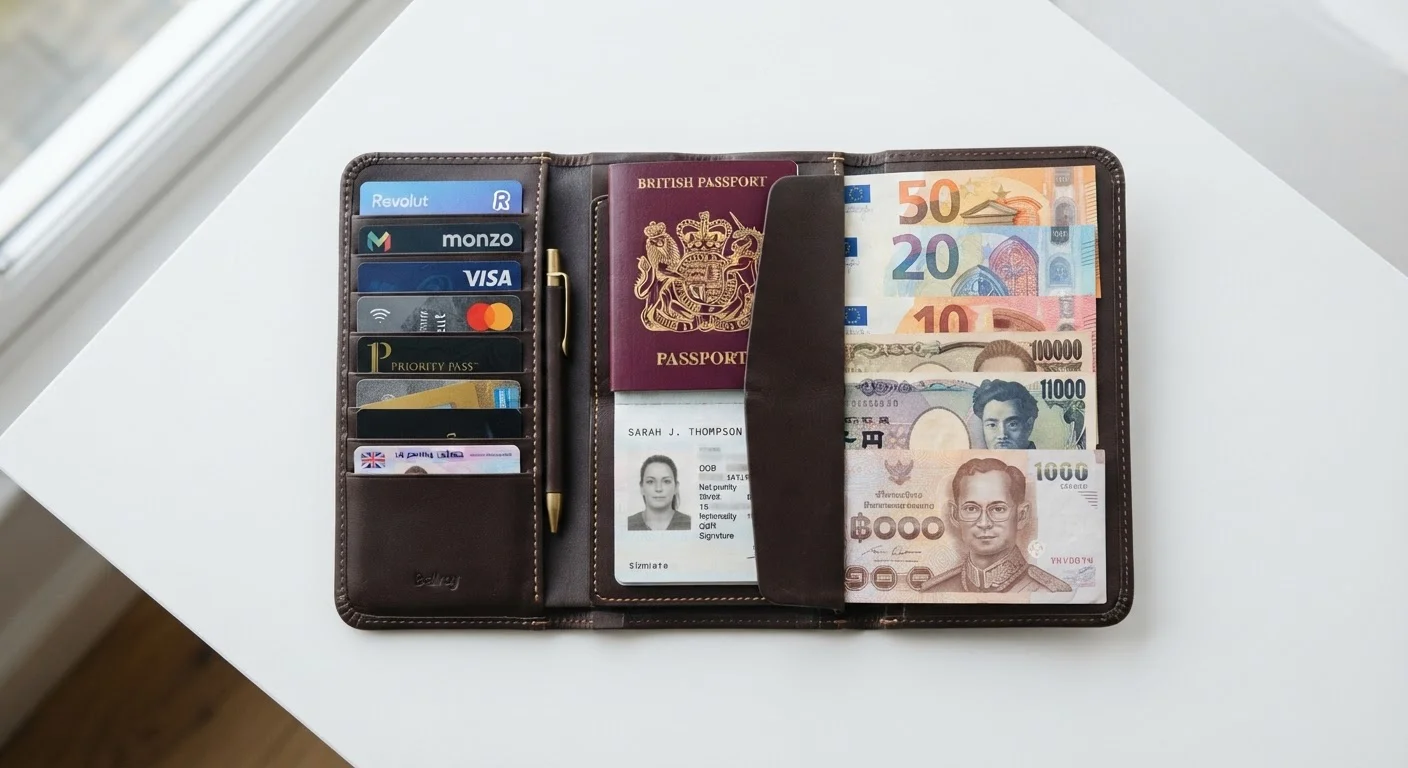


Start With the Documents, Not the Flights
The most common first-timer mistake is opening a flight search before checking whether their documents are in order. Reverse that sequence and you'll avoid a stressful scramble later.
Passport validity
The remaining time before your passport expires. Many countries require at least six months of validity beyond your planned return date - check before booking.
Visa
An official authorization from a country allowing you to enter. Some are obtained in advance through an embassy; others are issued on arrival or electronically.
Layover
A stop between flights where you remain in an airport before boarding your next flight. International layovers often require clearing customs and re-checking baggage.
Transit visa
A special visa required by some countries just to pass through their airport, even if you're not entering the country. Requirements vary significantly by nationality.
Time zone offset
The difference in clock time between your departure city and destination. A large offset can affect arrival planning, jet lag, and your first day's usable hours.
International Driving Permit (IDP)
A document that translates your home driver's license into multiple languages, required for renting or driving a vehicle in certain foreign countries.
Passport validity is the first gate. Many countries require your passport to remain valid for at least six months beyond your intended departure date. If yours is close to expiring, apply for renewal before doing anything else - processing times vary and can stretch to several weeks during busy periods.
Visa requirements depend entirely on your nationality and destination. US citizens can enter dozens of countries without a pre-arranged visa, but some destinations require an e-visa or embassy appointment that takes days to weeks to process. Check the US Department of State website and the official embassy or consulate page for your destination - not a third-party summary - for the authoritative requirements.
If you're considering a destination that involves crossing through a third country, that transit country may also require its own transit visa. For a deeper look at related booking terminology, the international flight planning glossary is a useful reference.
How to Sequence Your Booking Decisions
Once your documents are confirmed or in process, a logical booking order reduces both cost uncertainty and logistical conflict.
- Confirm your destination and travel window. Flexibility on dates - even by a few days - often opens up better flight options.
- Book flights first. Flight availability shapes everything else: your arrival city, time of day, and whether you need accommodation the night before departure.
- Book accommodation second. Once you know when and where you land, you can work outward from there. Trying to match accommodation and flights simultaneously creates false constraints.
- Arrange ground transport. Airport transfers, rail passes, or car rentals should follow, not precede, your flight confirmation.
If you're building your day-by-day plan at the same time, the itinerary building guide walks through exactly how to construct a coherent schedule once your bookings are in place.
Build a Booking Checklist Early
Create a simple document listing every item that needs to be booked or confirmed, with target completion dates. This prevents the common error of advancing too quickly on one element - say, accommodation - while neglecting another, like ground transport or travel insurance. Checklists also make it easy to hand off coordination to a travel partner.
Flights, Layovers, and Time Zones
International flights introduce two variables that domestic travel doesn't: meaningful layovers and significant time zone shifts.
Layover duration matters more than most first-timers expect. International connections often require clearing passport control and re-checking bags, which takes time. A connection that looks fine on paper can become a problem in a large hub airport. Allow at least two to three hours for international connections; more if the connecting airport is known for long customs queues.
Time zone arithmetic needs to happen before you book, not after you land. A flight that departs at 11 p.m. and arrives at 6 a.m. two days later looks straightforward until you realize you've lost a full day of usable time. Plan your first day post-arrival conservatively - jet lag is real and arrival-day productivity is usually limited. See flight planning across time zones for a more detailed breakdown of how to account for this before booking.
Once you've confirmed your arrival airport, knowing how to navigate it efficiently matters. The guide to reading airport maps covers how to decode terminal layouts quickly on arrival.
Codeshares and Interlines Affect Your Connection
When your itinerary involves flights on multiple airlines - common on international routes - understanding whether they operate under a codeshare or interline agreement affects how your bags are transferred and whether you'll need to re-check in. A codeshare means both airlines share one flight; an interline agreement means they've agreed to transfer baggage between separate flights. If in doubt, confirm baggage handling at booking with the issuing airline.
Accommodation and Ground Logistics
International accommodation decisions involve a few considerations that don't apply domestically. Neighborhood location matters more when you're unfamiliar with transit systems - proximity to your main points of interest, or to a central transit hub, reduces friction significantly on early trip days.
Cancellation policy deserves careful attention. International trips are harder to reschedule than domestic ones, and fully non-refundable rates carry more risk when flights or entry requirements can change. Where flexibility is comparable in price, it's worth factoring in.
For ground transport, research what options exist at your destination before assuming rental cars are the right call. Many cities with strong public transit are faster and cheaper to navigate without a car. If driving is the plan, verify whether an International Driving Permit is required - this varies by country and is generally easy to obtain in advance through authorized organizations.
For those weighing a driving-focused trip abroad versus a structured itinerary, the perspective in travelling by vehicle as a first-timer covers useful foundational logistics and mindset for driving in unfamiliar territory.
What to Verify Before You Fly
Even after everything is booked, a pre-departure checklist prevents the kind of surprises that derail otherwise well-planned trips.
- Entry requirements: Re-confirm visa status, passport validity, and any proof-of-onward-travel requirements within a few weeks of departure. Rules can change.
- Health requirements: Some destinations require proof of vaccination or impose health-related entry conditions. Verify with both the destination country's official sources and your own government's travel health advisories. Consult a healthcare provider for any vaccination or health-related decisions well ahead of travel.
- Travel advisories: Check the US Department of State's travel advisory level for your destination. Conditions can shift, and knowing the current status is a baseline responsibility, not an overreaction.
- Financial access: Confirm your bank cards will work abroad, notify your bank of your travel dates, and understand the ATM or payment landscape at your destination.
- Travel insurance: Evaluate what coverage you have through existing cards or policies, and assess whether supplemental coverage is appropriate for the trip length and destination. This is general guidance - review your own policy documents for what is and isn't covered.
For travelers planning a culturally immersive trip, meaningful cultural travel guidance covers how to engage respectfully and thoughtfully with the places you visit.
US Department of State Travel Advisories
The official source for US travelers to check destination-level advisories, entry requirements, and safety conditions before and during international travel.
Cruise Itineraries Hub
If a cruise is on your radar as an international travel option, this hub covers popular and offbeat routes worth considering - see cruise itinerary planning.
CDC Traveler's Health
The US Centers for Disease Control and Prevention provides destination-specific health notices and vaccination information for international travelers. Consult a healthcare provider for personal health decisions.