

Start With Constraints, Not Wishes
Most first-time itinerary builders open a blank document and immediately start listing places they want to see. That's the wrong direction. Before any destination or activity earns a spot on your plan, you need a clear picture of what you're actually working with.
Establish your hard constraints first:
- Total trip length - exact departure and return dates, not approximations
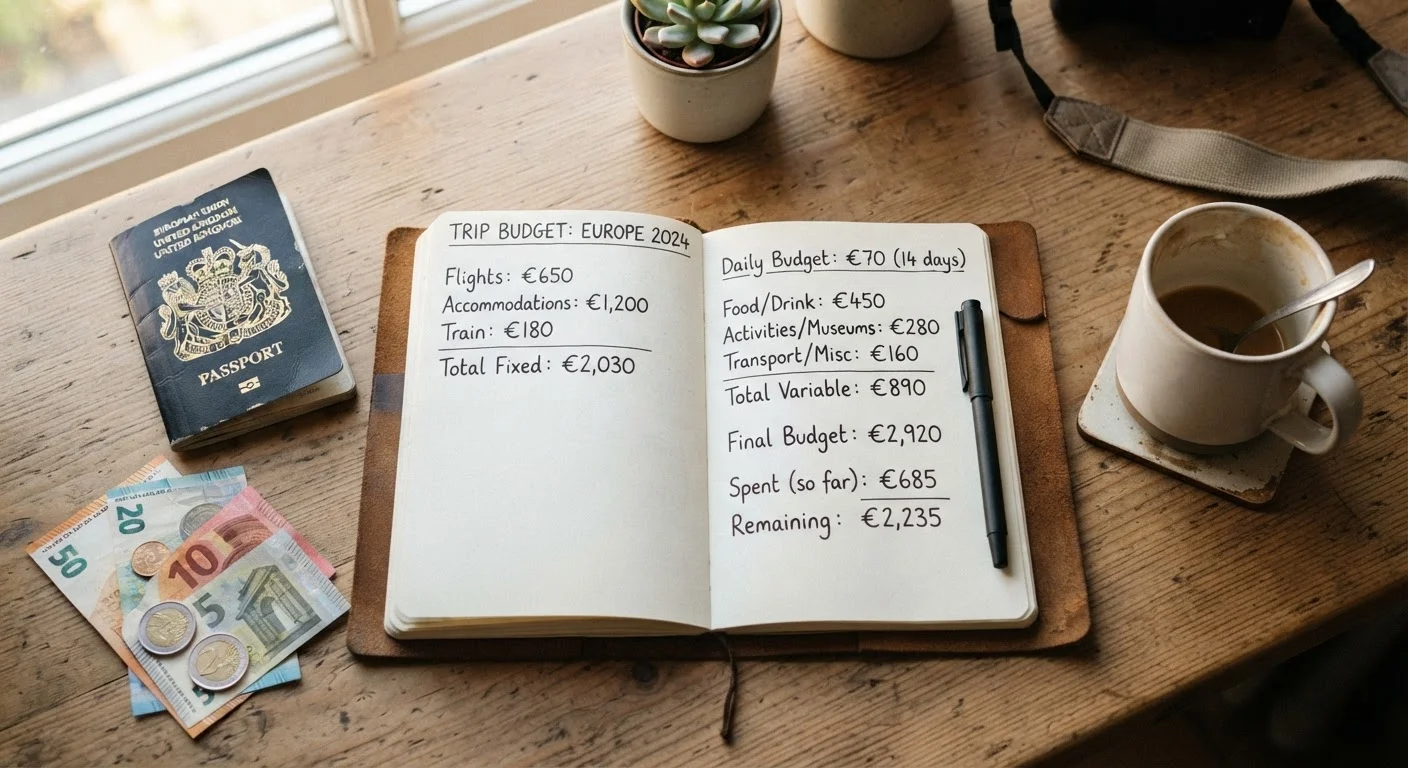
- Overall budget envelope - what's realistically available, not what you wish you had
- Travel party composition - solo, couple, family with kids, group of friends; each changes pacing assumptions significantly
- Non-negotiable obligations - a wedding on day three, a required return flight on day seven
Once those are fixed, you have a real container to fill. Everything else - destinations, activities, day-trips - gets evaluated against whether it fits that container. For a fuller view of all the planning layers involved, the complete framework for planning any trip is a useful companion reference.
Anchor point
A must-do experience or event that your itinerary is structured around. It's the non-negotiable that everything else is planned relative to.
Buffer day
An intentionally light or unscheduled day built into a trip to absorb delays, rest, or unexpected opportunities without derailing the overall plan.
Capacity planning
Deliberately limiting how many activities you schedule per day so that real-world logistics and spontaneity have room to fit without causing stress.
Transit time
The actual time required to move between two locations, including waiting, check-in, connections, and typical delays - not just the advertised travel duration.
Itinerary arc
The overall shape of a trip - how highlights, rest days, and transitions are distributed across the full duration to create a satisfying, balanced experience.
Anchor Points: Your Itinerary's Load-Bearing Moments
An anchor point is an experience, location, or event that your trip is genuinely built around - the thing you'd be disappointed to miss. Most trips have two or three of these. Identifying them early gives your itinerary its skeleton.
Once you've named your anchors, place them on a timeline relative to your trip length. Don't cluster them all at the start or end. Spread them to give the trip a natural arc: an early win, a midpoint highlight, a strong finish.
Everything else you add should either lead naturally into an anchor or follow naturally from one. A cooking class the afternoon before a market visit makes sense. A long driving detour on the same day as your main event doesn't.
Name Your Anchors Before Anything Else
Write down your two or three non-negotiable experiences on a separate line before you touch the rest of your plan. If you can't name them, spend more time clarifying your trip priorities before building the day-by-day structure. A plan without anchors tends to drift into a list of things you vaguely want to do, which is harder to execute and easier to abandon when logistics get complicated.
This anchor-first logic is how experienced travelers approach planning from day one - see how experienced travelers actually build their itineraries for more on that methodology.
Filling In the Days Without Overpacking Them
Here's where most first itineraries go wrong: filling every available slot. A day with six items on it looks productive on paper and feels exhausting in practice.
Plan for 60-70% capacity. If a day realistically holds four activities, plan for three. That unused 30% gets consumed by transit delays, a longer-than-expected lunch, an unexpected conversation with a local, or simply wanting to sit somewhere and absorb where you are.
Organize each day with a rough arc rather than a tight schedule:
- Morning: your highest-energy or most time-sensitive activity (popular sites before crowds)
- Midday: a natural pause - lunch, a neighborhood walk, a museum with air conditioning
- Afternoon: something lower-stakes or optionally skippable
- Evening: one good meal or experience, not two
If your trip involves driving between destinations, the same pacing logic applies on a larger scale. The anatomy of a well-planned road trip covers how to layer driving days and overnight stops without burning yourself out.
Build in Buffer and Contingency
Buffer isn't a luxury - it's a planning tool. Every itinerary should include at least one intentionally light day for every four to five days of travel. That day absorbs whatever the trip has thrown at you by then: a late arrival, an activity that ran long, a day you simply needed to rest.
Beyond full buffer days, build micro-buffers into daily transitions. If you're moving between cities, don't schedule an activity the same afternoon you arrive. Give yourself time to check in, orient, and decompress before the next thing starts.
Don't Skip the Plan B Step
Outdoor activities, open-air markets, and scenic drives are all weather-dependent. If a key experience relies on good conditions, identify a realistic alternative before your trip departs. Scrambling for a backup option in the moment - often without reliable internet or local knowledge - adds unnecessary stress and can derail the rest of your day.
Contingency planning also means having a mental fallback for weather-dependent activities. Know your plan B before you need it, not while you're standing in the rain.
Sanity-Check Your Draft Before Booking
Before any money changes hands, stress-test your draft itinerary against a few practical questions:
- Have you looked up actual transit times between every location pair, not just map distances?
- Are your accommodation locations logical - close enough to Day 2's activities, not Day 1's?
- Do your anchor experiences require advance booking, and is availability realistic for your dates?
- Is there at least one genuinely open stretch in your plan?
Run the itinerary past someone who hasn't been involved in building it. Fresh eyes catch geographic inefficiencies and pacing problems that planning tunnel-vision misses.
For travelers heading abroad for the first time, layering in logistics like visas, entry requirements, and time zones is a parallel process - a first-timer's map to booking international travel walks through those moving parts clearly.
Google Maps Timeline
Useful for stress-testing transit times between itinerary locations. Drop pins for each planned stop and check realistic driving or transit durations before committing to a day's structure.
Rome2rio
Compares transportation options (train, bus, ferry, flight) between two points worldwide. Helpful for understanding what modes are actually available between destinations before you lock in a plan.
Itinerary Planning for Short Trips
If your trip is under a week, the pacing trade-offs are sharper. This guide covers how to prioritize ruthlessly and structure compressed itineraries without feeling like you've shortchanged yourself.