
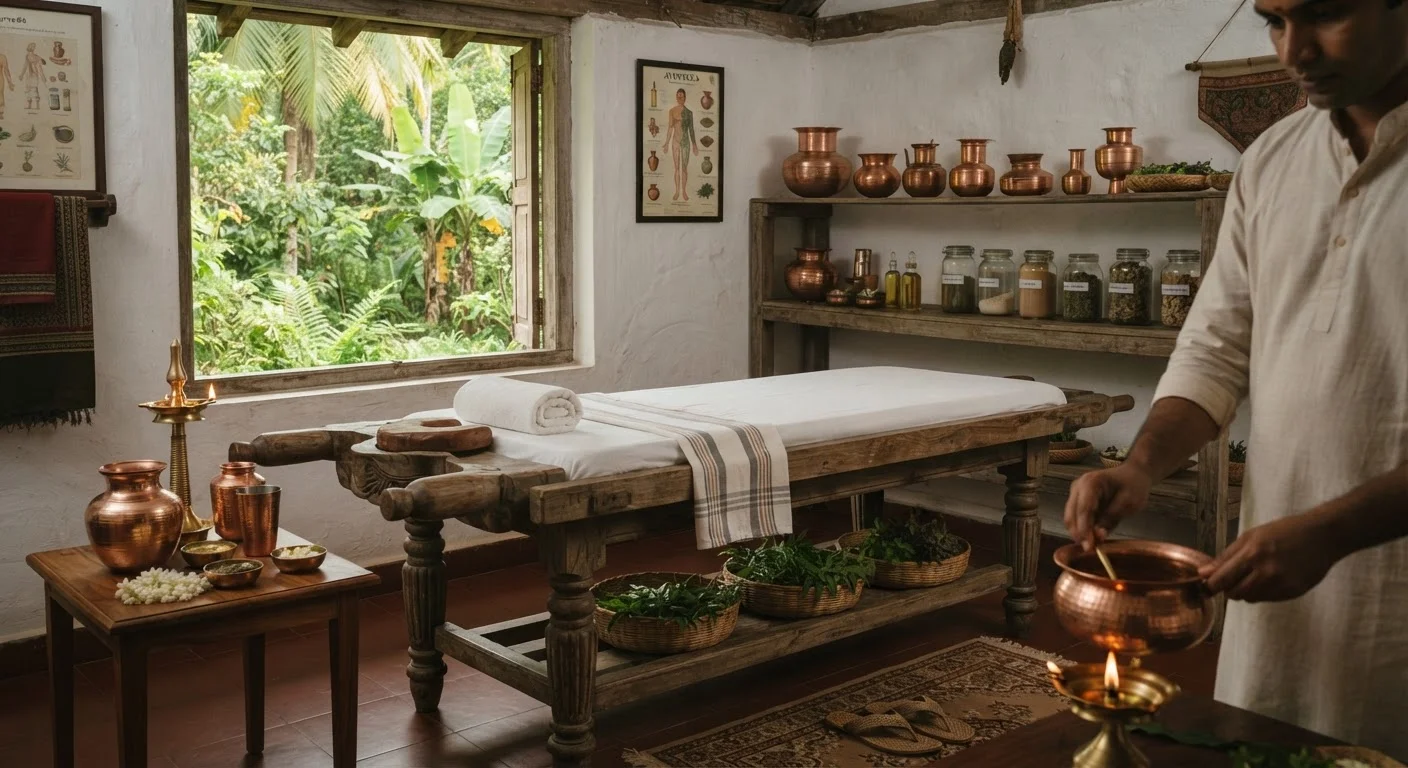
What Ayurveda Actually Is
Ayurveda - derived from the Sanskrit words ayus (life) and veda (knowledge) - is one of the world's oldest codified systems of health and well-being, with roots in the Indian subcontinent dating back more than 3,000 years. It is not a collection of massage therapies or herbal supplements. It is a comprehensive philosophical and clinical framework that addresses diet, lifestyle, mental state, and physical health as an integrated whole.
The tradition is documented in ancient texts including the Charaka Samhita and Sushruta Samhita, which outline diagnostics, surgery, pharmacology, and preventive care. In India, Ayurveda is formally recognized as a system of medicine, regulated by the Ministry of AYUSH (Ayurveda, Yoga and Naturopathy, Unani, Siddha, and Homeopathy), and practitioners undergo structured degree programs.
Understanding this context matters before you travel, because it shapes what you should realistically expect - and what questions to ask before booking. For a broader orientation to health-focused travel, see our guide to what wellness travel genuinely involves.
Ayurveda Is Not a Substitute for Medical Care
Ayurvedic practice is a recognized complementary tradition, but it should not replace diagnosis or treatment by a licensed physician for serious, acute, or chronic conditions. If you have an existing health condition, consult your primary care provider before enrolling in any Ayurvedic program. Disclose all medications and health history fully to the Ayurvedic practitioner upon arrival.
The Three Doshas: A Framework for Understanding Yourself
Central to Ayurvedic theory is the concept of the three doshas - Vata, Pitta, and Kapha - which are functional energies believed to govern physiological and psychological processes. Every person is understood to have a unique combination of these doshas, known as their prakriti (natural constitution), which an Ayurvedic physician determines through pulse diagnosis, observation, and interview.
- Vata governs movement, nervous system function, and creativity. Imbalance may present as anxiety, dryness, or irregular digestion.
- Pitta governs metabolism, digestion, and transformation. Imbalance may manifest as inflammation, irritability, or overheating.
- Kapha governs structure, stability, and immunity. Imbalance may appear as lethargy, congestion, or weight gain.
Treatments, dietary guidance, and daily routines are tailored to rebalance an individual's current state (vikriti) relative to their natural constitution. This is why a reputable Ayurvedic center conducts a formal initial consultation rather than offering generic menus of treatments.
3,000+
Years of Ayurvedic documented practice
Classical Ayurvedic texts are among the oldest surviving systematic medical documents in the world, predating many Western medical traditions.
~400,000
Registered Ayurvedic practitioners in India
According to India's Ministry of AYUSH, the country has a large formal workforce of licensed Ayurvedic physicians operating within a regulated framework.
What an Authentic Ayurvedic Program Involves
A genuine Ayurvedic stay is structured around a physician-led protocol - not a spa menu you browse at check-in. Core components may include:
- Initial consultation (nadi pariksha): Pulse diagnosis and health history assessment to determine your constitution and current imbalances.
- Panchakarma: A classical detoxification and rejuvenation protocol involving preparatory therapies (oil application and steam) followed by elimination treatments. This is medically supervised and not appropriate for everyone.
- Dietary prescription: Meals are often prepared according to your dosha and current condition - expect simple, cooked foods rather than resort cuisine.
- Yoga and pranayama: Breath and movement practices integrated as therapeutic tools, not fitness classes.
- Follow-up consultations: Adjustments to the protocol based on how your body is responding.
This structure is a significant departure from a hotel spa treatment. Our article on what wellness retreats rarely disclose upfront covers similar preparation realities that apply directly here.
Request the center's practitioner credentials and ask specifically whether Panchakarma is supervised by a BAMS-qualified physician - not just administered by therapists.
Panchakarma involves elimination therapies that carry real physiological effects; unsupervised application can cause adverse outcomes, particularly for people with cardiovascular or digestive conditions.
Block at least three days of low-stimulation recovery time after returning home from a full Panchakarma program before resuming a demanding work or travel schedule.
The detoxification process continues past the final day of treatment; returning immediately to high-stress environments can undermine the program's restorative effects.
Choosing the Right Setting and Duration
Kerala's coastal and inland regions - particularly areas around Thrissur, Palakkad, and Thiruvananthapuram - have the deepest infrastructure for clinical Ayurveda, with family lineages of practitioners and established institutions. Sri Lanka also has a strong tradition, drawing from the same classical texts.
Duration matters considerably. A single treatment has limited therapeutic value in the Ayurvedic framework. Meaningful detoxification programs are generally structured over 7, 14, or 21 days. Shorter stays can be valuable for education and foundational practices, but set expectations accordingly.
Plan Around the Right Season
Kerala's monsoon season (roughly June through August) is traditionally considered the most effective time for Panchakarma - the cooler, humid air is believed to open pores and enhance the absorption of therapeutic oils. Many established centers run their most intensive programs during this window. If monsoon travel logistics concern you, the cooler dry months from November through February are also widely regarded as favorable.
When evaluating a program, ask whether the lead practitioner holds a BAMS (Bachelor of Ayurvedic Medicine and Surgery) degree or equivalent recognized qualification. Ask also whether the center's treatments use in-house prepared or certified herbal formulations, since the provenance of oils and medicines affects quality. Avoid programs where the initial consultation is cursory or skipped entirely.
Cultural Respect and Responsible Engagement
Ayurveda is not a cultural artifact to be extracted and repackaged - it is a living practice embedded in Indian philosophical and religious life. Travelers who approach it with intellectual curiosity and genuine humility tend to have meaningfully different experiences than those treating it as an exotic spa upgrade.
Practically, this means: learn basic terminology before you arrive; follow the program's guidelines on diet and rest without negotiating for exceptions; do not expect treatments to mirror a Western spa aesthetic; and engage with practitioners as medical professionals, not service staff.
Entry Requirements and Health Advisories
Visa requirements, recommended vaccinations, and travel health advisories for India change periodically. Always verify current requirements with the U.S. Department of State, the CDC Travelers' Health portal, and your own physician well in advance of travel. Do not rely on third-party booking platforms for regulatory accuracy.
It is also worth acknowledging that Ayurvedic herbal preparations are not regulated by the U.S. FDA, and some preparations have been found to contain heavy metals when tested outside India's regulatory environment. This is a known and documented concern - travelers should discuss any herbal supplements with their own physician before and after travel, particularly if they take prescription medications.
Preparing for Your Ayurvedic Journey
Preparation begins well before your departure date. Inform your primary care physician that you are undertaking an Ayurvedic program, particularly if you have any chronic conditions or take ongoing medications. Disclose all health history honestly during your intake consultation - the program's safety depends on it.
Mentally, approach the experience with flexibility. Dietary restrictions may be substantial; schedules may be quieter and more regimented than a standard vacation. This is intentional - the therapeutic environment requires reduced stimulation.
For travelers newer to retreat-style travel, our preparation checklist for first-time retreat travelers offers a transferable framework for questions to ask and logistics to sort in advance. After your return, consider reading our guidance on planning a wellness journey that holds up beyond the trip itself - reintegrating Ayurvedic practices into daily life at home is where lasting benefit is most likely to take root.
“Ayurveda does not treat a disease - it treats the person who has the disease. The same condition in two individuals may call for entirely different interventions, because the underlying constitution and imbalances differ.”
— Dr. Vasant Lad, Founder of The Ayurvedic Institute and author of foundational Ayurvedic texts
This article provides general educational information about Ayurvedic traditions and travel. It is not medical advice. Consult a qualified healthcare professional before undertaking any health program, particularly if you have existing medical conditions or take prescription medications.