
What Actually Separates These Two Expressions of Luxury
The word "luxury" appears so frequently in hotel marketing that it has nearly lost precision. Thread counts, marble bathrooms, and butler service are expected at a certain price point in both boutique and chain categories. The real distinction lies elsewhere: in philosophy, in the texture of the experience, and in what each model considers its primary obligation to guests.
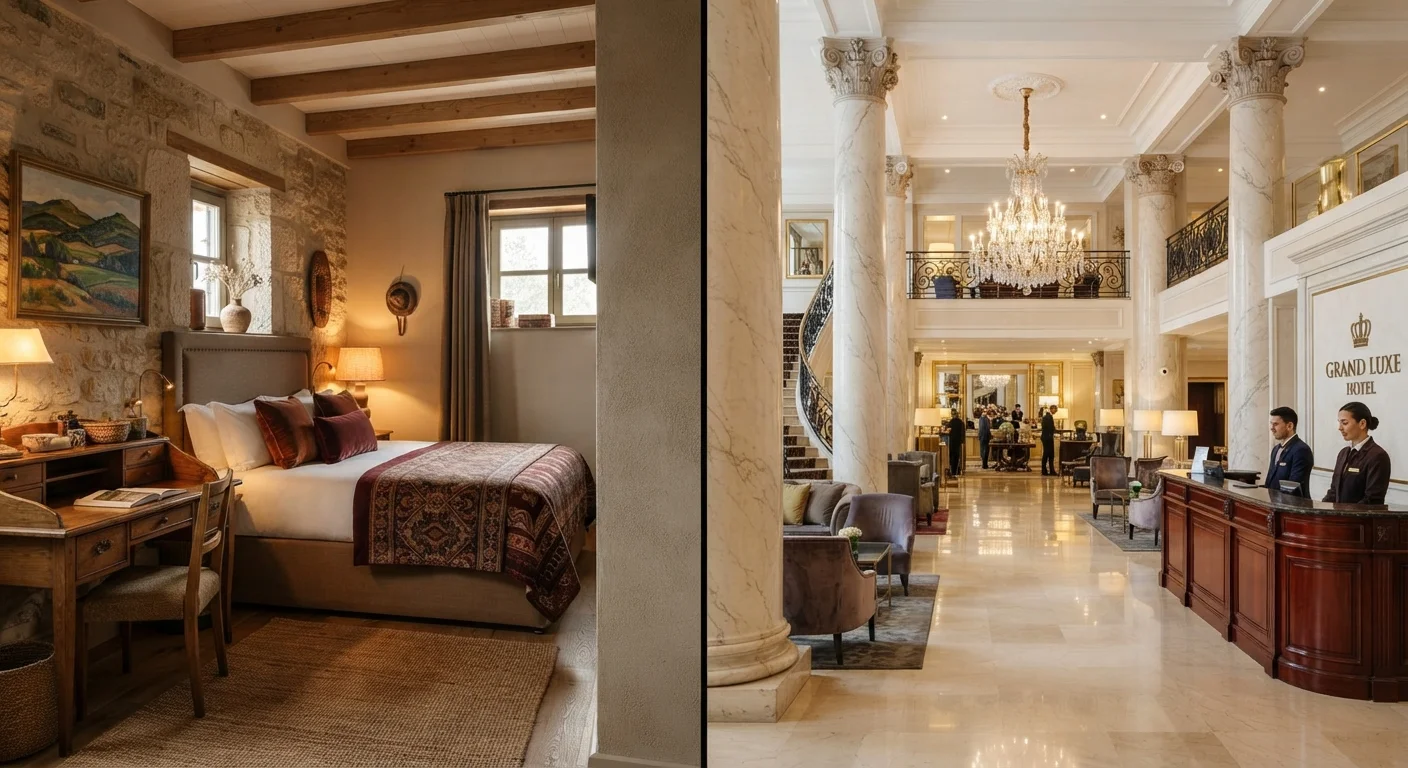
Boutique luxury properties - typically independent, under 100 rooms, and built around a distinct concept or location - treat the stay itself as the destination. The building's history, the owner's aesthetic sensibility, the chef's relationship with regional suppliers: these are not incidental. They are the product. Chain luxury hotels, by contrast, operate on a different covenant: whatever city you're in, whatever the local culture, you will receive the same caliber of service, the same category of amenity, the same standard of finish.
Both are legitimate promises. But they are fundamentally different ones, and understanding that difference is the foundation of choosing well. For a broader look at how boutique and chain stays compare across the full market - not just the luxury tier - our guide to the full stay experience covers the territory in depth.
| Criterion | Boutique Luxury | Chain Luxury |
|---|---|---|
| Property size | Typically under 100 rooms | Often 200-500+ rooms |
| Sense of place | Central to the concept | Varies; often supplementary |
| Service style | Intuitive, relational | Structured, systems-driven |
| Consistency | Property-dependent | Brand-standardized |
| Loyalty rewards | Rare or limited | Robust points and status tiers |
| On-site amenities | Selective, concept-driven | Comprehensive, full-service |
| Design philosophy | Distinctive, owner-led | Brand-cohesive, polished |
| Risk profile | Higher variance; research essential | Lower variance; predictable baseline |
Service Culture: Intuition vs. Infrastructure
Service is where the philosophical gap between these two models becomes most tangible. In a boutique property with 30 or 40 rooms, a well-run team can know returning guests by name, remember dietary preferences, and make adjustments without being asked. This kind of hospitality is intuitive and relational - it emerges from proximity and low guest-to-staff ratios.
Chain luxury hotels deliver service through systems. Training programs, service standards manuals, mystery guest programs, and multi-department coordination produce a hospitality that is technically accomplished and reliably consistent. At the highest tier - the so-called ultra-luxury segment - chain hotels achieve extraordinary levels of anticipatory service through sheer resource deployment. But the warmth of that interaction can feel calibrated rather than spontaneous.
~60%
Luxury travelers citing 'authentic local experience' as a key factor
Industry research from the Luxury Institute has consistently found that experiential authenticity ranks among the top purchase drivers for high-end travelers globally.
Under 100
Typical room count defining a boutique property
The Small Luxury Hotels of the World collection and similar alliances use room count and independence as primary criteria for boutique classification.
Neither approach is inherently superior. A traveler arriving at a well-run boutique after a difficult journey may find the informal attentiveness far more restorative than formal five-star procedure. Another guest with specific, predictable needs - early check-in, hypoallergenic bedding, a particular room configuration - may feel more confident that a global brand's systems will deliver without requiring explanation.
Sense of Place vs. Seamless Standards
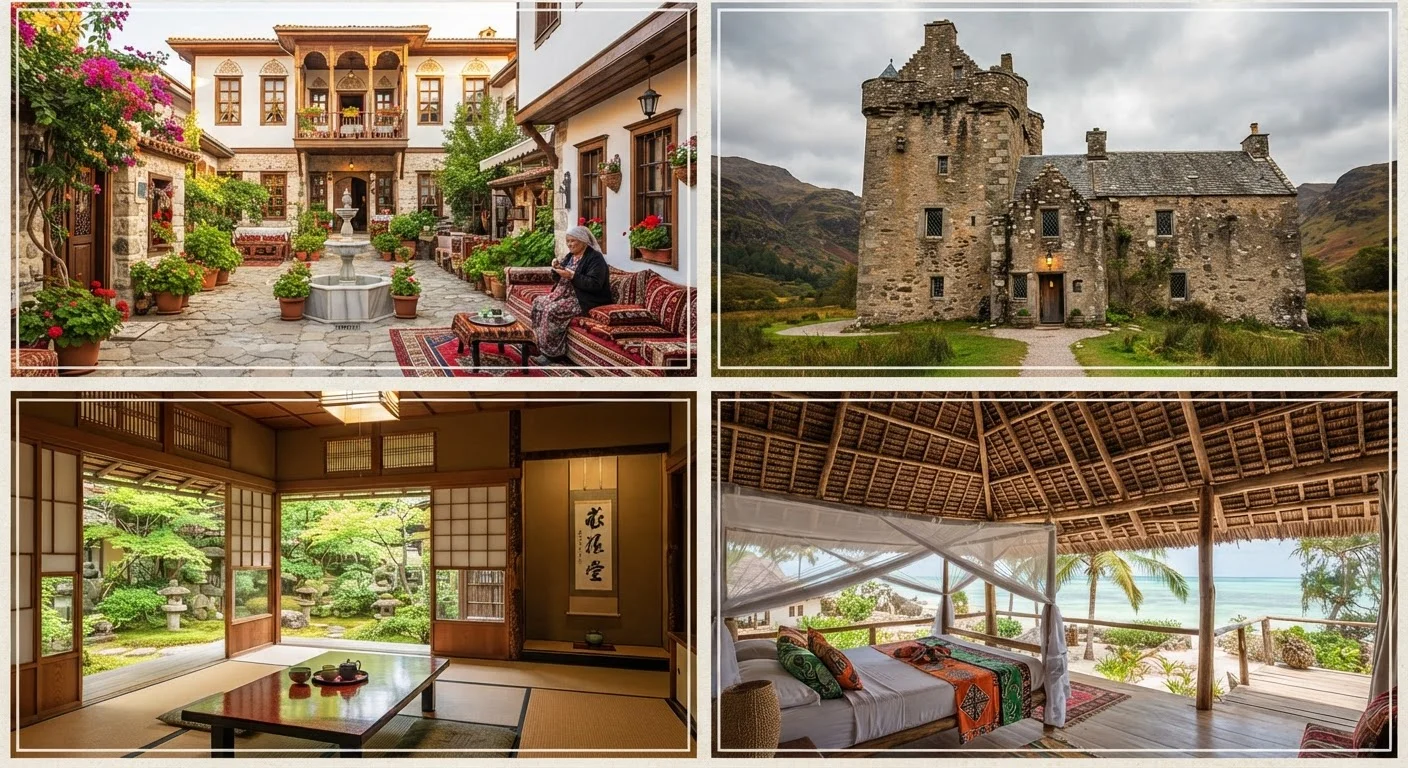
One of the strongest arguments for boutique luxury is the sense of place it can deliver. An independent property in Kyoto, Marrakech, or Oaxaca has the freedom to be genuinely of its location - in its architecture, its materials, its food and beverage program, and the perspective of the people who run it. That rootedness is difficult to manufacture and nearly impossible to replicate at scale.
Chain luxury properties have made meaningful efforts here - local partnerships, regionally inspired design, chef-driven restaurants with genuine provenance. But the corporate framework inevitably introduces some distance between the property and the place. Brand standards, liability considerations, and procurement at scale all shape what a chain property can and cannot do, regardless of the ambition of its local team.
For travelers exploring boutique and unique stays, the appeal is precisely this irreplaceability. The experience cannot be extracted and transplanted. If you want to understand what a city feels like at a human scale, a well-chosen independent property is often the more direct path.
Soft Brands Bridge the Gap
Several major hotel groups now operate 'soft brand' collections - umbrella programs that allow independent properties to affiliate with a global loyalty network while retaining their own name, design, and character. This gives guests partial access to chain-style loyalty benefits without sacrificing the boutique experience. It's worth checking whether an independent property belongs to such a collection before assuming it has no loyalty pathway.
Loyalty, Consistency, and Practical Trade-Offs
Chain luxury hotels hold a structural advantage for frequent travelers: loyalty programs. Status-matched upgrades, guaranteed late checkout, complimentary breakfast, and the ability to earn and redeem points across a portfolio of properties represent real, compounding value for those who travel regularly. Independent boutiques - even exceptional ones - rarely offer comparable programs, though some belong to soft-brand collections or independent alliances that provide modest benefits.
Consistency is the other pillar. A traveler booking a chain luxury property in a city they've never visited has a reasonable expectation of what they'll find: room quality, service responsiveness, food and beverage range, and amenity access. That predictability has genuine value, particularly on business trips or in destinations where local research is difficult. It's worth comparing this dynamic to how booking method itself can shape your experience - our analysis of agent vs. direct booking explores that layer of the decision.
The boutique trade-off is asymmetric risk: the ceiling is higher, but so is the floor. A poorly managed independent property with no corporate accountability has fewer corrective mechanisms than a global brand with service recovery protocols. Research - recent, specific, review-based - matters far more when choosing a boutique.
Those weighing broader hospitality formats may also find value in our comparison of all-inclusive and room-only luxury, which addresses similar questions of structure versus flexibility at the resort level.