
The Threshold Effect: First Impressions as Design Intent
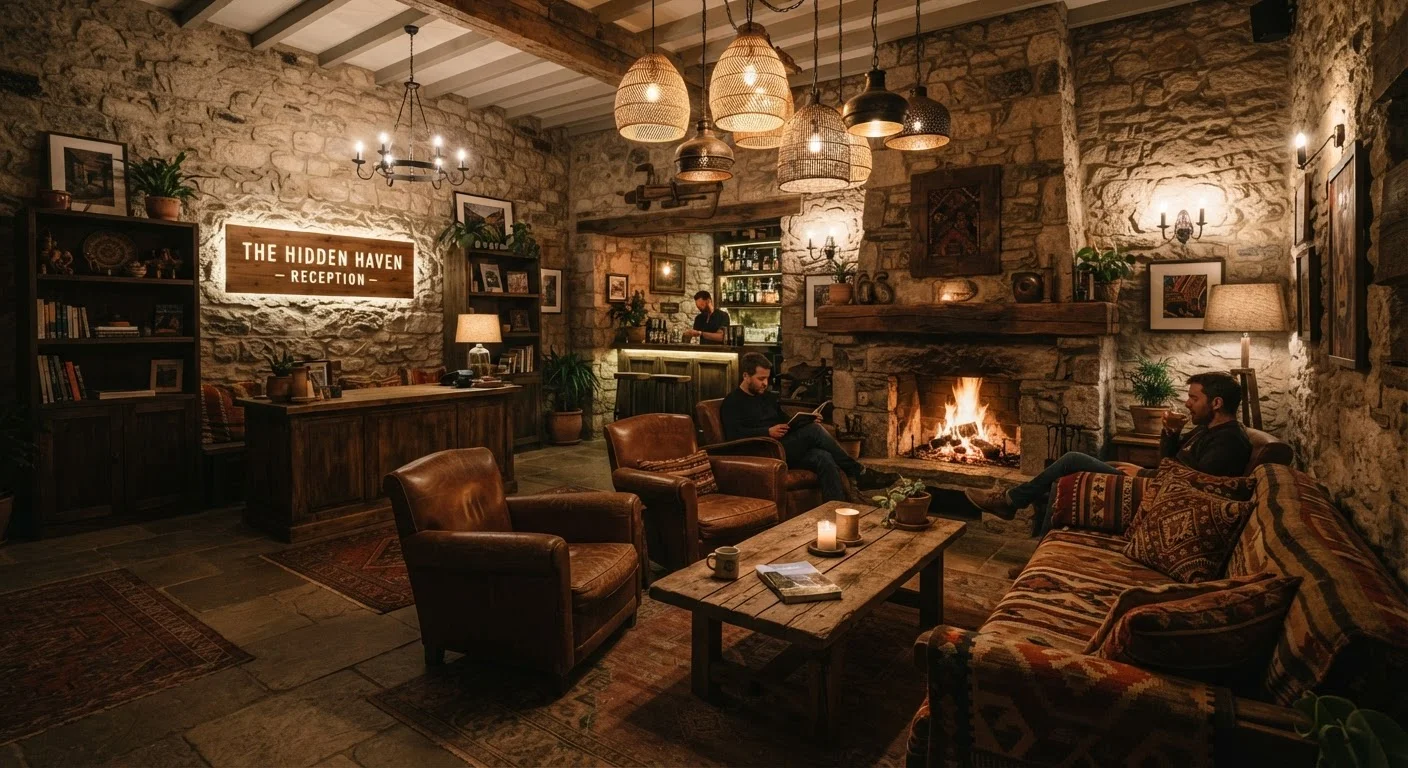
The moment a guest pushes open a boutique hotel's front door, a deliberate sensory argument begins. Unlike chain properties — where lobbies are engineered for operational efficiency across dozens of markets — independent hotels use the entrance as an opening statement. The ceiling height, the quality of light, the smell of the air, the material underfoot: none of these are accidental.
Designers working at this scale talk about the threshold effect — the psychological shift that occurs when a guest crosses from street to interior. A low, compressed entryway that opens into a double-height dining room creates a release of tension. A long, narrow corridor lined with archival photography builds anticipation. These sequences are choreographed, not assembled. Understanding this helps explain why so many boutique stays produce a feeling guests struggle to articulate: the space itself was working on them from the first step.
What separates a boutique hotel from a standard property comes down partly to this spatial freedom — the absence of a template that must perform identically in Austin and Aberdeen.
Material Honesty: How Local Sourcing Shapes a Sense of Place
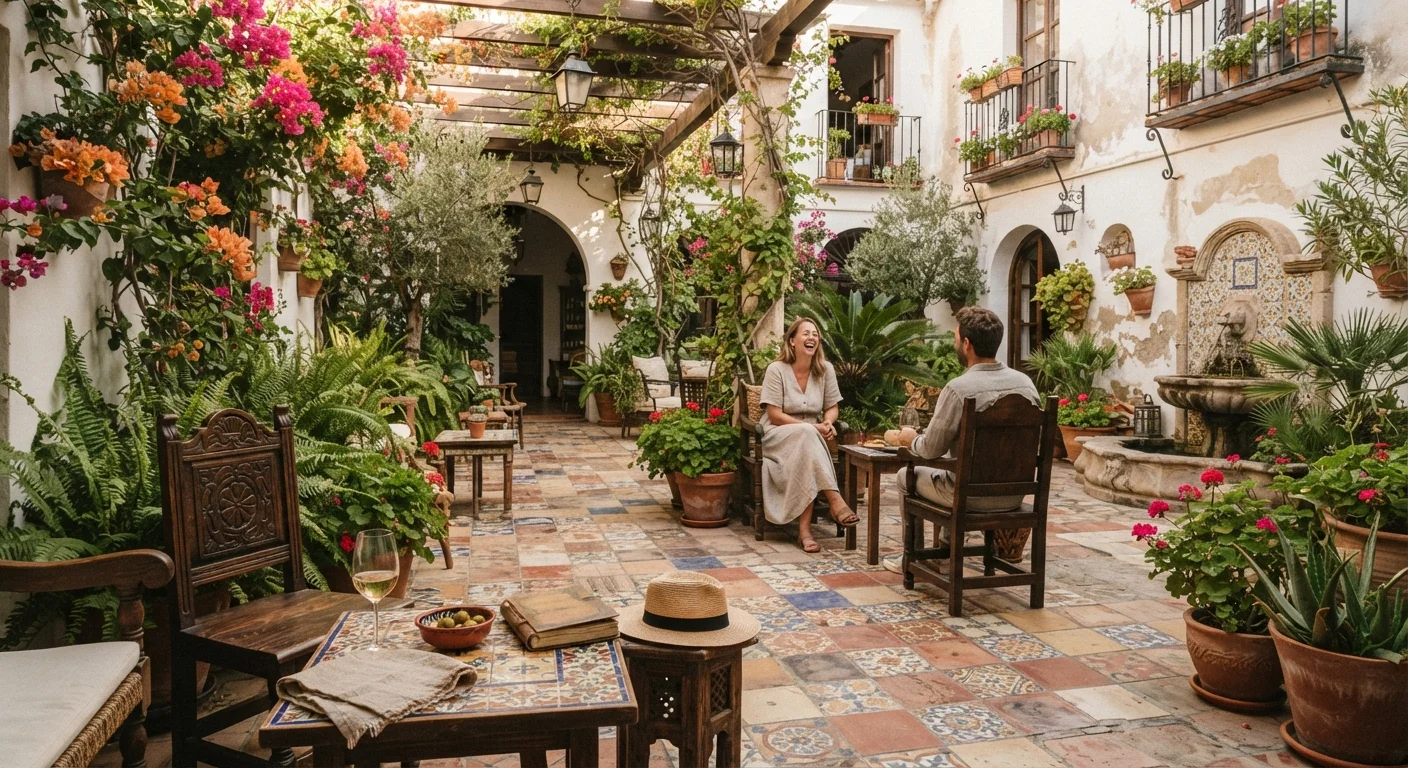
Material selection is where atmospheric design either earns its credibility or collapses into pastiche. A hotel in coastal Portugal that installs hand-glazed azulejo tiles salvaged from a demolished nearby chapel is doing something qualitatively different from one that orders a tile pattern that references the same tradition from an overseas manufacturer. Both may look similar in photographs. In person, only one carries the weight of place.
The distinction matters because guests — particularly frequent travelers — are increasingly sensitive to what designers call material honesty: the sense that the building's fabric genuinely belongs where it stands. Rough-hewn local limestone, textiles woven by regional artisans, reclaimed timber from a building with a documented history: these materials bring inherited context that no import can replicate.
68%
Travelers prioritizing distinctive accommodation design
A survey cited in hospitality industry research suggests a majority of independent travelers consider design and atmosphere a significant factor in property selection.
3x
Higher guest recall for properties with distinct spatial narrative
Hospitality researchers have observed that experiential differentiation — including spatial design — correlates strongly with unaided recall and repeat booking intent among frequent travelers.
40%+
Boutique hotel openings sourcing materials locally
Industry observers note a growing proportion of independent properties explicitly committing to regional sourcing as both a design and community-investment strategy.
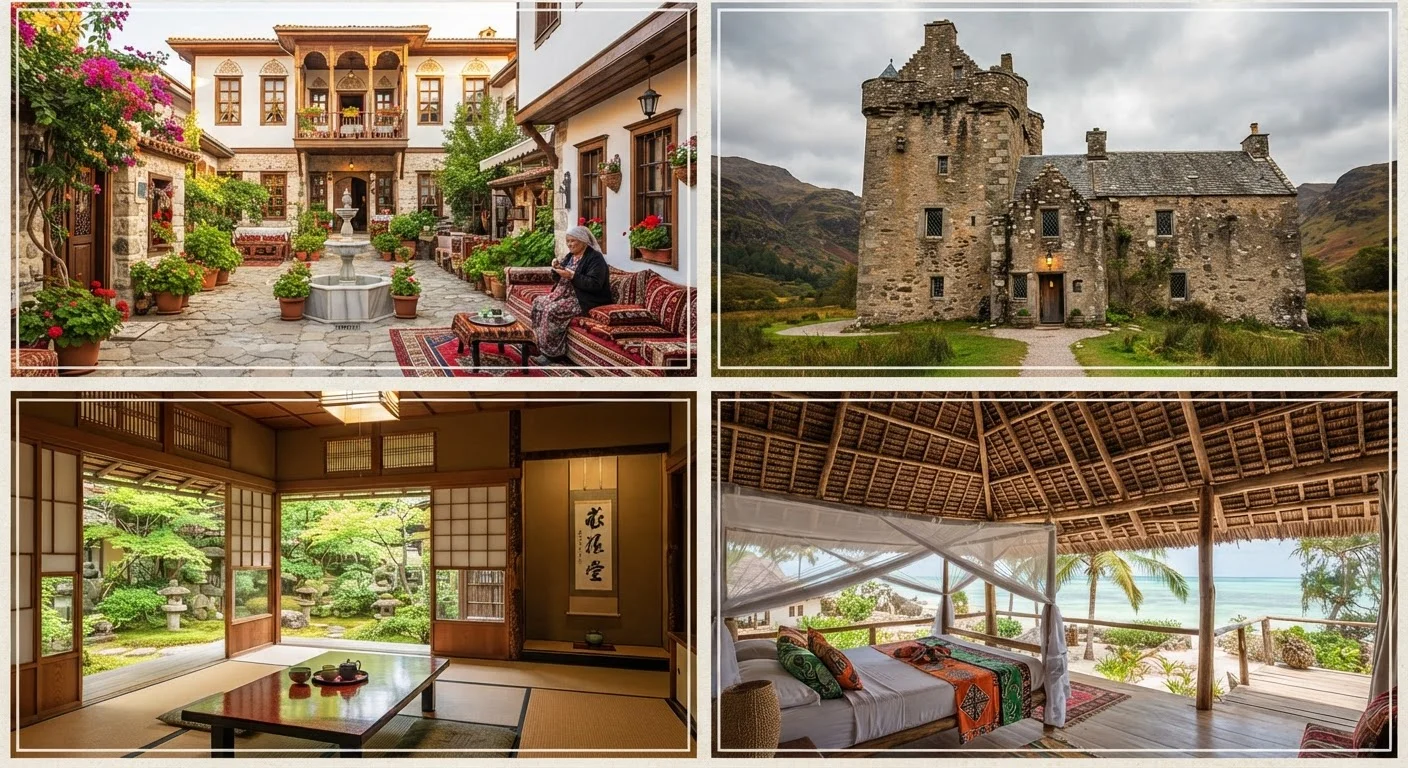
This is also where boutique hotels connect most directly to local economies. Commissioning area craftspeople and sourcing regionally isn't just an aesthetic choice — it embeds the property in its community in ways that reinforce rather than perform authenticity. For travelers interested in how these distinctions play out across different stay formats, regional accommodation traditions around the world offer useful context.
Light, Scale, and the Art of Spatial Sequencing
Lighting is the most commonly underestimated element in boutique hotel design — and the one most responsible for how a space actually feels rather than how it photographs. Warm, low-level lighting in a reading nook signals permission to slow down. Harsh overhead illumination in the same space signals the opposite, regardless of how carefully the furniture was chosen.
Scale operates similarly. Boutique properties often work with existing buildings — converted warehouses, merchant townhouses, former monasteries — that were never designed as hotels. The best designers resist the urge to regularize these spaces. Asymmetrical rooms, unexpected alcoves, ceilings at different heights across the same floor: these apparent imperfections are in fact the property's most valuable assets. They create spatial variety that keeps guests oriented but perpetually discovering.
Read the Space, Not Just the Photos
Before booking, look for property images that show transition spaces — staircases, corridors, the view from the bed toward the window — not just the hero shot of the common room. These in-between spaces reveal whether the design intent holds throughout, or whether the atmosphere is concentrated in a few photogenic zones. Reviews that describe how a place felt, rather than just what it included, are equally telling.
Spatial sequencing — the ordered movement from public to semi-public to private zones — is another tool that operates largely below conscious awareness. A well-sequenced boutique hotel makes the transition from lobby to bar to room feel like a natural progression, each space calibrated slightly differently in intimacy and sensory intensity. The effect is cumulative: by the time a guest reaches their room, they've been guided through an experience that has done the emotional work of arrival.
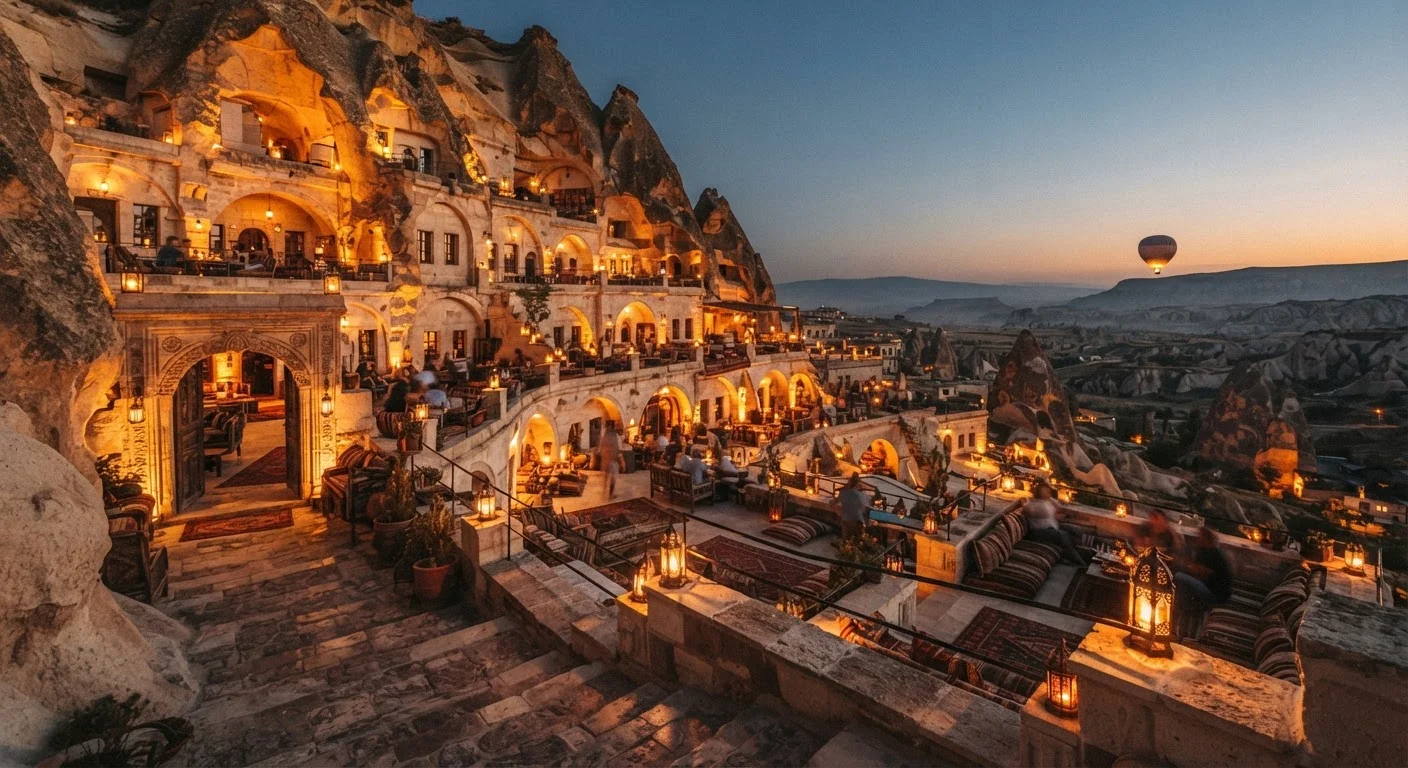
For travelers drawn to the extremes of this approach, converted architecture turned into accommodation shows how spatial constraints can become defining features.
When Atmosphere Becomes Performance
Not every property that deploys these tools does so with integrity. As boutique design has become commercially influential, its vocabulary — exposed brick, Edison bulbs, curated bookshelves, hand-lettered menus — has been adopted widely enough that the style now sometimes precedes any genuine sense of place. A hotel can look atmospheric without actually being rooted in its location.
The difference is legible to experienced travelers. Genuine atmospheric design answers a specific question: why here? Every material, every spatial decision, every piece of local craft should have a defensible answer to that question. When it doesn't — when the exposed brick is in a city with no brick-building tradition, or the woven textiles come from a region with no weaving history — the effect tips from story-telling into set-dressing.
Separating genuine character from aesthetic performance is a skill worth developing before a stay, not just a judgment made after. Equally, understanding the trade-offs between heritage and new-build boutiques can help set more calibrated expectations about the kind of depth a property can credibly claim.
“The best hotels are not decorated spaces — they are narrated ones. Every material decision is a sentence in a story about where you are.”
— Ilse Crawford, Interior designer and founder of Studioilse, known for human-centred hospitality design
Atmosphere, at its most effective, isn't a feature list — it's an argument about where you are and why it matters. The properties that make that argument convincingly are the ones guests remember long after checkout.