
A Coastline Still Catching Its Footing
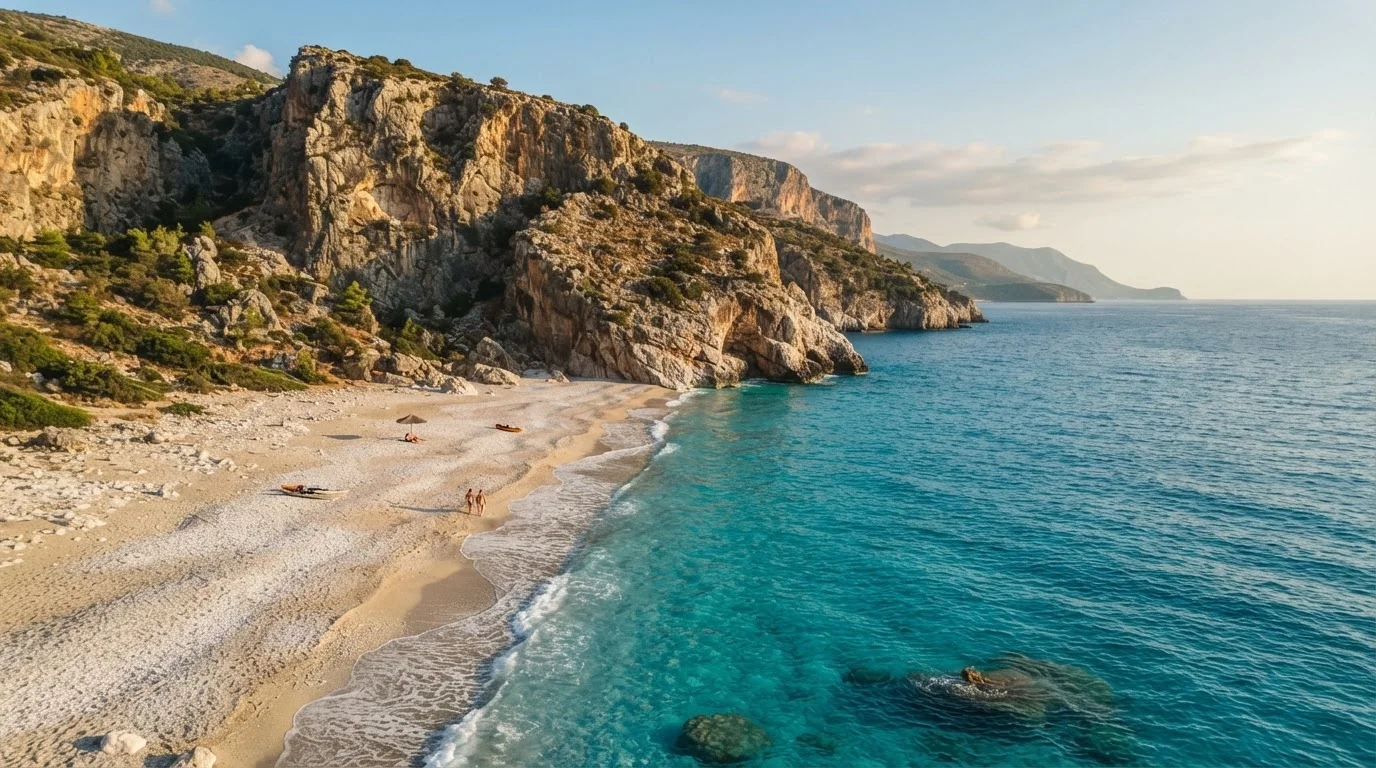
The Albanian Riviera stretches roughly 100 kilometres along the country's southwestern edge, from the port city of Vlorë down to Sarandë, directly opposite Corfu. The Ionian water here - the blues ranging from pale aquamarine in shallow coves to deep cobalt offshore - has drawn comparisons to the Greek islands for decades. What kept most travellers away was equally straightforward: until the mid-2010s, Albania remained one of the least-visited countries in Europe, a legacy of its near-total isolation under Enver Hoxha's government until 1991.
That is changing rapidly. Sarandë now fills with Albanian families, Kosovar visitors, and a growing wave of European independent travellers every July and August. Boutique guesthouses have opened in Himara, Dhermi, and the cliff-perched village of Palasë. But the transformation is uneven, and understanding that unevenness is the first step to travelling here well.
For context on how other compact European countries balance development and authenticity, our piece on travelling Slovenia end to end offers a useful counterpoint.
What the Riviera Gets Right
Exceptional water clarity and uncrowded beaches
Many coves along the Riviera - particularly around Palasë and Gjipe - remain accessible only on foot or by boat, keeping visitor numbers naturally low. The water quality is consistently rated among the cleanest in the Ionian basin.
Costs are low by any European coastal standard
Accommodation, food, and local transport run significantly cheaper than comparable spots in Greece, Croatia, or Montenegro, allowing for a longer or more comfortable trip on a modest budget.
Two UNESCO World Heritage hilltowns within reach
Gjirokastër and Berat both carry UNESCO status and offer architectural and historical depth that few visitors connect to a beach trip here - an easy inland detour adds genuine cultural weight.
A distinct cultural identity unlike anywhere in Europe
Albania's layered history - Illyrian, Byzantine, Ottoman, Italian-influenced, and Soviet-era - produces a setting that feels genuinely singular rather than a variation on a familiar Mediterranean theme.
Relatively easy regional connectivity via Corfu ferry
The short crossing from Sarandë to Corfu makes multi-destination Ionian itineraries practical, allowing travellers to split time between Albania and Greece without backtracking.
Beyond the beaches, the cultural geography is extraordinary. The UNESCO-listed hilltown of Gjirokastër - a fortress-city of grey stone Ottoman mansions - sits roughly 90 minutes inland from Sarandë by road. Berat, known as the "City of a Thousand Windows" for its stacked white houses overlooking the Osum River, is reachable from Vlorë. Neither town sees the visitor volumes they probably deserve, which means wandering their citadel streets without crowds remains entirely possible.
The cuisine, rooted in fresh seafood, grilled lamb, byrek (savoury pastry), and local olive oil, is consistently good and genuinely affordable. A restaurant meal in a coastal village rarely requires careful budgeting. Albanian raki - grape or mulberry brandy - is a ritual social offering, and the local wine regions of Berat and Korçë are producing bottles that are starting to draw regional attention.
Where Friction Enters the Picture
Coastal road is scenic but demanding
The SH8 highway involves steep gradients, tight bends, and inconsistent road surfaces. Driving it in poor weather or at night is not recommended; travellers without experience on mountain roads should plan carefully.
Cash dependency outside main centres
Card payments are accepted at larger hotels and restaurants in Sarandë and Vlorë, but smaller villages and markets still operate primarily on cash. ATM availability thins out significantly south of Himara.
Peak-season overcrowding at key spots
Ksamil and Dhermi can become heavily congested in July and August, with accommodation prices rising and the quietness that defines the Riviera's appeal largely disappearing during these weeks.
Utility and service reliability remains inconsistent
Power outages and water supply interruptions still occur in some village guesthouses, particularly in summer when demand spikes. Travellers expecting seamless resort-style infrastructure will encounter occasional friction.
Limited English signage outside tourist centres
While younger Albanians in hospitality speak reasonable English, navigating smaller villages, rural roads, and local markets is easier with a few phrases of Albanian or Italian, which is widely understood along the coast.
The SH8 road, which winds along the Riviera's dramatic coastal cliffs from Vlorë to Sarandë, is arguably the most cinematic drive in the Western Balkans. It is also narrow, partially unpaved in sections, and shared with heavily loaded trucks. Renting a car with good clearance and building in extra travel time is standard advice from anyone who has driven it. Public minibuses (furgons) do connect the main towns but run on informal schedules - expect flexibility to be required.
When to Travel for the Best Balance
May, June, and September offer warm Ionian water, functional coastal roads, and accommodation availability without the high-summer crush. Water temperatures typically remain swimmable into early October. The shoulder months also tend to bring better value at guesthouses that adjust pricing dynamically through summer.
The peak summer crush in Dhermi and Ksamil in July and August is increasingly notable. Ksamil's small sandy islands - perhaps the most photogenic spots on the entire coastline - can feel genuinely overwhelmed during this window. Arriving in May, June, or September transforms the experience considerably.
Practical Orientation: Getting There and Around
The most common international entry point is Tirana's Nënë Tereza International Airport, served by a range of European carriers. From Tirana, the Albanian Riviera is roughly three to four hours south by road. Sarandë also receives regular ferry connections from Corfu, making it possible to combine both destinations in a single trip - the crossing takes around 30 minutes.
~100 km
Length of the Albanian Riviera coastline
The coastline between Vlorë and Sarandë spans roughly 100 kilometres, encompassing dozens of beaches and coves at varying degrees of accessibility.
30 min
Ferry crossing time, Sarandë to Corfu
Regular ferry services connect Sarandë and Corfu Town, making dual-destination Ionian itineraries logistically straightforward.
2
UNESCO World Heritage sites within day-trip range
Both Gjirokastër and Berat hold UNESCO World Heritage status and are reachable from the coast as day trips or short overnight detours.
Accommodation ranges from small family-run guesthouses in villages like Borsh and Lukova to newer boutique properties in Himara. The middle tier - comfortable hotels with reliable hot water and Wi-Fi - is growing but still patchy outside main towns. Booking ahead in peak season is strongly advised; outside of it, walk-in availability is generally fine.
For travellers interested in pairing a Riviera trip with deeper Balkan exploration, the lake city of Ohrid in neighbouring North Macedonia is a natural addition. Our guide to what North Macedonia offers beyond the tourist trail covers the essentials.
Entry requirements, visa rules, and travel advisories change. Always verify current conditions with your government's official travel guidance and Albania's border authorities before planning travel.