
Inside Cabins: The Case for Going Windowless
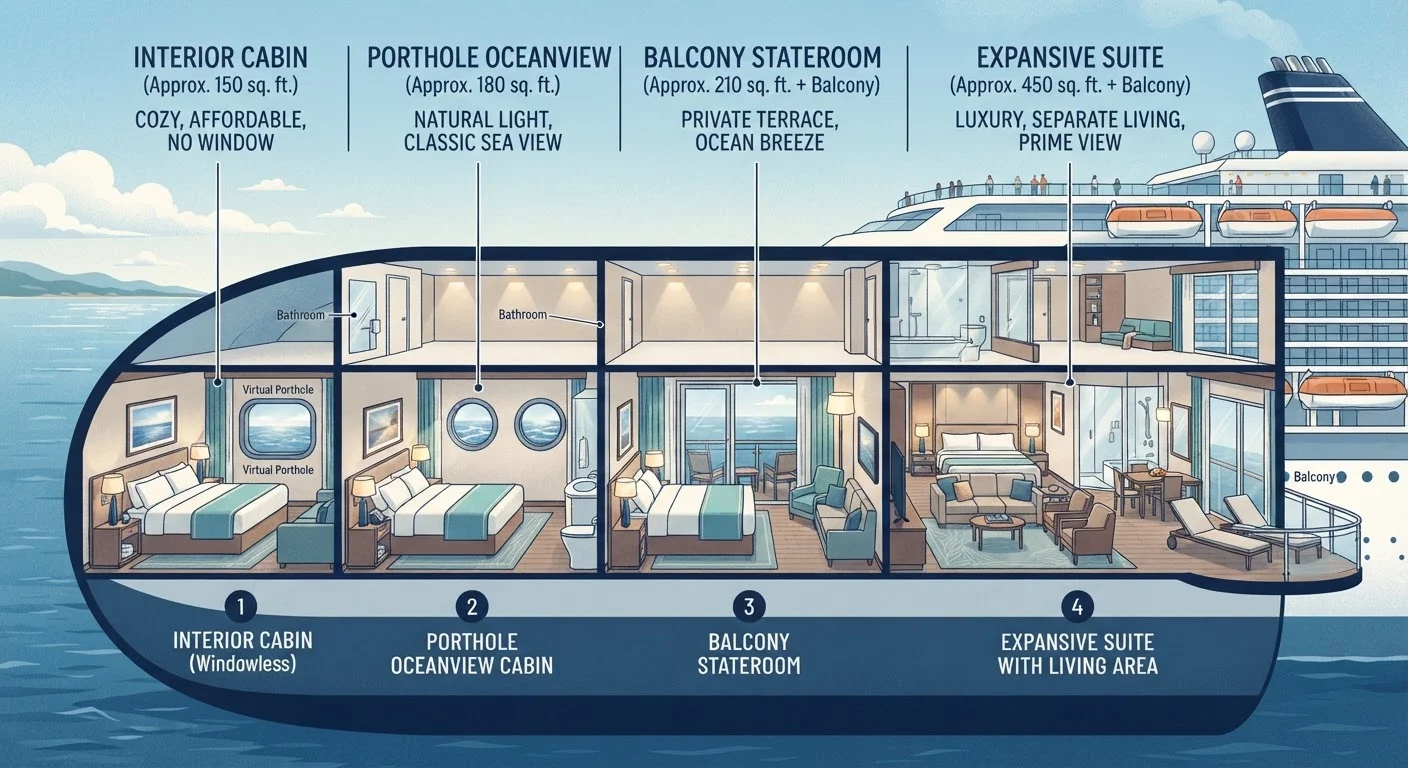
An inside cabin (also called an interior stateroom) has no window or porthole - you're enclosed entirely within the ship's hull. What that means in practice: no natural light, no sea view, and a typically compact footprint that varies from around 150 to 200 square feet depending on the ship class.
That description sounds limiting, and it can be - for the wrong traveler. For the right one, inside cabins are a strategic choice. Repositioning cruises, transatlantic sailings, and Caribbean itineraries with port calls every day leave little reason to linger in the room. Experienced cruisers often book inside cabins deliberately, banking the difference toward premium dining, excursions, or a longer voyage overall.
One underrated benefit: inside cabins are genuinely dark and quiet. For light-sensitive sleepers, they're often the best rest available on a ship. Modern inside cabins on vessels like Royal Caribbean's Wonder of the Seas or Norwegian's newer ships include virtual balconies - large screens streaming a live ocean feed - which partially offset the enclosed feeling without the price jump.
When Inside Cabins Are the Smart Play
If your itinerary includes six or more port days and you're a confident sleeper, an inside cabin often represents excellent value. Redirect the savings toward a specialty dining package or a shore excursion that genuinely enhances the trip. Darkness in inside cabins also means no early-morning light waking you before a long port day.
Oceanview Cabins: Light Without the Ledge
An oceanview cabin sits between inside and balcony both in price and experience. A fixed window or porthole brings in natural light and offers a connection to the sea - but the glass doesn't open, and there's no outdoor space. On older ships, oceanview portholes are genuinely small; on newer vessels, picture windows can span a generous portion of the cabin wall.
The practical value of an oceanview cabin is light and orientation. Waking up and seeing daylight - and having a rough sense of weather and sea state before leaving the room - matters to many cruisers more than they expect. On longer voyages, that daily connection to natural rhythms makes a real difference.
Worth noting: some oceanview cabins are listed as "obstructed" due to lifeboats or deck overhangs in front of the window. Cruise lines typically discount these and flag them on deck plans, but the degree of obstruction varies - always verify using the specific ship's layout. For a thorough understanding of how ships are physically organized, the anatomy of a cruise ship offers useful deck-by-deck context.
~150-200 sq ft
Typical inside cabin size
Standard inside staterooms on major contemporary cruise ships generally range from 150 to 200 square feet, though new builds trend toward the higher end.
180-250 sq ft
Typical balcony cabin interior size
Balcony staterooms on mainstream cruise lines typically offer 180 to 250 square feet of interior space plus a private terrace, varying by ship class.
4 tiers
Standard cabin category structure
Virtually all major ocean cruise lines organize staterooms into four core tiers: inside, oceanview, balcony, and suite - each with multiple sub-categories.
Balcony Staterooms: The Sweet Spot for Most Cruisers
The balcony stateroom - also marketed as a "veranda cabin" on some lines - is the category most experienced repeat cruisers gravitate toward, and for clear reasons. You get a private outdoor terrace, typically with two chairs and a small table, accessible through a sliding or hinged glass door. The ability to step outside, smell the sea air, watch a glacier approach, or have morning coffee as a port city comes into view fundamentally changes the cruise experience.
Balconies range from narrow Juliet-style configurations (barely enough room to stand) to genuinely spacious terraces on premium lines or aft-facing cabins. Square footage of the cabin itself also tends to be larger than oceanview equivalents, generally running 180 to 250 square feet plus the terrace.
Where balconies matter most: scenic itineraries. Alaska, Norway's fjords, the Greek islands, the Douro River - destinations where the landscape is the point reward travelers who have outdoor space to watch it unfold. On a Western Caribbean beach itinerary where you're off the ship by 8am daily, the calculus is different.
It's also worth understanding how balcony pricing interacts with the broader cruise pricing model. How onboard pricing actually works affects the real cost of any cabin upgrade - some lines bundle beverage packages and gratuities in higher categories, changing the effective price difference.
Suites: A Different Product Entirely
Describing a cruise suite simply as "a bigger balcony cabin" misses what the category actually delivers on most major lines. Suite-class cruising typically involves a separate product tier with its own amenity stack: priority embarkation and disembarkation, dedicated butler or concierge service, access to a private sun deck or restaurant, in-suite dining options, and often inclusive beverage or gratuity arrangements.
Suite footprints vary enormously - from a junior suite at around 300 square feet to a full-ship penthouse exceeding 1,800 square feet on vessels like Celebrity Cruises' Edge-class ships or Silversea's fleet. More relevant than raw square footage is what the suite unlocks beyond the room itself.
On lines like Cunard, MSC, and Norwegian (with its Haven concept), suite guests access a ship-within-a-ship experience: private pools, dedicated dining rooms, separate embarkation terminals. This is meaningfully different from what a standard balcony or oceanview provides. For travelers evaluating whether suite-class is worth the investment, understanding where the line sits in the broader tier structure helps calibrate expectations - the cruise line tier system explained provides that framework.
Choosing the Right Category for Your Trip
The most useful framework for choosing a cabin category isn't price - it's how you actually use a ship. Ask yourself: How much time will you spend in the cabin? Is the itinerary scenery-driven or port-driven? Are you a light sleeper who benefits from darkness and quiet? Do the suite perks your line offers align with things you'd actually use?
A solo traveler doing a transatlantic repositioning cruise who reads, sleeps, and uses the ship's public spaces heavily might find an inside cabin perfectly comfortable for 14 nights. A couple on a Norwegian fjords sailing celebrating an anniversary will find the balcony isn't optional - it's the point. Two families traveling together who plan to use the suite's separate living room for social time may find the per-person cost of a suite more justifiable than it looks at first glance.
Cabin category is also only one dimension of the stateroom decision. Location - deck, forward vs. aft, proximity to elevators and dining - affects daily experience as much as the category itself. The trade-offs between cabin types deserve scrutiny alongside the category choice, not after it.
“The cabin category question is really a question about how you use a ship. Most cruisers overestimate how much time they'll spend in the room - and a few dramatically underestimate it. Know your own travel habits before you decide.”
— Cruise Escapes Editorial Team, Cruise travel specialists