
The Two Pricing Philosophies Explained
Cruise lines operate under two broadly distinct pricing philosophies, and confusing one for the other is one of the most common budgeting mistakes travelers make. An all-inclusive model bundles most or all onboard experiences - alcoholic beverages, specialty dining, Wi-Fi, gratuities, and sometimes shore excursions - into the published fare. An à la carte model offers a lower headline price but meters out nearly every extra as a separate charge once you're aboard.
These aren't just stylistic differences; they reflect fundamentally different business models and target different types of cruisers. Understanding which applies to your shortlisted ship - before you hand over a deposit - is essential. For a broader look at how cruise lines segment their offerings, see our guide on luxury, premium, and contemporary cruise line tiers.
| All-Inclusive Model | À La Carte Model | |
|---|---|---|
| Base Fare | Higher upfront cost | Lower upfront cost |
| Beverages | Typically included | Sold separately as packages |
| Specialty Dining | Often included or heavily discounted | Per-visit surcharge, $30-$60+ |
| Gratuities | Usually bundled into fare | Daily auto-gratuity added onboard |
| Shore Excursions | Included on some luxury lines | Pay per excursion booked |
| Budget Predictability | High - costs known pre-voyage | Low - spending varies widely |
| Best Suited For | High-engagement, frequent spenders | Minimalist, independent travelers |
What's Typically Included (and What Isn't)
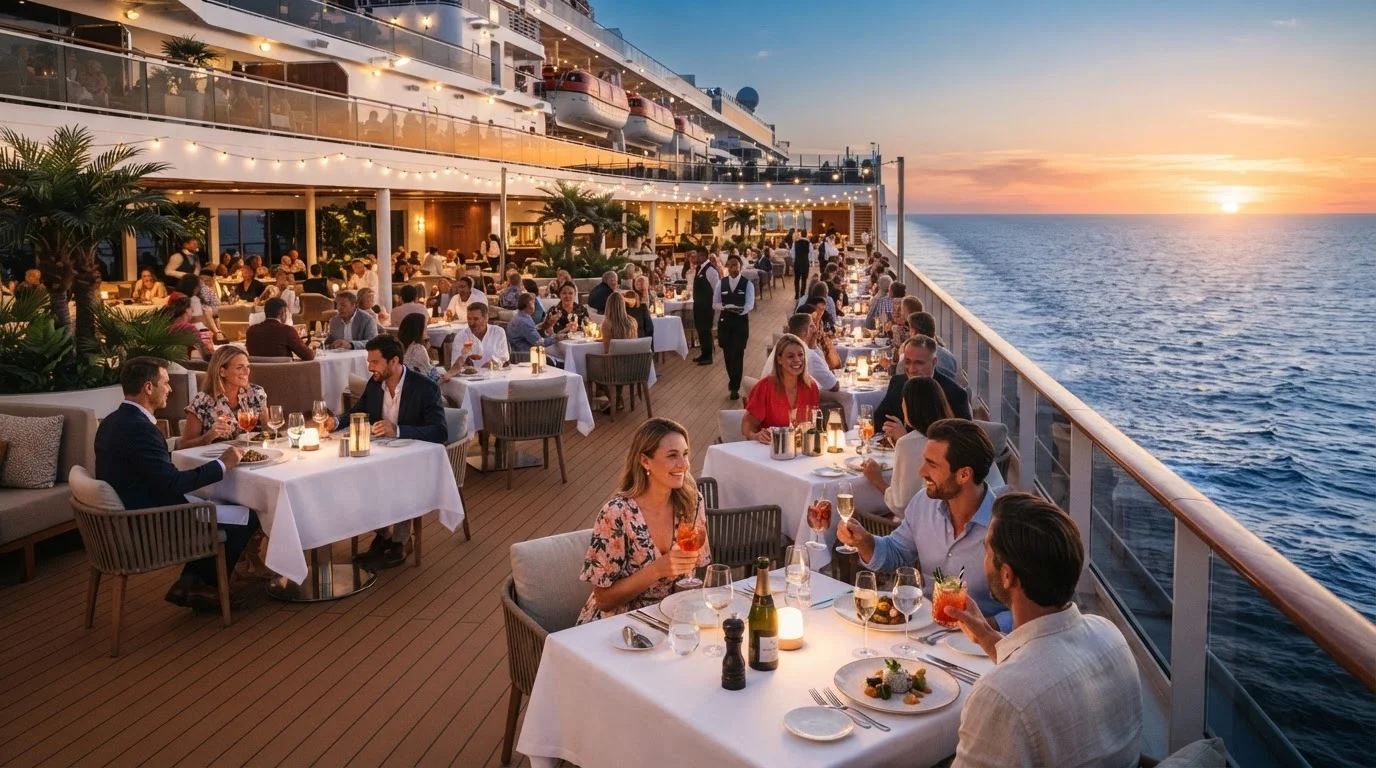
Even within an all-inclusive framework, the definition of "included" varies widely. At the ultra-luxury end - lines operating smaller, expedition-style or premium ocean ships - you'll often find unlimited beverages (including premium spirits), specialty restaurant access, crew gratuities, and curated shore excursions all folded into the fare. At the premium tier, some lines now offer packages that include a beverage package and Wi-Fi but stop short of excursions.
Contemporary, mass-market lines are predominantly à la carte. Their base fare typically covers a main dining room, buffet, standard cabin, and non-alcoholic beverages - everything else carries a charge. Specialty restaurants can run $30-$60 per person per night. Beverage packages are sold separately and frequently range from $60 to $100 or more per person, per day. Automatic daily gratuities - often $16-$22 per person - are tacked on unless pre-paid or adjusted. Those charges are explained in detail in our piece on cruise gratuities and what they actually cover.
Read the Beverage Package Fine Print
All-inclusive beverage packages frequently cap premium spirits or exclude certain wine labels above a price threshold. Before assuming a package covers your preferred drinks, check the line's published exclusions list. Some lines also restrict packages to the same category for all guests sharing a cabin, meaning one non-drinker may still be required to purchase coverage.
Running the Real Numbers
The fairest way to evaluate pricing models is to simulate your actual onboard day. Consider a seven-night sailing for two adults on an à la carte line: a beverage package for two ($80/day × 2 × 7) totals $1,120. Add daily gratuities ($19 × 2 × 7) at $266, two specialty dinners ($50 × 2 × 2) at $200, and one ship-excursion day ($120 × 2) at $240. That's roughly $1,826 in extras on top of the base cabin fare.
The same travelers on a comparable all-inclusive sailing might pay a higher sticker fare - but if those elements are genuinely bundled, total out-of-pocket spending could be similar or lower, with zero onboard billing surprises. The math tilts toward à la carte only when travelers consistently opt out of extras: skipping alcohol, dining exclusively in the main restaurant, and booking independent shore tours rather than ship-organized excursions.
Your cabin category affects this calculus too, since suite guests on many lines receive added inclusions not available in standard categories. Our cabin categories guide covers which upgrades carry genuine perks versus cosmetic ones.
$1,800+
Typical onboard extras per couple, 7-night sailing
Industry estimates suggest a couple on an à la carte line can spend well over $1,800 in onboard extras beyond the base cabin fare on a week-long itinerary.
$60-$100
Daily beverage package cost per person
Beverage packages on major contemporary cruise lines are generally priced between $60 and $100 per person per day, depending on tier and line.
Choosing the Model That Fits Your Travel Style
The practical question isn't which model is objectively better - it's which one aligns with how you actually travel. Ask yourself three things: How much do you drink? How often do you dine at specialty venues? Do you book excursions through the ship or strike out on your own?
Frequent, high-engagement cruisers - those who order wine with dinner, enjoy cocktails at the pool, and appreciate the convenience of ship-organized excursions - typically extract more value from all-inclusive pricing. Minimalist cruisers who treat the ship primarily as transportation and accommodation, spending most of their time ashore independently, often do better on à la carte fares.
It's also worth noting that many lines now blur the boundary with "cruise packages" - add-ons sold at booking that bundle a beverage plan, specialty dining credits, and sometimes Wi-Fi. These can be cost-effective but require careful reading: exclusions, daily limits, and restaurant restrictions appear in the fine print. The dynamics here parallel patterns seen in land-based hospitality, which our related article on all-inclusive resorts vs. room-only luxury hotels examines in a comparable context.
Watch for 'Complimentary' Packages With Hidden Costs
Lines that advertise a 'free beverage package' or 'free specialty dining' as a booking perk often build those costs into the fare or impose conditions - such as requiring both guests in a cabin to take the package. Promotional inclusions are not always as straightforward as they appear. Scrutinize the total fare against comparable sailings without the perk to determine actual value, and verify what's genuinely covered before making decisions based on the promotional language.