

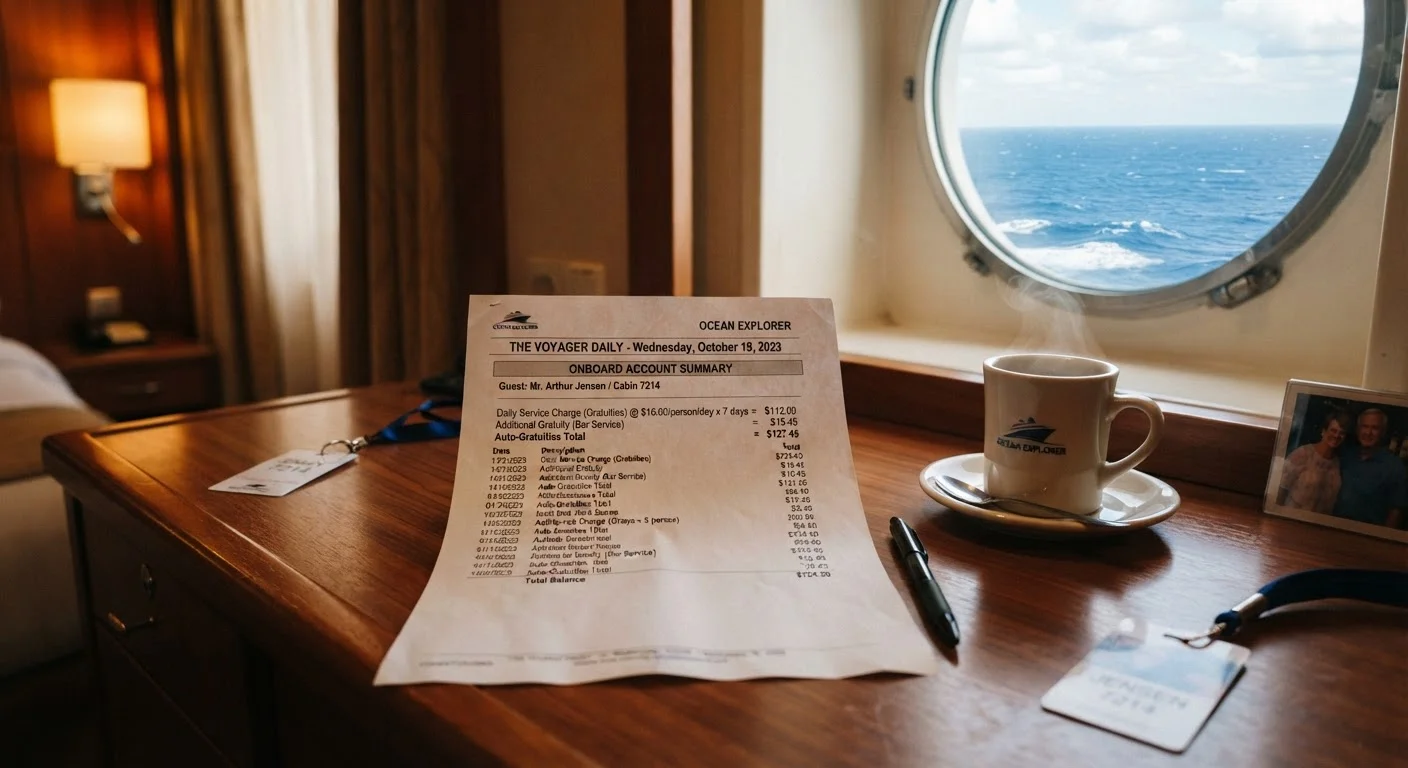
How the Daily Service Charge System Works
When you review your onboard account at the end of a cruise, you'll typically find a line item labeled something like "daily gratuity," "hotel service charge," or "crew appreciation." This charge - most commonly ranging from around $16 to $22 per person per day on mainstream ocean lines - is not a fee kept by the cruise company. It functions as a structured wage supplement distributed to crew members across multiple service departments.
The system emerged partly because cruise ship crews are internationally sourced, working under contracts that factor in gratuity income as part of total compensation. Rather than leaving pay equity to the randomness of individual passenger tipping, lines created pooled structures to ensure broader and more consistent distribution. Your cabin steward, your main dining room server and assistant server, and the buffet team all receive shares - even if you never interact directly with some of them.
Gratuities Are Not the Same as Fees
Cruise gratuities are distinct from port fees, fuel surcharges, or embarkation taxes - all of which may also appear on your statement. Port fees and taxes are government- or port authority-mandated charges; gratuities are crew compensation supplements set by the cruise line. Understanding the difference helps you read your onboard folio accurately. For a parallel in hotel stays, see how resort fees and destination charges work differently from hotel taxes.
For a broader look at how cruise pricing structures compare, see our guide on all-inclusive vs. à la carte cruise pricing - understanding the model upfront reshapes your entire voyage budget.
What the Charge Does and Does Not Cover
The daily service charge covers the core hospitality crew who maintain your stateroom and serve your included meals. It does not automatically extend to every crew member you tip in person. Bar staff, specialty restaurant servers, spa therapists, and shore excursion guides operate under separate gratuity structures.
When you order a drink at a bar or book a spa treatment, a service charge - commonly 18-20% - is added automatically at the point of sale. This is separate from your daily per-person charge and goes directly to staff in those specific venues. Specialty restaurant tabs work the same way. Being aware of these layered charges helps you anticipate the real per-day cost of cruising rather than being caught off guard at checkout.
$16-$22
Typical daily gratuity range per person
Most mainstream ocean cruise lines charge within this per-person, per-day range as of recent published fleet policies.
18-20%
Auto-gratuity on spa and bar charges
Specialty venue purchases - including drinks, spa services, and specialty dining - typically carry an automatic service charge added at point of sale.
3-5 depts.
Crew departments sharing the gratuity pool
Cabin stewards, main dining servers, assistant servers, and buffet staff are commonly included; some lines extend the pool further to back-of-house crew.
Luxury and expedition lines increasingly include gratuities in the advertised fare, meaning the sticker price is the actual price. If you're comparing lines, this distinction matters significantly for budgeting. The Ship & Line Tips hub is a good starting point for understanding how different cruise experiences are structured and priced.
Adjusting Gratuities: What You Should Know Before You Do
Most mainstream cruise lines allow passengers to visit guest services and request a reduction or removal of the automatic charge. The process is straightforward, but the downstream effect is significant: when a passenger removes the charge, the affected crew members often do not receive that income, because the pool calculation is adjusted accordingly. This is why cruise industry veterans and crew advocates generally recommend addressing service complaints through guest services rather than by removing gratuities.
If you had a genuinely poor experience with a specific crew member, reporting it formally gives the line the opportunity to address the issue - and keeps the broader crew compensation intact. Conversely, if you receive outstanding service, adding a personal cash tip directly to your cabin steward or dining server at voyage end is a widely appreciated gesture that complements the pooled system.
Budget Gratuities Before You Board
Add the daily gratuity rate to your per-day cruise budget when comparing itineraries. On a 10-night sailing for two, automatic gratuities alone can add $320-$440 to your total cost - before any bar, spa, or specialty dining charges. Knowing this upfront keeps your onboard spending plan realistic.
This is also worth considering alongside the hidden costs of travel more broadly - gratuities are one of several cruise-specific charges that can catch first-timers off guard if not budgeted in advance.
Pre-Paying Gratuities and Booking Inclusions
Many cruise lines offer the option to prepay gratuities at booking, locking in the current rate and removing the daily charge from your onboard account. This approach suits travelers who prefer a clear, settled budget before boarding. Some promotional fares include gratuities as a booking incentive - always confirm in writing whether this is truly pre-included or is simply a rate label.
River cruises, small-ship expeditions, and ultra-luxury ocean lines tend to handle gratuities differently from mass-market ocean sailings. On some river voyages, a suggested total amount is provided for the entire cruise, to be distributed at the passenger's discretion. On others, it's fully included. Researching the specific line's policy before sailing - rather than assuming it mirrors your last ocean cruise - prevents budget surprises and ensures you're treating crew equitably.
For travelers who want to understand how cruise-specific financial planning compares to other travel sectors, our overview of booking strategies covers the broader picture of managing travel costs intelligently.