
Why the Bag-Drop Clock Is Stricter Than You Think
Checked baggage cutoffs exist for logistical reasons that have nothing to do with bureaucratic rigidity. Baggage must be screened, tagged, sorted, and physically loaded into the aircraft hold - a sequence that requires a defined window before pushback. Airlines build their cutoffs backward from the departure time to accommodate this chain, and when a bag misses the window, it cannot be inserted into the middle of a completed process.
The cutoff is typically printed on your booking confirmation, but it's easy to overlook when you're focused on your departure time. Domestic U.S. routes commonly set the bag-drop cutoff at 30-45 minutes before departure; international routes frequently extend that to 60 minutes or more. Cutoffs can also vary by airport hub, so the rule that held on your last trip may not apply to your next one.
Cutoff Times Are Non-Negotiable
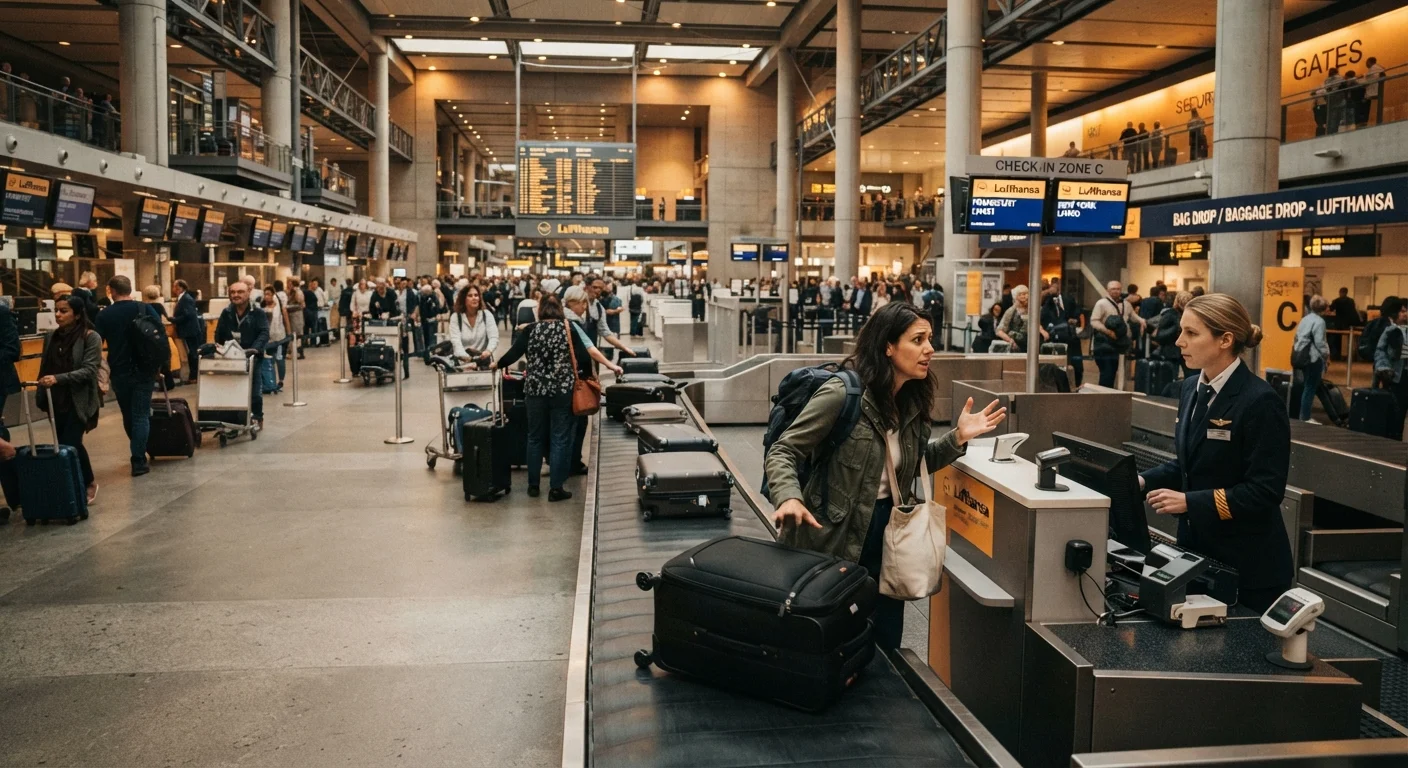
Airline bag-drop cutoffs are system-enforced, not judgment calls. Once the deadline passes in the airline's departure control system, agents are locked out from tagging and loading your bag - even if they want to help. Arriving at the counter exactly at the cutoff does not give you enough time to complete the process.
For a broader look at how experienced travelers think about airport timing, see why frequent flyers arrive earlier than you think.
The Real Consequences of a Rejected Bag
When a bag is turned away at the counter, the consequences are rarely limited to mild inconvenience. The most immediate issue is deciding what to do with it: you cannot bring a bag loaded with liquids, sharp objects, or oversized items through security as a carry-on without violating TSA rules or gate-boarding limits.
45 min
Typical domestic bag-drop cutoff before departure
Most major U.S. carriers publish a checked baggage acceptance deadline of 30-45 minutes before scheduled departure for domestic routes.
60-90 min
Cutoff window on many international flights
International departures and codeshare flights frequently carry extended bag-drop cutoffs due to additional screening and documentation requirements.
If your bag travels on a later flight, you may need to return to the airport to retrieve it, or pay for same-day delivery if the airline offers that option. If your bag cannot travel until the following day, you'll need to purchase essentials at your destination - an expense that typically far exceeds whatever time you thought you were saving. There's also the risk of cascading disruption: a missed connection on the luggage side can separate you from your belongings for days, particularly on international itineraries.
The pattern of cutting arrival time close is one that affects travelers across all transport modes - and the downstream costs follow a similar logic.
Common Mistakes and How to Avoid Them
Confusing the check-in deadline with the bag-drop deadline.
Why it happens: Many travelers complete online check-in and assume the job is done, not realizing a separate, earlier physical deadline exists for checked baggage.
Budgeting travel time only to the terminal entrance, not to the bag-drop counter.
Why it happens: GPS navigation ends at the airport, so travelers underestimate the time needed to park, reach the terminal, and find the correct check-in zone.
Assuming a short security queue means there's still time to check a bag.
Why it happens: Travelers conflate airside and landside timelines, treating a fast security experience as evidence the entire departure process is on track.
Not accounting for longer cutoffs on international or codeshare flights.
Why it happens: Travelers apply domestic flight habits to international departures, which involve customs documentation, stricter load-planning requirements, and often earlier gate closures.
Paying late-bag or same-day redelivery fees without understanding what triggered them.
Why it happens: When a bag is rejected at the counter, travelers often accept whatever resolution is offered in the moment without knowing what alternatives exist.
One structural fix is to verify baggage cutoffs at the same time you confirm your itinerary. The booking confirmation checklist is a practical place to build this habit. Pairing it with efficient security habits gives you the best chance of clearing the full landside process with time to spare.