
Why Security Takes Longer Than It Should
Most delays at the security checkpoint aren't caused by TSA throughput - they're caused by unprepared travelers ahead of you. Understanding this shifts the strategy: your goal isn't to rush, it's to be systematically ready before you reach the conveyor belt. Experienced flyers treat security as a rehearsed sequence, not a spontaneous scramble.
Airport security lanes vary significantly in composition and speed. A lane filled with families traveling with strollers and leisure bags will move at a different pace than a lane populated mostly by business travelers with carry-ons. Reading the queue before you join it is one of the simplest, highest-yield habits a frequent flyer can develop. For more on how early decisions shape your airport experience, see why experienced travelers arrive earlier than you'd expect.
~10 min
Typical PreCheck lane wait at major U.S. airports
TSA reports that more than 93% of PreCheck passengers wait under 10 minutes, compared to significantly longer standard lane averages.
30-45 min
Average standard lane wait during peak travel periods
TSA publicly tracks checkpoint wait times by airport and hour; peak-hour standard lanes at major hubs regularly exceed 30 minutes.
Core Practices for Faster Security Clearance
The following practices are drawn from consistent patterns among frequent flyers who move through security with minimal friction. Each targets a specific bottleneck in the standard checkpoint process.
Enroll in a trusted traveler program before your next trip.
TSA PreCheck and Global Entry provide dedicated lanes with reduced screening requirements - shoes, belts, and light jackets stay on, and laptops remain in bags. These programs represent the single largest structural time saving available to U.S.-based frequent flyers.
Choose your lane by reading the queue composition, not just its length.
A shorter line with several unprepared travelers can move slower than a longer line of business travelers who know the drill. Look for queues with single travelers or small groups carrying only carry-on bags.
Pack your carry-on so liquids and electronics are accessible at the top.
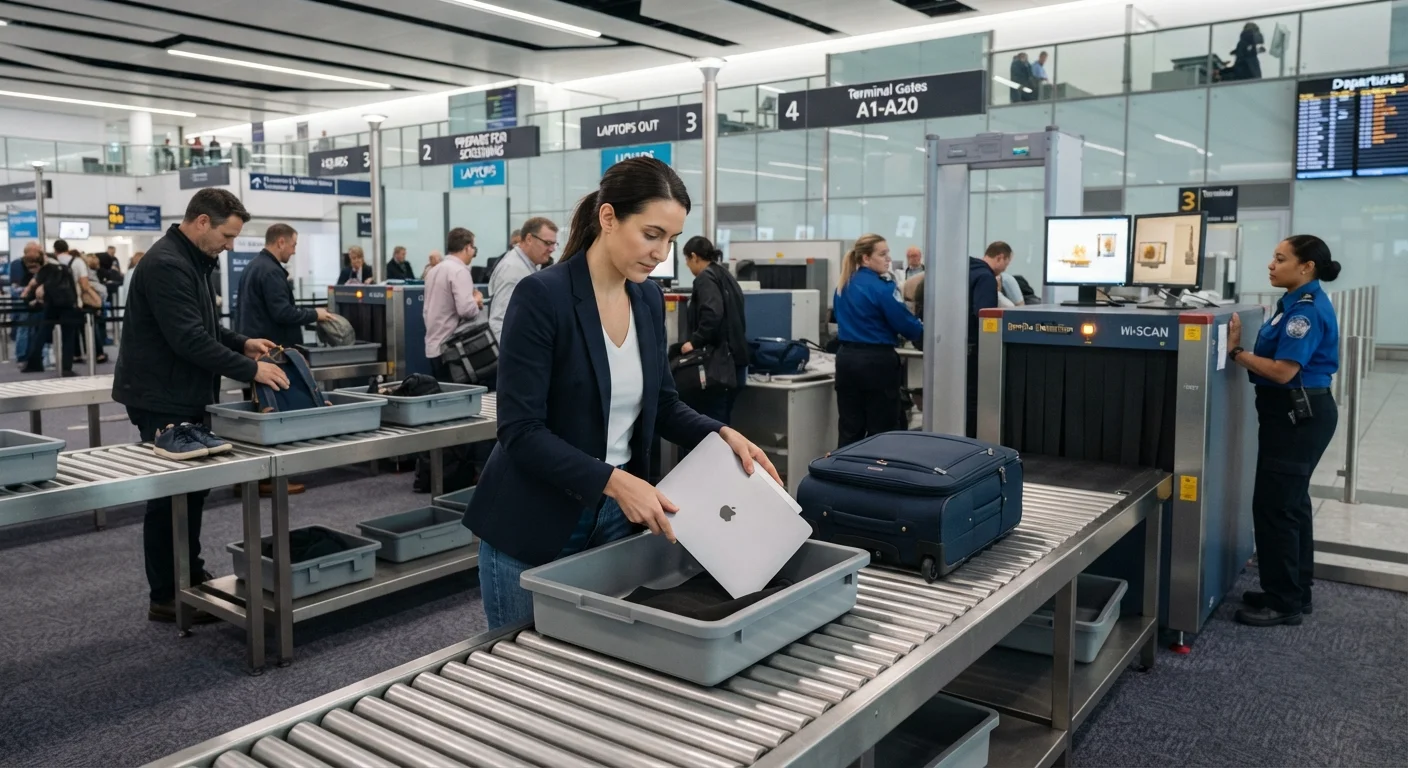
Digging through a bag at the belt slows you down and holds up everyone behind you. Keeping your quart bag and laptop in a designated outer pocket or top compartment turns a 60-second scramble into a five-second pull.
Complete your pre-screening routine before reaching the bin area.
The bin area is a bottleneck - every second spent emptying pockets, removing a belt, or untying shoes there creates a ripple delay for the travelers behind you. Doing this work at the back of the queue costs you nothing.
Wear shoes that can be removed and replaced quickly.
Unless you have PreCheck, shoes go through the X-ray. Lace-up boots with multiple hooks significantly slow your re-dress process on the other side, creating a secondary bottleneck at the collection area.
Quick Wins You Can Apply Today
Not every improvement requires a program enrollment or gear change. Several of the most effective security habits cost nothing and take under a minute to adopt.
Pack Your Quart Bag Last, Access It First
When loading your carry-on, place your TSA-compliant liquids bag as the final item so it sits at the top when you open the bag at security. This single habit eliminates one of the most common belt-area delays. The same logic applies to your laptop - store it in a sleeve that pulls out cleanly without dragging cables or accessories with it.
When You're Running Tight on Time
Even well-prepared travelers occasionally face a compressed timeline. If you're heading into security with a tight connection, communicate your situation directly to a TSA officer at the checkpoint entrance - lanes for urgent connections exist at many major airports and officers can direct you appropriately. Requesting lane access isn't cutting - it's a built-in process.
For a detailed breakdown of what happens once you clear security under time pressure, see our guide to navigating tight connections. Planning your route choices upstream also matters - certain itineraries consistently create unnecessary security stress, a topic covered in route selection red flags to avoid.
Security Lane Access for Urgent Connections
Many major U.S. airports have a process for directing travelers with imminent departures to the front of the standard security queue. This is not universally guaranteed and varies by airport and checkpoint staffing. Always verify the policy with a TSA officer on the day of travel rather than assuming access will be granted. Allow as much buffer time as possible - see why frequent flyers arrive earlier than you think for context on building that buffer into your routine.