
The Clock Starts the Moment You Land
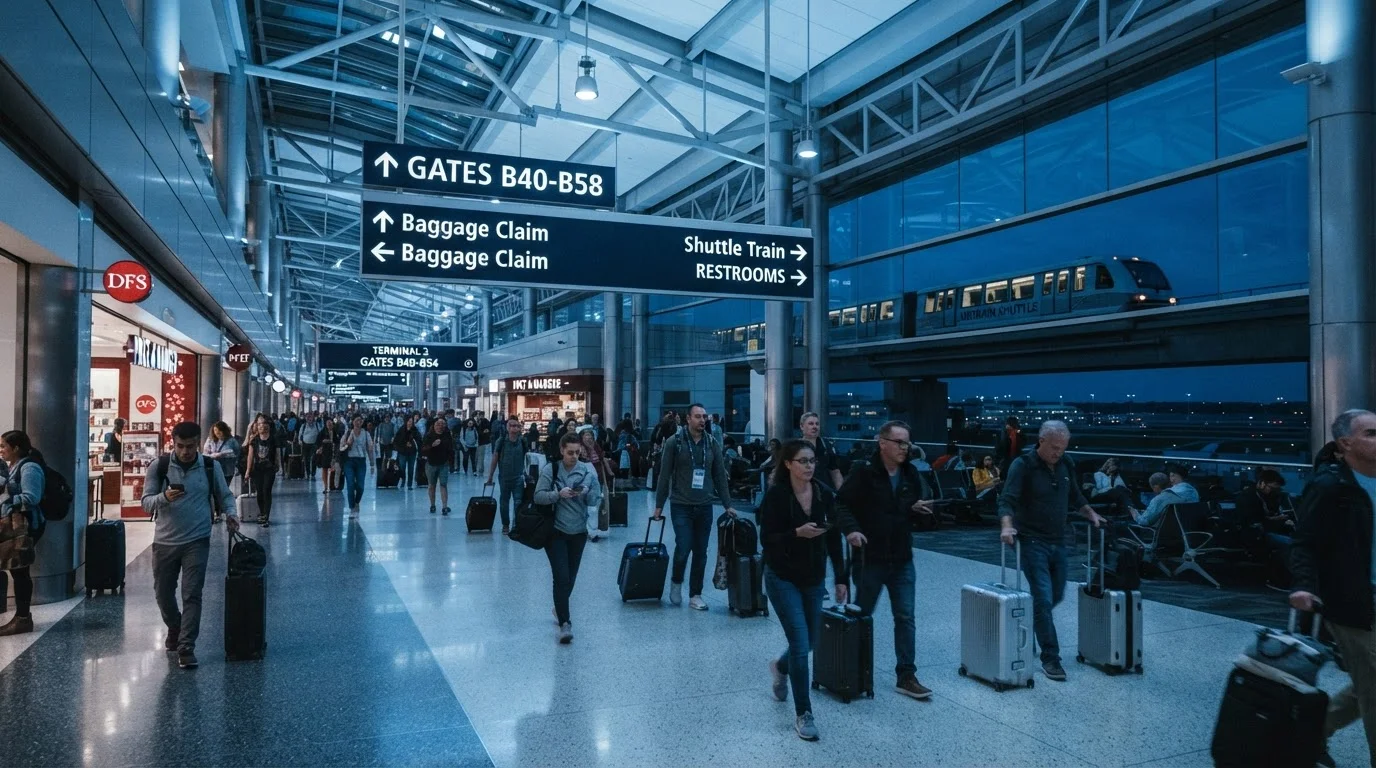
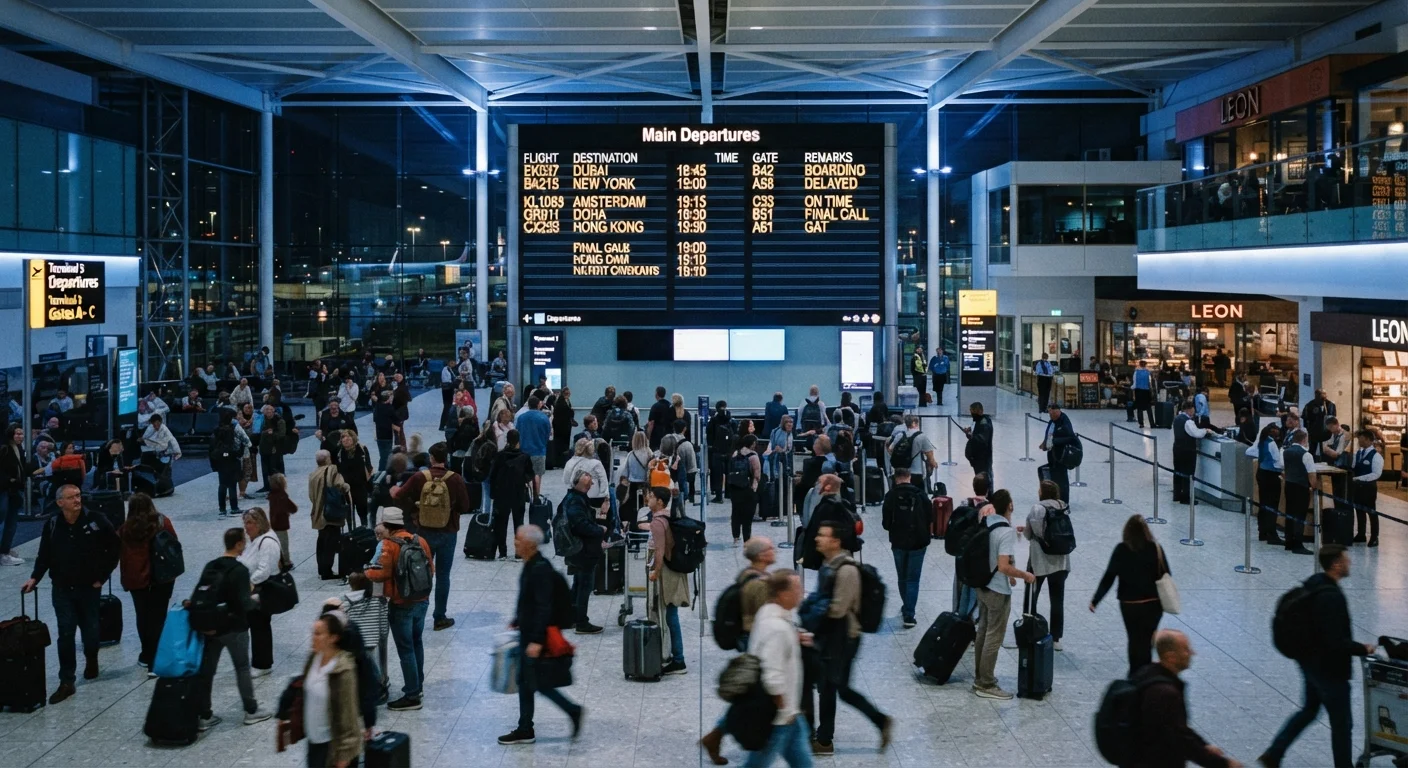
The instant your inbound flight touches down, a countdown begins. Those 45 minutes - or fewer - don't start when you reach your gate; they started when the aircraft's wheels hit the runway. Taxiing to the jetbridge, waiting for the door to open, navigating the aisle, and clearing the terminal all consume that buffer before you've taken a single purposeful step toward your connection.
Understanding what a tight connection actually means operationally is the first step toward surviving one. It isn't simply a short wait - it's a compressed sequence of mandatory steps: deplaning, transit through the terminal (sometimes across multiple concourses), and arrival at the departure gate before the door closes. Gate cutoff times typically precede departure by 10-15 minutes, so a 45-minute connection may effectively give you 30 minutes of usable transit time.
For a deeper look at how layover mechanics work across different route types, see how layovers affect your full journey.
10-15 min
Typical gate cutoff before departure
Most U.S. domestic carriers close boarding 10 to 15 minutes before scheduled departure, reducing usable transit time on any tight connection.
30-45 min
Typical customs clearance time on entry
International-to-domestic connections at U.S. airports commonly require 30-45 minutes for customs and immigration under normal wait conditions, per CBP process guidelines.
5-10 min
Time saved by a front-cabin aisle seat
Seat selection data and traveler experience consistently show that deplaning from the first third of the cabin saves measurable minutes on a tight connection.
What the Airline Knows (and What It Doesn't Account For)
Airlines publish Minimum Connection Times for each hub airport - differentiated by domestic-to-domestic, international-to-domestic, and other pairing types. These figures represent the shortest interval at which an itinerary can typically be sold. A connection that meets the MCT is considered valid by the booking system. What the MCT does not account for is your specific situation: your gate assignment on arrival, whether a terminal change is required, your walking pace, whether the inbound flight arrived on time, or whether you're traveling with young children or reduced mobility.
As explored in the gaps in minimum connection time calculations, these benchmarks are engineering averages - not personalized guarantees. A 40-minute connection at a mid-size airport may be routine; the same interval at a sprawling international hub may be unachievable on foot.
MCTs Vary by Airport and Passenger Type
Minimum Connection Times are not uniform across U.S. airports. A domestic MCT at a smaller hub may be as low as 30 minutes, while international connections at major hubs like JFK or LAX may carry MCTs of 60-90 minutes or more. Always check the specific MCT for your connecting airport and route type - your airline or booking platform should be able to confirm this on request.
The Variables That Determine Whether You Make It
Several factors have an outsized effect on whether a tight connection succeeds:
- Seat position: An aisle seat in the first 10 rows of the cabin can yield a 5-10 minute advantage over a middle seat at the rear.
- Terminal and concourse: Same-terminal connections at airports with efficient intra-terminal transit (moving walkways, trams) are far more manageable than cross-terminal connections requiring a shuttle or re-screening.
- International vs. domestic connections: International-to-domestic connections almost always require clearing customs, immigration, and re-screening through security - each a separate queue that can consume 20-30 minutes under favorable conditions.
- Ticket structure: Both flights on a single itinerary means the airline bears rebooking responsibility if the first flight caused the miss. Separate tickets mean you carry the full risk.
- Time of day: Mid-day connections at peak-traffic hub airports face longer security queues and more congested concourses than early-morning connections.
If the worst happens and you do miss your flight, knowing your next move immediately matters. A clear recovery process is outlined in what to do after a missed connection.
Alert the Gate Agent Before Landing
If your inbound flight is running late, contact your airline via app or phone while still in the air (if Wi-Fi is available) to alert them of your tight connection. Gate agents can sometimes hold a departure door for a few minutes for known connecting passengers - but only if they're aware of the situation. Acting early gives the airline the best opportunity to assist you.
How to Tilt the Odds Before You Ever Board
The most effective work on a tight connection happens before you reach the airport. Pull up your airport's terminal map the night before and trace the exact path from your arrival gate area to your departure concourse. Many airports publish real-time gate information the morning of travel - note both your arrival and departure gates as soon as they're confirmed, typically 60-90 minutes before the first flight.
Choose a carry-on over checked luggage where practical. Pack light, wear comfortable shoes, and load your boarding pass digitally so you're not fumbling at a scanner. On the aircraft, politely inform a flight attendant of your situation - a brief cabin announcement requesting seated passengers allow connecting travelers to deplane first is standard practice and commonly honored.
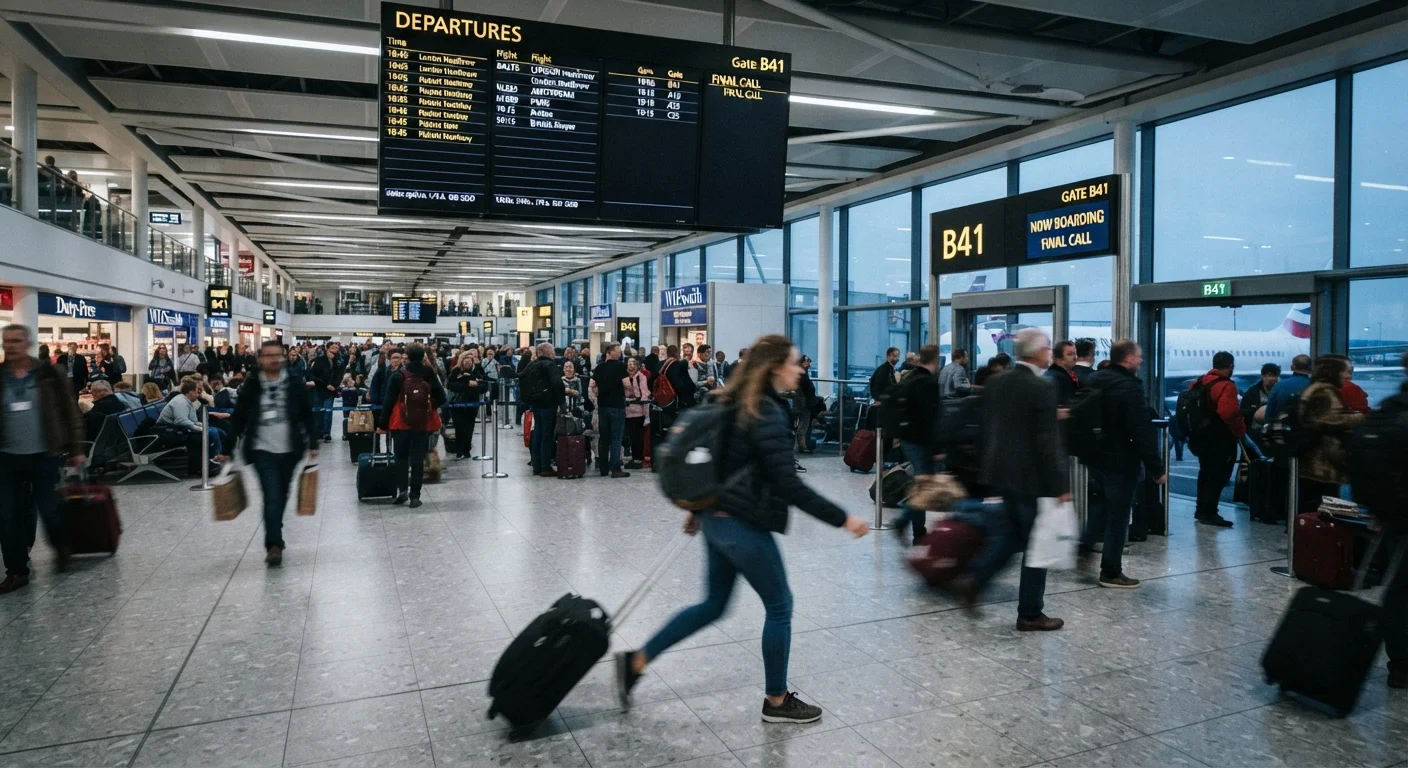
At the gate, move immediately. Skip the restroom stop if you can; reach your departure gate first, then reassess. If the gate is showing a delay, use that window - but don't assume a delay will hold. Gates close on the published cutoff time regardless of whether the aircraft is still at the jetbridge.
The discipline required here mirrors the time-pressure thinking that experienced travelers apply in other contexts - much like the port departure dynamics explored in why cruise travelers misjudge departure windows. In both scenarios, the margin for error is smaller than it appears.