

What Slow Travel Actually Means
Slow travel doesn't have a strict definition, but the working principle is consistent: stay longer, move less, and prioritize familiarity over coverage. Where a conventional itinerary might place you in four cities across ten days, a slow travel framework might anchor you in one or two, with deliberate exploration radiating outward from a home base.
The concept borrows from the broader slow movement - the same philosophy behind slow food and slow living - but applied to how you pace a trip. It's less about travel speed and more about intentionality. See how itinerary structure shapes a trip's quality for a grounded look at what that intentionality looks like in practice.
For frequent travelers, slow travel often functions as a reset - a deliberate counter to the highlight-reel pressure that pushes itineraries toward exhaustion.
The Real Advantages of Slowing Down
The benefits of slow travel go beyond stress reduction, though that alone is considerable. The cumulative case is stronger than most travelers expect before they try it.
Deeper cultural familiarity develops naturally over time
Spending a week or more in one place lets travelers move past surface-level tourism - you learn the rhythms, the neighborhoods, and the unscripted moments that rarely appear in itineraries.
Lower per-day costs through weekly and monthly rates
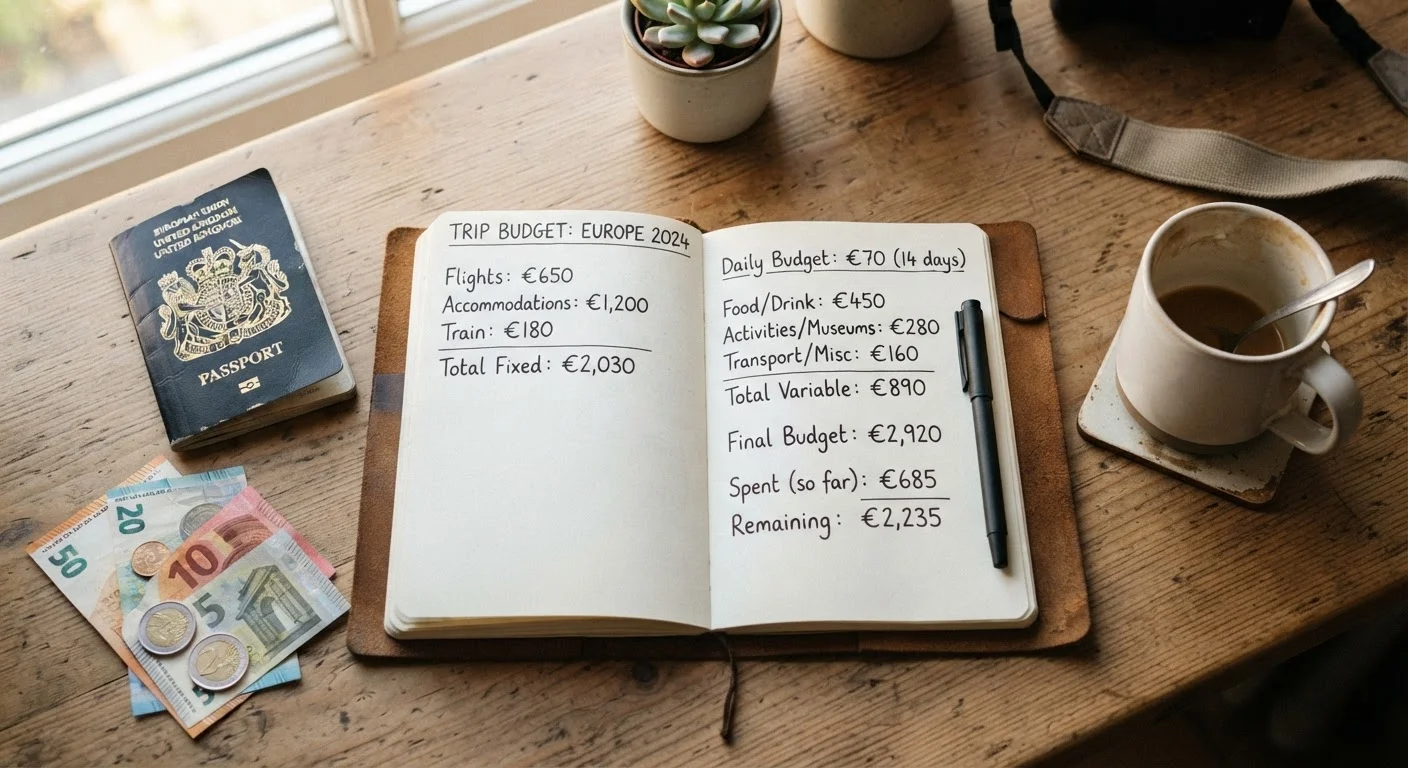
Accommodation and car rental pricing often drops significantly for longer bookings, and fewer inter-city transit legs mean less money spent on flights, trains, or fuel.
Significantly reduced travel fatigue
Packing, moving, and orienting yourself in a new place takes real energy. Fewer transitions preserve that energy for actual experiences rather than logistics.
More space for spontaneity and discovery
When the schedule isn't back-to-back, there's room to follow a recommendation, linger somewhere unexpected, or simply rest without guilt or cost.
Better for remote workers and extended travel
Travelers who work while traveling benefit from stable Wi-Fi, established routines, and the ability to separate work time from genuine leisure without constantly rebuilding their setup.
3-5×
Longer average stay vs. conventional tourism
Slow travelers typically stay 1-4 weeks per location compared to the 1-3 night average for conventional city-hopping itineraries, according to general travel behavior research.
30-50%
Potential accommodation cost reduction
Weekly and monthly rental rates frequently run 30-50% lower per night than nightly rates in the same property, a widely documented pricing pattern across major rental platforms.
Financially, longer stays unlock pricing structures that rushed travel doesn't. Weekly apartment rentals, monthly accommodation rates, and reduced transit costs all tilt the math toward slower movement. How pace shapes overall travel spend is worth examining before assuming slower automatically means cheaper - context matters.
Culturally, the gains compound over time in ways a two-night stay simply can't replicate. You develop neighborhood literacy - which bakery opens early, which piazza fills up by noon, which street vendors are actually worth stopping for. That kind of knowledge doesn't come from a guidebook.
The Trade-Offs You Should Expect
Slow travel has real costs, and anyone considering it deserves an honest accounting of them rather than a sales pitch.
Fewer destinations covered per trip
Slow travel is a deliberate trade: more depth in exchange for less breadth. Travelers with long destination lists or limited annual leave will feel this constraint acutely.
FOMO on well-known highlights nearby
Committing to one base can mean skipping celebrated sites in adjacent regions - a real psychological cost for travelers motivated by landmark experiences.
Requires flexible or extended time off
The approach is harder to execute well on a standard one- or two-week vacation window, particularly if transit to the destination already consumes several days.
Some destinations reward faster movement
Regions with spread-out geography - island chains, large national parks, or multi-country routes - may actually deliver more value through a well-structured faster pace.
Can feel monotonous without deliberate planning
Extended stays in one place can stagnate without intentional variety built into the week - day trips, neighborhood rotation, and new social contexts all require active effort.
The most practical limitation is geographic: if you have two weeks and want a broad survey of a country or region, slow travel will actively work against that goal. This isn't a flaw in the approach - it's just a genuine constraint. Comparing slow travel against itinerary-heavy tours lays out that tension honestly for travelers weighing cultural depth against coverage.
Slow Travel Isn't All-or-Nothing
A hybrid approach works well for many travelers: anchor two-thirds of a trip in one or two bases, then allow faster movement for a final stretch. This captures some depth while preserving the option to cover additional ground. The key is making the trade-off consciously rather than defaulting to a packed itinerary out of habit.
Slow travel also requires a certain psychological tolerance for staying put. Travelers who get restless easily, or who feel satisfaction primarily from accumulating destinations visited, will likely find long stays frustrating rather than restorative.
Building a Slow Travel Itinerary That Actually Works
The mechanics of slow travel planning differ enough from standard itinerary building that a few structural shifts are worth noting.
Choose a base with logistical reach. A home-base city or town works best when it sits within reasonable range of day-trip options - so you get variety without the cost and friction of repeated long-distance moves.
Plan for unscheduled time deliberately. Counter-intuitive as it sounds, good slow travel itineraries build in blank space on purpose. Why leaving unplanned time leads to better experiences makes this case compellingly in a road trip context, but the principle transfers directly.
Think in weekly rhythms, not daily checklists. A week-long stay creates space for slower mornings, spontaneous detours, and revisiting places you liked - which is where genuine travel memory gets made.
Budget-conscious slow travelers should also explore what longer stays do to overall costs. Stretching a travel budget without sacrificing meaningful experiences covers the strategic levers that make this feasible without hollowing out the trip.