

Why Early Check-In Is Complicated - and Why It Matters
Standard hotel check-in times - typically between 2 p.m. and 4 p.m. - exist for a straightforward operational reason: rooms need to be vacated, inspected, and cleaned before the next guest enters. When a hotel is running at high occupancy and prior guests check out close to the noon deadline, even the most willing front desk team has limited room to offer early access.
That said, early arrival is a common reality for travelers. International flights frequently land mid-morning. Overnight train journeys deposit passengers in city centers by 7 a.m. Knowing what hotels can realistically do - and what levers you can pull - matters more than hoping for good luck at the desk.
The dynamics here aren't entirely different from other parts of travel where timing and preparation pay off. Much like the logic behind why seasoned travelers build in extra time, early hotel arrivals reward those who plan ahead rather than improvise on the day.
Combine Your Request With a Room Preference
When you contact the hotel in advance, pair your early check-in request with a specific room preference - floor level, away from the elevator, or a particular view. Front desk teams are often more motivated to prioritize your room assignment when the request is concrete and easy to fulfill.
What Hotels Can Do - and What You Can Do
Hotels have more flexibility than guests often realize, but it's rarely automatic. Properties that run sophisticated housekeeping operations can sometimes prioritize room turnovers based on pre-flagged early arrivals - but only if they know you're coming early. That's why advance communication is the single most effective tool available to you.
What you will need
Loyalty program status changes the calculus noticeably. Properties within major hotel groups allocate a portion of cleaned rooms specifically for elite members each morning, meaning status holders often access rooms by 9 or 10 a.m. without any special negotiation required. For travelers who stay with one brand consistently, the cumulative benefit of status is significant - and early check-in is one of the most practical expressions of it. Understanding how room improvements and upgrades actually work also helps frame what front desk staff can and can't control in real time.
Early Check-In Is Never Guaranteed
Even hotels that offer early check-in as a paid upgrade cannot always follow through - room availability on the day depends on when prior guests depart and how quickly housekeeping can turn rooms over. Never plan a critical activity or meeting immediately after arrival assuming you'll have access to your room. Build buffer time into your itinerary.
If early room access is critical - say, you need to change for a midday event - the most reliable path is a confirmed paid upgrade where available, not a courtesy request. If it's simply a convenience, luggage storage plus patience is usually sufficient.
Contact the Hotel 24-48 Hours Before Arrival
Reach out to the property directly - by phone, email, or the hotel's own app - one to two days before you arrive. Explain your expected arrival time and ask whether early check-in is possible. This window gives housekeeping managers enough lead time to flag your reservation and, if feasible, hold a ready room for you.
Avoid requesting early access only at the moment you walk in. By that point, room assignments are often already in motion and there is little flexibility.
Mention Your Loyalty Status or Direct Booking History
If you hold status with the hotel's loyalty program, provide your membership number when making your early check-in request. Properties typically give elite-tier members priority access to available rooms before standard check-in time - sometimes without an additional fee.
Even without status, guests who book directly with the hotel (rather than through third-party aggregators) tend to receive more flexibility, since direct bookings carry higher margin and stronger relationship signals for the property.
Ask About a Paid Early Check-In Option
Many mid-range and upscale hotels now offer a confirmed early check-in for an additional fee - often structured as a half-night rate or a flat service charge. If having room access by a specific time is important to you, inquire whether this option exists and what it costs.
This is distinct from a courtesy early check-in, which depends entirely on availability. A paid early check-in, where available, typically guarantees a confirmed room at a defined time. Confirm the exact terms in writing before agreeing.
Store Your Luggage and Use the Hotel's Facilities
If your room isn't ready, ask the front desk to store your luggage. Virtually every full-service hotel offers complimentary bag storage, and many boutique properties do as well. This frees you to explore the destination, grab a meal, or handle errands without dragging your bags along.
Some hotels also extend use of the fitness center, pool, or lounge areas to early arrivals even before rooms are assigned - it's worth asking specifically what is available to you while you wait.
Follow Up Politely at the Front Desk on Arrival
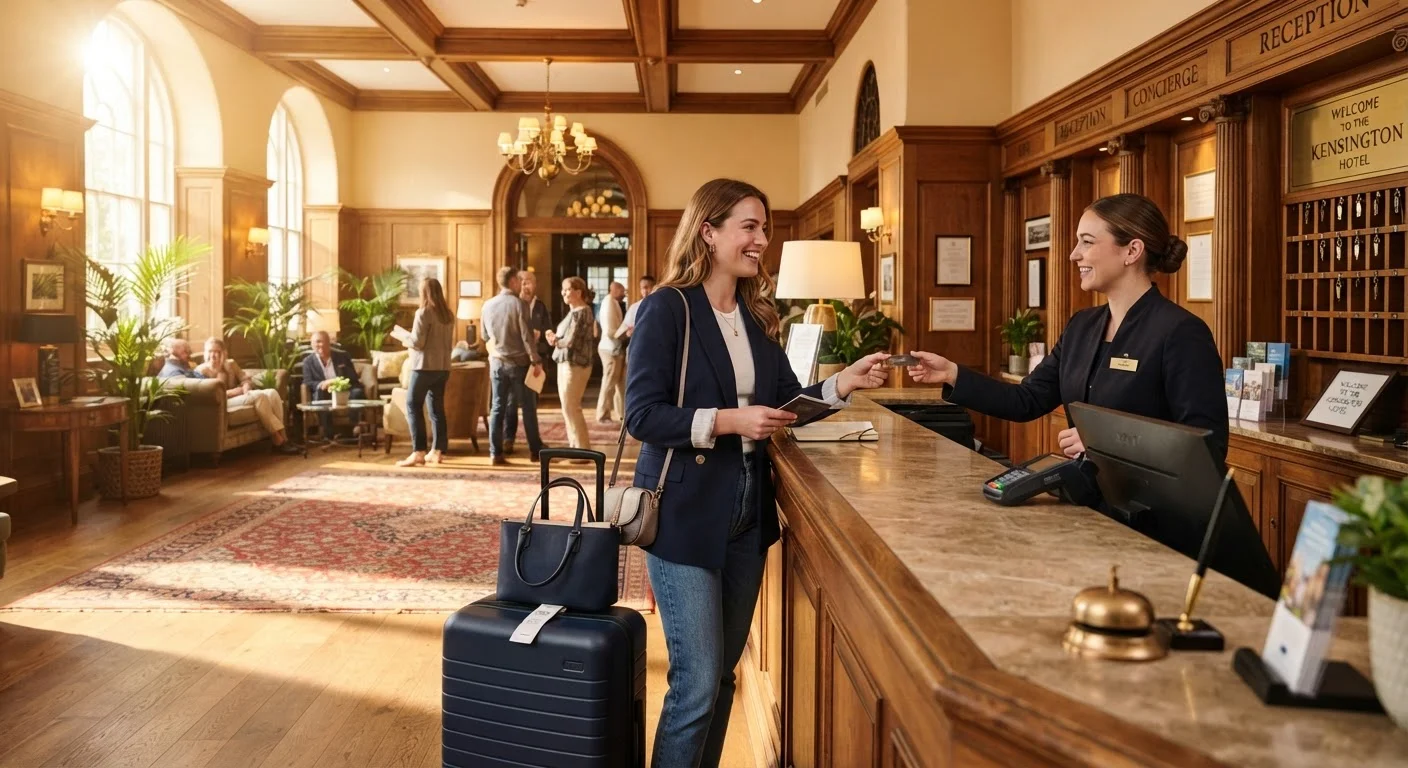
When you arrive, introduce yourself, mention that you called ahead, and ask for an update on your room's status. Remind staff of any specific preferences you shared earlier. A calm, friendly check-in interaction - acknowledging that you understand availability depends on the day's departures - tends to keep your request top of mind without creating friction.
For a fuller picture of managing your stay from arrival onward, the hotel stay checklist covers each phase in practical detail.
Avoid Pressuring Front Desk Staff
Desk agents have limited control over when rooms become available. Frustration directed at staff rarely helps and can undermine goodwill that might have worked in your favor. A patient, friendly approach consistently yields better outcomes than demands or complaints.
For travelers heading to a cruise immediately after a hotel stay, keeping arrival logistics clean on both ends matters. The pre-cruise preparation checklist outlines how to coordinate that kind of tightly sequenced itinerary without leaving anything to chance.