
The Problem With the Phrase Itself
"Off the beaten path" has been applied so broadly in travel writing that it has nearly lost all meaning. In Central America specifically, the phrase gets attached to everything from the Monteverde Cloud Forest - a destination receiving hundreds of thousands of visitors annually - to remote Garífuna villages in Honduras accessible only by small boat, where outside visitors remain genuinely unusual. These are not the same thing, and conflating them does a disservice to travelers who are genuinely seeking the latter.
The distinction matters for practical reasons. Planning a trip around an expectation of solitude, local immersion, and unhurried pace - only to arrive at a place built around tour buses and zip-line operators - produces frustration on both ends. It also shapes how traveler dollars flow, and whether communities that haven't yet been absorbed into mainstream tourism circuits ever benefit from the attention travelers bring. As our piece on treating undervisited destinations responsibly explores, that ethical dimension is inseparable from the planning question.
Myth
If a destination appears in travel magazines or Instagram feeds, it can still be genuinely off the beaten path.
Fact
Significant media coverage reliably drives visitor numbers. A place may have been overlooked once, but consistent editorial attention transforms it.
The Semuc Champey limestone pools in Guatemala were a genuine secret two decades ago. Today they feature on countless Central America itineraries and have the visitor infrastructure to match. Exposure creates demand; demand creates infrastructure. Once that cycle starts, the experience changes fundamentally, regardless of how the destination continues to be marketed.
Myth
"Off the beaten path" means somewhere without hotels or tourist facilities.
Fact
Low infrastructure doesn't equal genuine local immersion - and high infrastructure doesn't automatically mean a tourist trap.
Some deeply community-rooted destinations have developed modest but functional tourism infrastructure precisely to maintain local control over visitor experience. Conversely, a place with no facilities may simply be inaccessible and inhospitable rather than culturally rich. The quality and orientation of the experience matters more than the presence or absence of a guesthouse with hot water.
Myth
Fewer tourists automatically means a more authentic or valuable travel experience.
Fact
Tourist volume is one variable among many. Cultural depth, local agency, and visitor behavior shape the experience far more than headcounts.
A village festival in Belize's Toledo District that welcomes a handful of visitors annually is not inherently more meaningful than an artisan market in Antigua that sees thousands - if the latter still functions as a genuine economic engine for local makers. The variables that matter are whether the community shapes its own engagement with visitors and whether travelers show up with curiosity rather than consumption as their primary mode.
Myth
Central America's off-the-beaten-path destinations are interchangeable - they all offer jungle, ruins, and local color.
Fact
The region contains enormous geographic, cultural, and historical diversity that requires destination-specific preparation.
The Caribbean lowlands of Costa Rica bear little resemblance to the highland indigenous communities of Chiapas-adjacent Guatemala. Nicaragua's Pacific surf towns differ dramatically from the Corn Islands. Honduras's Bay Islands operate on a different economic and cultural register than its interior Lenca highland villages. Treating these as variations on a single "Central America experience" produces poorly calibrated expectations and undermines genuine engagement with each place.
Myth
You need a specialist tour operator to access truly remote Central American destinations.
Fact
Many genuinely undervisited areas are reachable independently, though they require more planning, flexibility, and language preparation than tour-circuit destinations.
Local bus networks, shared shuttle services, and regional ferries connect much of Central America at a granular level that organized tours bypass. The challenge is not access so much as orientation - knowing which market town serves as a hub for a given rural area, which days local transport runs, and how to ask the right questions. That legwork is itself part of the experience and builds the kind of local knowledge no itinerary can replicate.
What Undervisited Actually Looks Like on the Ground
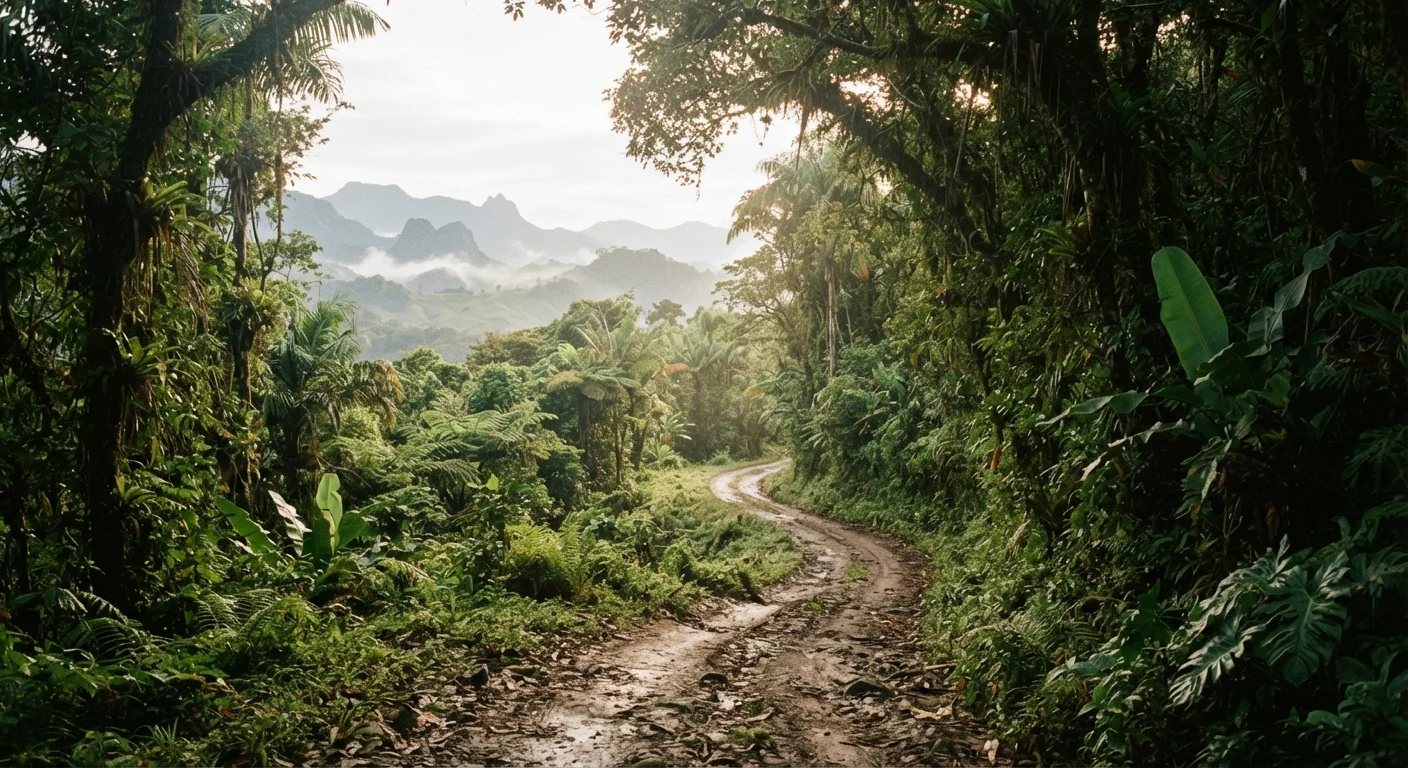
True low-traffic destinations in Central America tend to share several characteristics that rarely appear in glossy travel features. Infrastructure is minimal - not charmingly rustic, but functionally thin. Spanish fluency becomes less optional and more essential. Accommodation runs to family-run hospedajes rather than boutique hotels with booking.com profiles. And the rhythm of daily life around you is oriented toward the community's own needs, not toward your experience of it.
The Pacific coast of Nicaragua between Corinto and the Gulf of Fonseca, the interior highlands of Guatemala's Huehuetenango department, or the Mosquito Coast of Honduras - these areas see fragments of traveler traffic, but nothing resembling a circuit. Getting in requires patience: local chicken buses, shared rides, occasional ferry crossings. Getting oriented requires conversation, not a QR code. This is meaningfully different from, say, the Ruta de las Flores in El Salvador, which is beautiful and worthwhile but thoroughly sign-posted and tour-operator-accessible.
Safety Conditions Vary Significantly by Country and Region
Parts of Central America carry active travel advisories from multiple governments due to crime, civil unrest, or environmental hazards. These conditions are not uniform across the region and can change. Before traveling to any destination - especially genuinely remote areas with limited emergency infrastructure - consult your government's official travel advisory service and register with your embassy where available.
The contrast with more packaged regional travel - Caribbean cruises that dip into Roatán, say - couldn't be sharper. Where cruise itineraries deliver curated access to a carefully managed slice of a destination, genuine ground-level exploration in Central America's overlooked zones delivers something unmanaged and therefore more demanding. Neither is inherently superior; they serve different travelers with different needs. But they should not be described with the same vocabulary.
~1.7M
Annual visitors to Costa Rica's Arenal region
Figures from Costa Rica's tourism board have consistently placed the Arenal Volcano area among the country's most visited zones, illustrating how fast 'hidden' destinations scale.
7
Countries in Central America
Each has distinct entry requirements, travel conditions, and regional character - a reminder that the region resists single-itinerary generalization.
The question of what counts as "authentic" is worth interrogating too - something our editorial on myths about cultural authenticity abroad addresses directly. A market in Chichicastenango that draws thousands of foreign visitors weekly is still a real, functioning market. A ceremony closed to outsiders in a Q'eqchi' Maya village is not more or less authentic - it is simply not available to you, and that boundary deserves respect.
Traveling Responsibly in Places That Haven't Asked for Tourism
There is a version of off-the-beaten-path travel that treats overlooked destinations as trophies - proof of the traveler's adventurousness rather than places with their own stakes in whether visitors show up. Central America's genuinely undervisited regions are often that way because geographic isolation, historical conflict, or economic marginalization kept infrastructure investment away. Arriving as a traveler in those conditions is a privilege that comes with weight.
Practical responsibility here means spending locally and deliberately: eating at family comedores rather than importing your dietary preferences, hiring community guides rather than external operators, and learning enough about local history - including the legacies of conflict in countries like Guatemala and El Salvador - to engage with some humility. It also means being honest about your own limits. Remote areas with poor road access, limited medical facilities, and unreliable communications are not dangerous by definition, but they do require honest self-assessment. For guidance on this balance in comparable contexts, our coverage of responsible travel in fragile remote communities offers a useful framework, even if the geography differs.
Entry requirements, visa conditions, health advisories, and road conditions in Central America vary by country and change frequently. Always verify current information with official government sources and relevant embassies before making travel plans.