
The Gap Between Departure Time and All Aboard Time
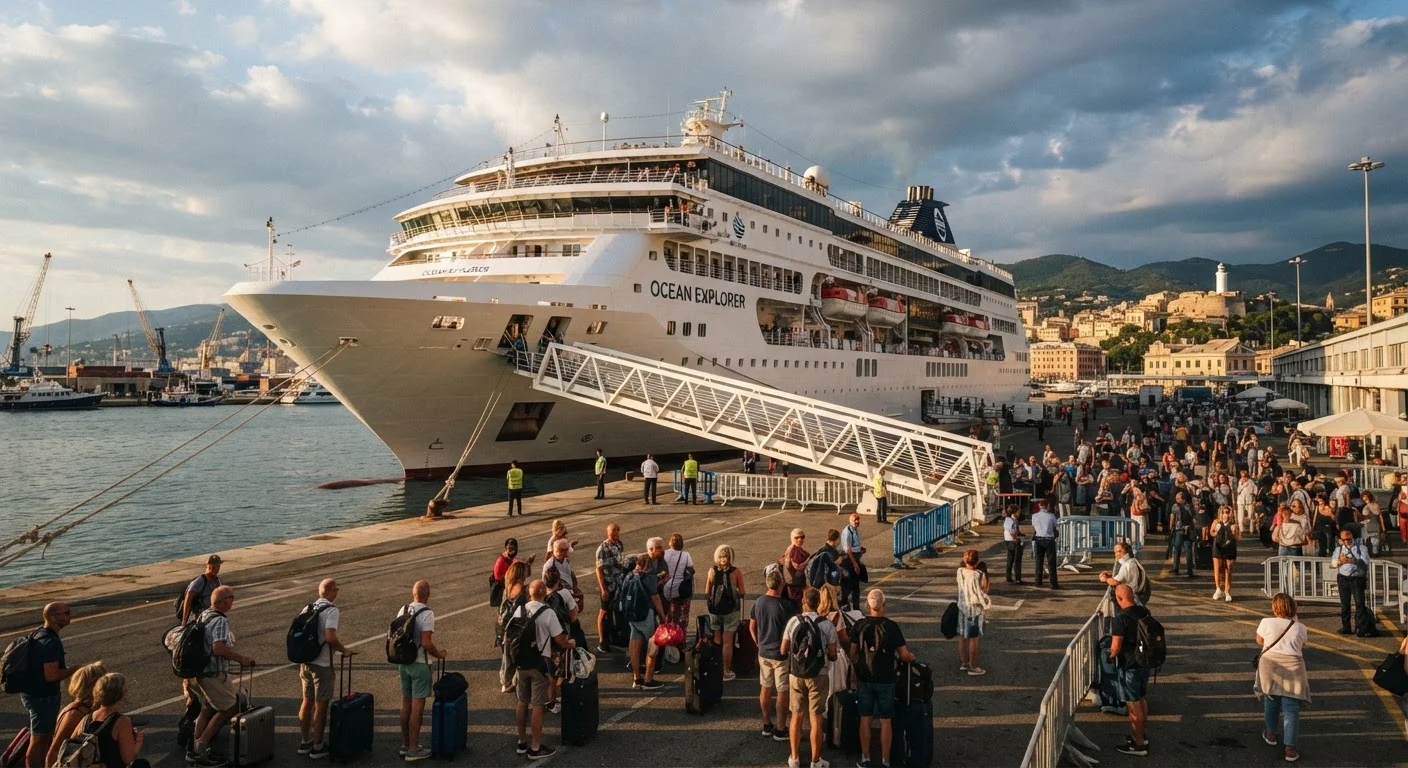
The single most common reason cruisers cut it dangerously close is a misreading of the ship's schedule. The published departure time — say, 5:00 PM — is when the ship leaves the dock. The All Aboard time is typically 30 to 60 minutes earlier, and that is the real deadline for every passenger. Missing All Aboard doesn't mean a stern look from a crew member; it means the gangway closes without you.
Cruise lines print the All Aboard time in the ship's daily program, often distributed the evening before a port day. Many travelers set mental reminders based on the departure time they recall from their original booking documents — documents that almost never show the All Aboard time at all. Reading a cruise itinerary carefully before sailing is essential, but the daily program onboard is the only authoritative source on the day itself.
All Aboard Is Non-Negotiable — The Ship Will Sail
Cruise lines are contractually obligated to meet port authority schedules and cannot hold indefinitely for late passengers. If you miss the All Aboard time, the gangway closes and the ship departs. Catching up means booking your own flights, hotels, and transfers to the next port — entirely at your expense. No amount of circumstances will reliably change this outcome.
Common Mistakes That Leave Passengers on the Dock
Treating the ship's departure time as the deadline for returning to port.
Why it happens: Travelers naturally focus on the departure time listed in booking confirmations and itinerary summaries, not realizing All Aboard is a separate, earlier cutoff.
Assuming an independent tour operator will return you with enough buffer time.
Why it happens: Local guides are often unaware of All Aboard times and optimize for a full experience rather than early returns.
Letting a phone's automatic time zone update override ship time.
Why it happens: Smartphones update to local port time automatically, which can differ from ship's clocks by one or more hours on itineraries crossing time zones.
Underestimating how long tender operations take to return passengers to the ship.
Why it happens: Outbound tender queues in the morning are often short; return queues in the late afternoon can stretch to 45 minutes or longer as hundreds of passengers return simultaneously.
Relying on the original booking itinerary for All Aboard times rather than the ship's daily program.
Why it happens: Pre-voyage documents rarely include All Aboard times, so travelers assume the departure time they've memorized is the operative deadline.
Why Independent Excursions Demand a Different Mindset
Booking shore time independently — through a local tour operator, a hired driver, or simply exploring on your own — is genuinely rewarding and often delivers a richer experience than a ship-organized excursion. But it comes with one critical trade-off: the ship assumes no responsibility for your return.
When you book a shore excursion directly through the cruise line, the ship will typically hold departure if that excursion is running late due to circumstances outside passengers' control. That courtesy does not extend to independently arranged plans. A traffic jam, a delayed ferry, or simply losing track of time in a market means the ship may sail without you — and you'll be responsible for arranging travel to the next port at your own expense.
Independent Excursion? The Ship Won't Wait
Unlike cruise-line excursions, independently arranged shore trips carry no schedule protection. If your driver gets stuck in traffic or your ferry runs late, the ship's departure schedule takes priority. Always identify the port's taxi or transport fallback before you leave the dock area, and never rely on a single return route.
Experienced cruisers on independent excursions build in a minimum 90-minute buffer before All Aboard and identify a fallback return route before they leave the port area. For tips on itinerary decisions that frequently disappoint, the pattern of underestimating return logistics appears repeatedly.
The Time Zone Trap and Other Hidden Timing Pitfalls
Itineraries that cross time zones — common on Caribbean island-hopping routes, transatlantic crossings, and Alaska sailings — create a specific trap. The ship operates on ship time, which may differ from local port time. When the ship advances its clocks overnight, a passenger whose phone auto-updated to local time may believe they have an extra hour that simply doesn't exist aboard.
30–60 min
Typical gap between All Aboard and ship departure
Most major cruise lines set All Aboard 30 to 60 minutes before the scheduled departure, a window that many passengers significantly underestimate.
~40%
Of cruise ports that require tender operations
Industry estimates suggest a significant share of port calls involve tendering, adding a queue-dependent variable to return timing that dock-side arrivals don't face.
The daily program will always state what time the ship's clocks are set to. Experienced cruisers keep a secondary watch or phone set to ship time throughout a voyage — a simple habit that eliminates the time zone trap entirely. For those who want to understand why schedules sometimes shift unexpectedly, why cruise itinerary changes happen provides useful context on how port schedules are negotiated and why timing is rarely as fixed as it appears.
Port congestion, tender operations (where a smaller boat ferries passengers to shore when the ship can't dock directly), and unexpected customs clearance delays all compress usable shore time in ways most travelers don't anticipate. The gap between published port hours and actual usable time can be substantial. Plan conservatively, return early, and use any surplus time to explore the quieter corners of the ship that empty out during port days.