
A Coastline That Tourism Largely Forgot
While the world's adventure travelers have been mapping every corner of Southeast Asia and the Middle East, Pakistan's Makran Coast has remained conspicuously absent from the itinerary. That absence is not accidental - it reflects a combination of geopolitical complexity, minimal infrastructure, and a region that has simply never been packaged for outside consumption. For a particular kind of traveler, that is precisely the draw.
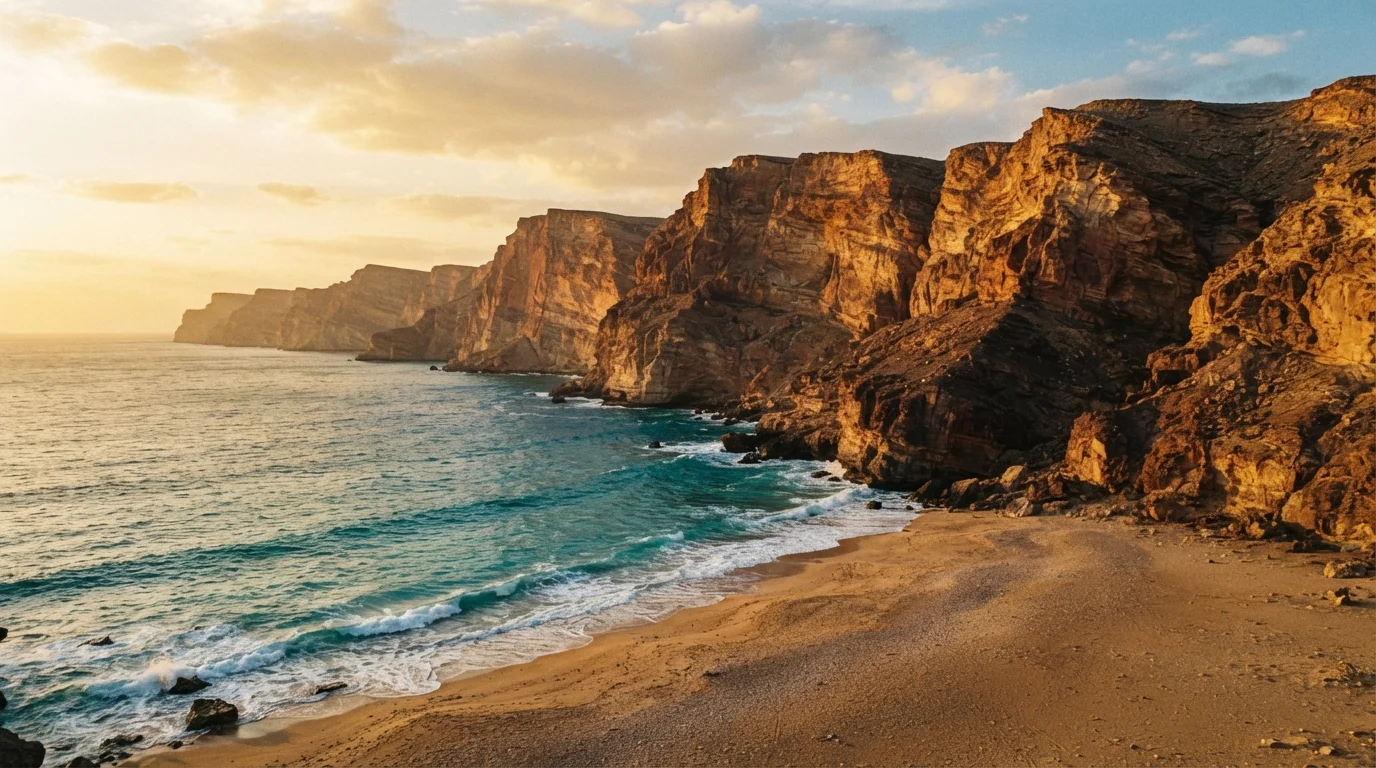
The coast stretches from the port city of Gwadar eastward through a succession of fishing villages, wind-carved cliffs, and desert terrain that slides directly into the Arabian Sea. Towns like Pasni and Ormara sit along this route, connected by roads that range from serviceable to genuinely rough. There is no coastal promenade, no resort strip, no standardized tourist trail. What exists instead is an enormous, largely unbroken landscape that rewards patience and preparation.
What Makes This Coastline Geologically Extraordinary
Even among experienced travelers, the geological character of the Makran Coast tends to come as a surprise. The region sits atop one of the world's most active accretionary prisms - a zone where the Arabian tectonic plate is being pushed beneath the Eurasian plate, producing formations rarely seen at this scale anywhere else on Earth.
The most dramatic expression of this activity is the cluster of cold mud volcanoes found near Gwadar, the most significant of which is Chandragup. Unlike conventional volcanoes, these vents emit cold mud, brine, and methane from deep subsurface fissures. Chandragup is considered sacred in local tradition, and pilgrims visit alongside the rare curious geologist or traveler. The scale of the formations - some rising several meters above the surrounding coastal plain - is genuinely strange and striking.
Beyond the mud volcanoes, the coastline itself is carved into dramatic sequences of sedimentary cliffs, sea stacks, and natural arches. Princess of Hope, a wind-eroded rock formation near Hingol National Park, has become one of the coast's few named landmarks familiar to Pakistani travelers, though it remains virtually unknown internationally.
The Logistics of Actually Getting There
Honesty about logistics is essential here, because the Makran Coast is not a destination where you can improvise. Foreign nationals require a No Objection Certificate before entering Baluchistan, and in many areas travel with a police escort is mandatory rather than optional. These requirements exist for real reasons, and navigating them is part of the journey's architecture.
Gwadar is the most practical entry point, accessible by air from Karachi on domestic carriers. The Makran Coastal Highway - a Chinese-built road stretching from Karachi to the Iranian border - connects the major coastal towns and has significantly improved overland access compared to a decade ago. That said, road conditions vary, and stretches between settlements can be long and isolated.
Hiring a local guide familiar with both the terrain and the current permit landscape is not merely convenient - it is functionally necessary for traveling safely and respectfully through the region. Several Karachi-based specialty tour operators offer organized expeditions along the coast, which provide the logistical scaffolding that independent travel here rarely permits.
What Travelers Are Actually Finding
Those who have made the journey describe a quality of solitude that has become nearly impossible to find along any other coastline in Asia. Beaches that stretch for kilometers without a single structure. Fishing communities where the arrival of an outside traveler remains genuinely unusual. Skies with almost no light pollution. A pace of coastal life shaped entirely by tides and seasonal catch rather than tourism cycles.
Hingol National Park - Pakistan's largest national park by area - anchors the central section of the coast and encompasses mangrove estuaries, desert plateau, and rocky shore. The park is home to the endangered Baluchistan bear, marsh crocodiles in the Hingol River, and a remarkable density of bird species along its wetlands. It is a protected area, and visitors should observe all park regulations.
The word that recurs most often in accounts of the Makran Coast is unfinished - not in a negative sense, but in the sense of a place that hasn't yet been edited for outside eyes. That rawness is the destination's defining quality, and the reason the travelers quietly discovering it tend to return.