
Why Oaxaca's Hinterland Remains Underexplored
Oaxaca city earns its reputation. The zócalo at dusk, the chocolate mills on Calle Mina, the Museo de las Culturas — these are genuinely world-class. But the city functions as a gravitational center that too often traps travelers within its own orbit, leaving the surrounding region — one of the most culturally dense in the Americas — experienced only through a day-trip checkbox, if at all.
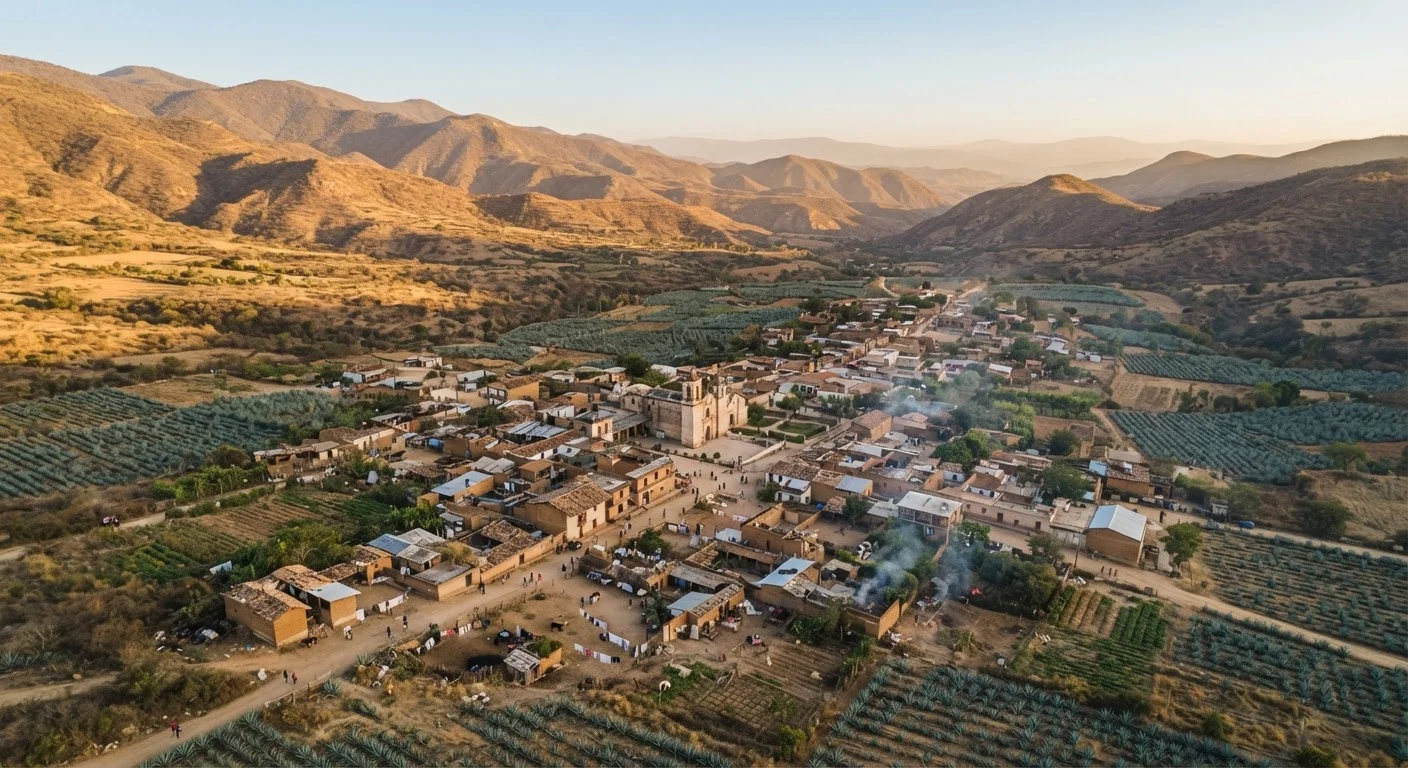
The Central Valleys and the mountain range known as the Sierra Juárez form a rough ring around the city, studded with villages that have sustained distinct identities across centuries. Zapotec and Mixtec communities here have negotiated with colonizers, tourists, and globalization on their own terms, and the result is a living mosaic that no single museum can replicate. Craft production, communal land governance (tequio), mezcal distilleries, and pre-Columbian archaeological sites coexist alongside roadside tlayudas and community-run ecoturismo cabins.
For the frequent traveler already fluent in the grammar of European villages — the kind who might appreciate the quiet rewards described in our look at Europe's overlooked village culture — Oaxaca's neighbors offer a comparably rich but entirely different register of discovery. The logistics are straightforward, the payoff is deep, and the crowds, by any global standard, remain thin.
A Note on Visiting Responsibly
Many of these villages operate under communal indigenous governance structures and hold cultural practices that are not performances for visitors. Ask before photographing people or ceremonies, purchase directly from artisans when possible, and follow any posted or verbal community guidelines. Visitors should also verify entry requirements, road conditions, and any relevant health or safety advisories with official sources before travel, as conditions can change.
Six Villages Worth Building a Day Around
Teotitlán del Valle: Where the Loom Is Still the Center of Life
Roughly 30 kilometers east of Oaxaca city, Teotitlán del Valle has woven wool rugs and textiles for centuries — and continues to do so in family workshops that open directly onto the street. What distinguishes the village from tourist-market versions of its craft is context: you can watch dye being extracted from cochineal insects, wild marigolds, and indigo, and understand that the geometric patterns drawn from Zapotec cosmology carry meaning that predates the Spanish introduction of the upright loom.
The village market on Sundays draws both locals and visitors, but the real experience is knocking on workshop doors any weekday morning. A small archaeological site sits above the town, and the parish church incorporates pre-Columbian stones in its foundation — a quiet, physical record of cultural negotiation.
Teotitlán's weavers still extract natural dyes from insects and wild plants, preserving techniques centuries older than synthetic color.
San Bartolo Coyotepec: Black Clay, Burnished by Hand
The lustrous black pottery synonymous with Oaxaca — barro negro — originates in San Bartolo Coyotepec, about 12 kilometers south of the city. The technique of hand-building and burnishing with a quartz stone, then firing in an earthen kiln, produces pieces with a distinctive metallic sheen that no glaze replicates. The form was popularized in the mid-20th century but the ceramic tradition runs much deeper.
Several family studios in the village welcome visitors, and the difference between watching a master potter shape a vessel on a gourd mold versus buying the finished piece in a Oaxaca city shop is the difference between souvenir and understanding. Prices at the source tend to be more reasonable, and purchases directly support the artisans.
Barro negro's metallic sheen comes from quartz-burnishing, not glaze — a technique unique to this single Oaxacan village.
San Martín Tilcajete: Alebrijes in Their Natural Habitat
The fantastical painted wooden figures known as alebrijes — animals real and imagined, carved from copal wood and painted in intricate geometric designs — have become icons of Mexican folk art. San Martín Tilcajete, in the Central Valleys, is one of the two villages (alongside Arrazola) where the tradition is most concentrated and where the craft has developed its own distinct aesthetic vocabulary.
Walking the village streets and stepping into workshops reveals an art form that is both communal and fiercely individual: neighboring households may use entirely different painting styles, and children learn alongside grandparents. Pieces range from small, affordable figures to monumental works that take months to complete. The wood itself — copal — is considered sacred in Zapotec tradition, lending the craft an additional layer of significance beyond its visual appeal.
In Tilcajete, neighboring workshops produce alebrijes with visibly different styles — evidence of a living, evolving artistic tradition.
Yagul: A Zapotec Fortress with Views That Earn the Climb
While Monte Albán draws the majority of archaeological visitors near Oaxaca, Yagul — a fortified Zapotec and later Mixtec city built atop a rocky outcrop about 36 kilometers east of the capital — receives a fraction of the foot traffic and rewards the extra distance with almost solitary exploration. The site includes a large ball court, elaborate palace complexes, and an acropolis with panoramic views across the Tlacolula Valley.
The surrounding landscape is equally compelling: wild agave, organ pipe cacti, and nopal form a thorny, arid ecosystem that feels geologically distinct from the valley floor. UNESCO has recognized the pre-Hispanic caves and agave landscape around Yagul and Mitla as a World Heritage cultural landscape, underscoring that the terrain itself is part of the cultural story. Visitors should bring water and sturdy footwear; the ruins involve uneven surfaces and exposed slopes.
Yagul sits within a UNESCO-recognized agave landscape, making the terrain as historically significant as the ruins themselves.
Etla: A Market Valley Town with a Food Tradition All Its Own
The Etla Valley, running north from Oaxaca city, is greener and better-watered than the Central Valleys to the east and south, and the town of Villa de Etla reflects this agricultural richness in its Wednesday market — one of the region's most authentic and least-touristed. Stalls sell fresh cheese (quesillo made at local dairies), memelas, chiles, and seasonal produce that rarely appears in city restaurants.
The valley also holds the former textile mill Ex-Fábrica Cinco Señores, now a cultural center that hosts contemporary art exhibitions, providing an unexpected counterpoint to the surrounding rural landscape. The combination of working market, local food culture, and functioning arts space makes Etla a more layered stop than its low profile would suggest.
Etla's Wednesday market is one of Oaxaca's most authentic — built around local dairy, seasonal produce, and almost no tourist infrastructure.
Capulálpam de Méndez: Community Forestry and Cloud Forest Solitude
High in the Sierra Juárez, roughly two hours from Oaxaca city by bus, Capulálpam de Méndez operates as a pueblo mágico — a government-designated heritage town — but remains almost entirely off the international traveler's radar. The community manages its surrounding forests through a cooperative model that has become a reference point for sustainable land use in Mexico, balancing timber production, ecotourism, and conservation.
Hiking trails through pine-oak cloud forest, a community museum focused on mining history and Zapotec heritage, and a thermal spring accessible on foot from the village center make Capulálpam a destination that rewards an overnight stay. Simple community-run lodging is available; meals center on mountain staples — black bean soup, tortillas made from local maize, wild mushrooms when in season. The altitude (around 2,100 meters) brings cool nights even in summer.
Capulálpam's community-managed forests are a functioning model of sustainable land governance — as remarkable as the cloud forest itself.
Getting There Without a Rental Car
Colectivo taxis and second-class buses cover most Central Valley villages efficiently and inexpensively from Oaxaca city. For the Sierra Juárez, buses depart from the second-class terminal on Calle Trujano. Routes and schedules change seasonally, so confirm departure points locally upon arrival. Many villages are also reachable through community tourism organizations based in Oaxaca city, which offer guided transport and help ensure your visit benefits local economies directly.
Putting the Pieces Together
None of these villages requires a guided tour, though several community tourism offices offer walking guides whose local knowledge repays any modest fee. Colectivos — shared taxis that depart from specific corners near Oaxaca's second-class bus terminal — are the fastest and most affordable way to reach most Central Valley destinations. For the Sierra Juárez, buses to Ixtlán de Juárez or Guelatao run from the same terminal and open a different altitude and ecosystem entirely.
The deeper parallel here is one that applies across the world's overlooked hinterlands — from the Basque interior's pilgrimage villages, detailed in our guide to the Basque Country's interior routes, to the valleys outside Oaxaca: proximity to a famous city is both a village's best logistical asset and the thing that risks overrunning it. Travel thoughtfully. Spend money locally — at the cooperative workshop, the family comedor, the mezcal palenque that welcomes visitors — rather than routing purchases back through city middlemen. The villages that welcome curious travelers today are the ones most likely to remain vibrant places worth visiting a generation from now.